9/22/2022 | Associate Director Deepa Ollapally Authored Article for East Asia Forum

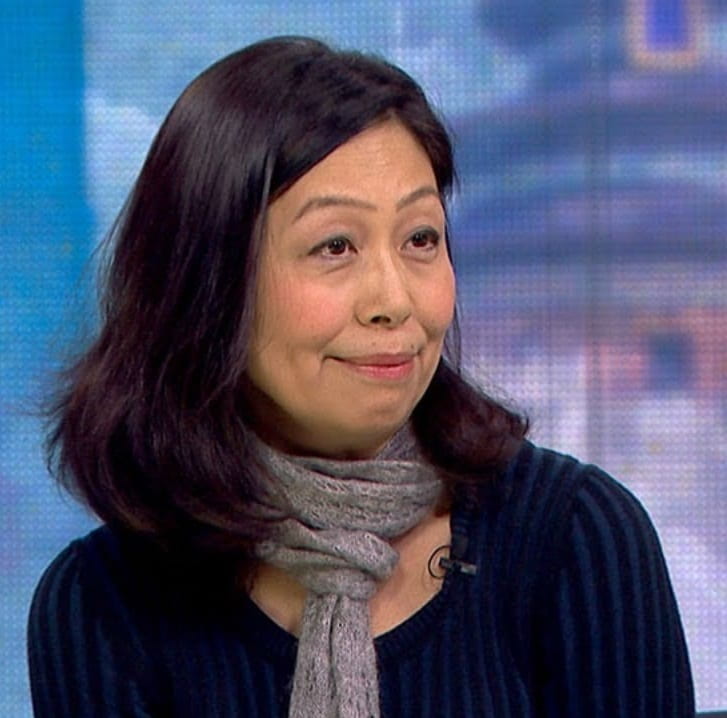
On September 22nd, 2022, Associate Director of the Sigur Center and Director of the Rising Powers Initiative, Professor Deepa Ollapally, authored an article for the East Asia Forum titled “India goes its own way on global geopolitics“. 

India goes its own way on global geopolitics

Originally published on East Asia Forum | 22 September 2022

Authored by Deepa Ollapally, GWU

Russia’s invasion of Ukraine coincided with a debate over whether to call US–China tensions ‘a new Cold War’ and a ‘no limits’ friendship between Russia and China. As the United States raced to place sanctions on Moscow, many in the Global South found themselves caught in the crosshairs of a realignment against Russia.

Among the non-committed, India is the largest democracy to strike its own path.

Russia has been one of India’s most steadfast diplomatic and defence partners and a weakened Russia would negate India’s preference for a multipolar global order in which it is an independent and influential pole. Washington’s tendency to group China and Russia as an ‘authoritarian axis’ that threatens the global order is not something to which India subscribes. India sees Russia as a close friend and China as an adversary, while the United States is hostile to both countries.

Since the invasion of Ukraine, the contradiction between India and the United States is playing out openly. India and China have been more aligned on UN votes, with India abstaining on 11 UN votes to condemn Russia, withstanding intense pressure from its closest Western partners as well as unflattering international media and public opinion.

India could not be persuaded to join the US-led economic sanctions against Russia as it is generally against unilateral sanctions levied outside the United Nations. New Delhi’s decision to accept Russia’s offer of deeply discounted oil is not entirely surprising, though Western officials and commentators have accused India of taking ‘sweet deals’ from an otherwise diplomatically isolated Russia and indirectly funding Putin’s war machine.

The West’s pressure on India went from pure money to values by characterising the conflict as between authoritarianism and democracy. In a much-watched interaction between visiting British Foreign Minster Liz Truss and Indian Minister of External Affairs Subrahmanyam Jaishankar, Truss took a swipe at India’s neutral stance, stating that ‘it’s vitally important for freedom and democracy in Europe, that we challenge Putin, and we ensure that he loses in Ukraine’.

India’s strategic ties with the United States and its embrace of the Quad once suggested an increasing acceptance of the US-dominated liberal order and a weakening commitment to a multipolar world. India and China’s growing adversarial relations also pointed to the limits of their cooperation on global governance and reform.

But Ukraine shows that India’s desire for multipolarity remains. India continues to be a dissatisfied member of the liberal global order despite having made gains through that order. At the June 2022 Bratislava Forum, Jaishankar argued that ‘Europe has to grow out of the mindset that its problems are the world’s problems, but the world’s problems aren’t Europe’s problems’.

India is the only major power to have membership in organisations that are generally seen by the West as competitive, if not adversarial. Along with BRICS, it is part of the East Asia Summit, the ASEAN Regional Forum, the Quad and the Shanghai Cooperation Organisation.

This wide-ranging membership exemplifies India’s decision to represent and protect its foreign policymaking autonomy and pursue greater global power-sharing. The Russia–China statement — issued after the 2022 Beijing Winter Olympics — recognises Indian autonomy and prioritises the relations between the three big powers within the BRICS. In a telling final paragraph, it stated that Russia and China ‘intend to develop cooperation within the ‘Russia–India–China’ format’.

India’s decision to participate in the weeklong military drill hosted by Russia in September 2022 did not sit well with its Quad partners. The United States expressed its displeasure over India taking part in the drills, stating it has concerns about any country ‘exercising with Russia while Russia wages an unprovoked, brutal war against Ukraine’. But US Press Secretary Karine Jean Pierre added that ‘every participating country will make its own decisions’, suggesting that the United States would not interfere.

Japan strongly objected to the drills in the Sea of Okhotsk and the Sea of Japan, calling them ‘unacceptable’. In deference to Japan’s sensitivities, India elected to stay away from the maritime component of the Vostok exercises and did not send its warships.

The balancing act between Russia and the West seems to be paying off. There was a flurry of high-level visitors to New Delhi in March and April 2022, including the prime ministers of Japan and the United Kingdom, foreign ministers of China and Russia and a virtual summit with Australia’s Prime Minister. But India’s foreign policy decisions are testing these partnerships and expectations.

There are political minefields ahead for India and its partners. NATO–Russia tensions will surely rise when Sweden and Finland’s requests for membership are taken up. An intensification of the Russia–Ukraine war might force India to choose between its Quad partners and Russia.

India’s earlier intention to achieve multipolarity through the BRICS will be even less tenable if Russia–China relations become ironclad. The notion of a more distributed power system will collide against the reality that closer ties with the United States may appear a better option for India.

At the beginning of the Russia–Ukraine war, India worried that China would gain an enfeebled and dependent Russia as a junior partner. New Delhi stood to lose Russia as a strong and reliable geopolitical partner. Economically, the sanctions on Russia are setting off a process of de-dollarisation that benefits China. The Ukraine conflict could deliver advantages to China that it could not have otherwise secured.

Indian policymakers are betting that Russia will not want to put all its eggs in one basket and that Russia will continue to respect India’s independence. A weakened Russia will still have veto power at the UN Security Council where India has historically been a beneficiary.

India is betting that the level of convergence with the Quad members on China’s aggression in the Indo-Pacific is strong enough for them to tolerate dissonance on other grounds. It is counting on its friends to realise that pressure to take sides is unlikely to produce results and may backfire.

India has consolidated its strategic autonomy without economic or strategic costs. Its Quad partners appear willing to tolerate differences — after all, there is no ‘Indo-Pacific’ without India.

New Delhi has been able to set the terms of global engagement in the current geopolitical constellation. But depending on the outcome of the Ukraine war, India’s conception of the type of global order that guards its strategic autonomy may have to be reluctantly refined.
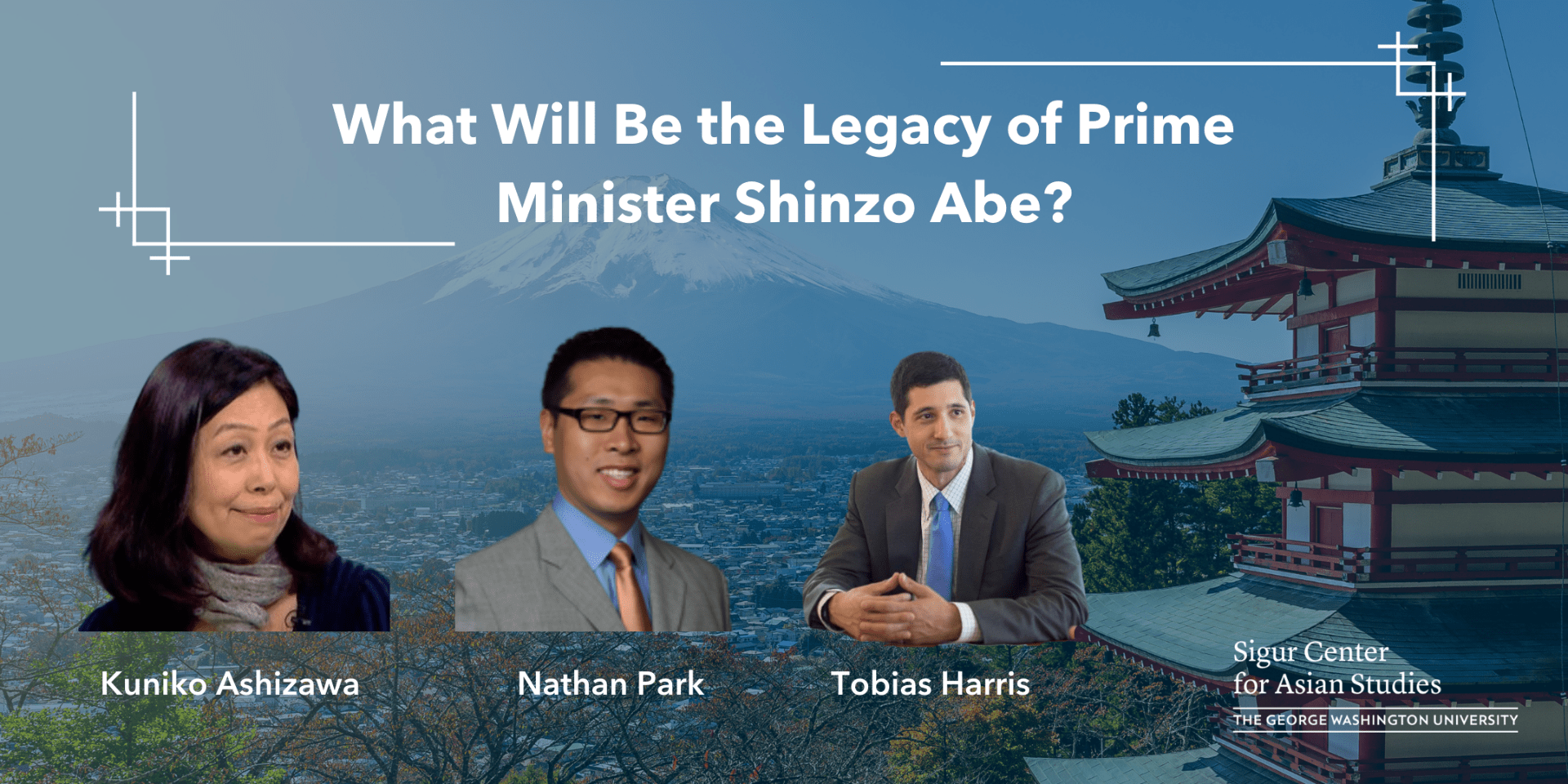
9/30/2022 | What Will Be the Legacy of Prime Minister Shinzo Abe?

Friday, September 30, 2022

12:00 – 1:30 PM EDT

Harry Harding Auditorium, Room 213

Elliott School of International Affairs

1957 E ST NW, Washington, DC 20052

Join us as we invite experts to take a look at the life, record, and legacy of former Prime Minister Shinzo Abe.

Two months after Shinzo Abe’s assassination, Japan continues to grapple with the death of its longtime leader and controversies swirl around plans to hold a state funeral. Despite the polarization Abe brought to domestic politics, his efforts to connect Japan with its allies and neighbors in Asia and beyond will shape Japanese foreign policy for many years to come. What are Abe’s legacies? How did he shape Japan’s domestic and foreign policy? How should he be remembered? This panel discussion will examine the political, social, and economic impacts of Abe’s premiership on domestic and regional affairs through various perspectives.

Registration is free and open to the public. This event is IN-PERSON only. 

This event will be recorded and will be available on the Sigur Center YouTube channel after the event.

Speakers

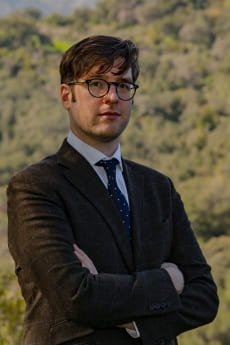
headshot of Nathan Park

S. Nathan Park is a versatile litigator who has handled every type of complex financial litigation, including cross-border matters involving securities and derivatives. He often represents Korea-based clients in connection with regulatory investigations involving U.S. and local authorities. He also has experience with international judgment enforcement and international arbitration.

Mr. Park writes extensively on Asia’s economy and politics and his work has appeared in The Wall Street Journal, Foreign Policy and The Atlantic.

Before joining Kobre & Kim, Mr. Park practiced at Milbank, Tweed, Hadley & McCloy LLP and Cleary Gottlieb Steen & Hamilton LLP, where he represented clients in government enforcement defense, internal investigation, complex commercial litigation, securities litigation, international arbitration and international civil litigation.

photo of kumiko ashizawa at a talk event

Kuniko Ashizawa teaches international relations and serves as Japan Coordinator of Asian Studies Research Council at the School of International Service, American University. From 2005 until 2012, she was a senior lecturer in international relations at Oxford Brookes University in the U.K. Her research interests include Japan’s foreign, security and development assistance policy, U.S.-Japan-China relations, regional institution-building in Asia, and the role of the concept of state identity in foreign policymaking, for which she has published a number of academic journal articles and book chapters, including in International Studies Review, Pacific Affairs, the Pacific Review, and Journal of Peacebuilding and Development. Her book, Japan, the U.S. and Regional Institution-Building in the New Asia: When Identity Matters (Palgrave McMillan, 2013), received the 2015 Masayoshi Ohira Memorial Prize. Ashizawa was a visiting fellow at various research institutions, including the Woodrow Wilson International Center for Scholars, the East-West Center in Washington, the Reischauer Center for East Asian Studies, SAIS, and the United Nations University (Institute of Advanced Studies) in Tokyo. She received her PhD in international relations at the Fletcher School of Law and Diplomacy, Tufts University.

headshot of Tobias Harris

Tobias Harris is senior fellow at the Center for American Progress, where he oversees the National Security and International Policy team’s work on Asia. From 2013 to 2021, he was a political risk analyst covering Japan and the Korean Peninsula at Teneo Intelligence, as well as a research fellow for economy, trade, and business at the Sasakawa Peace Foundation USA from 2014 to 2020. He is also the author of The Iconoclast: Shinzo Abe and the New Japan, the first English-language biography of Japan’s longest-serving prime minister. Prior to joining Teneo Intelligence, Harris worked for a Japanese legislator, authored the blog Observing Japan, and conducted graduate research at the Massachusetts Institute of Technology and the University of Tokyo. He holds a master’s degree in international relations from the University of Cambridge and a bachelor’s degree in politics and history from Brandeis University.

Moderator

Mike Mochizuki, in professional attire against blue background

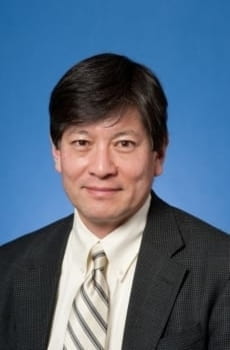
Mike Mochizuki is Associate Professor of Political Science & International Affairs, Japan-U.S. Relations Chair in Memory of Gaston Sigur, Director of the Bachelor in International Affairs programs, and co-director of the Memory and Reconciliation in the Asia Pacific program. Professor Mochizuki was director of the Sigur Center for Asian Studies from 2001 to 2005. Previously, he was a Senior Fellow at the Brookings Institution. He was also Co-Director of the Center for Asia-Pacific Policy at RAND and has taught at the University of Southern California and Yale University.

Sigur Center logo with line art of Asian landmarks

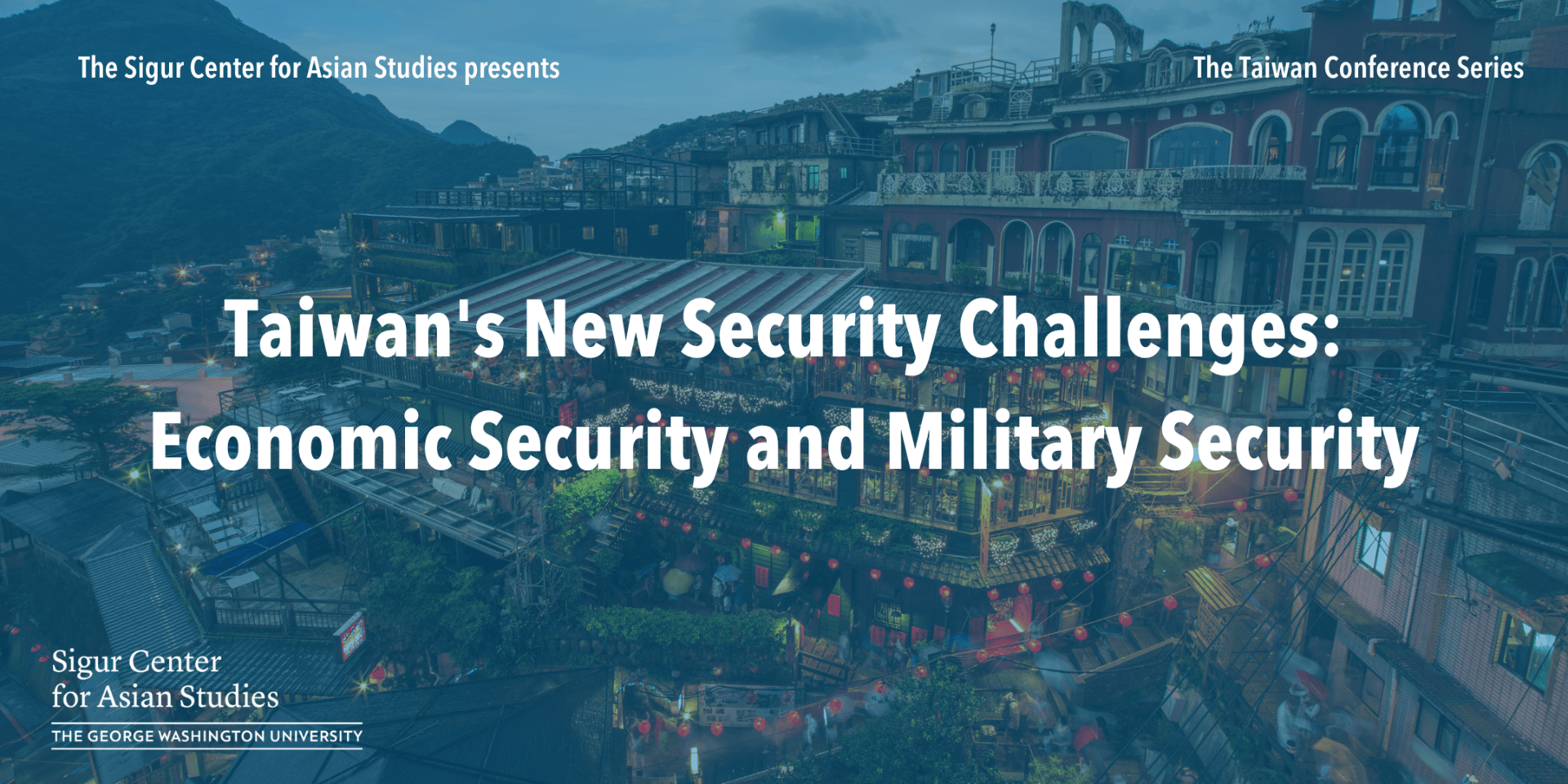
9/29/2022 | Taiwan’s New Security Challenges: Economic Security and Military Security

event banner for Taiwan Conference on September 29, 2022

Thursday, September 29, 2022

10:30 AM – 2:00 PM EDT

State Room, 7th Floor

Elliott School of International Affairs

1957 E ST NW, Washington, DC 20052

Taiwan is increasingly being tested by both military and economic security pressures from China. Beijing’s stepped-up manned and unmanned military activities and imposition of greater economic and military costs on other countries engaging in otherwise regular diplomatic and international engagement with Taiwan since August poses serious challenges to the rules-based international order, undermine the status quo across the Taiwan Strait, destabilize the Indo-Pacific region, and negatively impact international trade and transit. Combined with intense cybersecurity challenges, supply chain pressures and US-China tech competition, Taiwan faces a unique set of economic and military security challenges that are increasingly recognized and shared by like-minded partners in the region as well as across the globe.

Experts at the conference will offer their views on key economic and military issues currently facing Taiwan, and the prospects for Cross-Strait and regional stability.

Registration is free and open to the public. This event is IN-PERSON only. Lunch is provided.
This event will be recorded and will be available on the Sigur Center YouTube channel after the event.


Agenda

10:30am – 12:00pm – Panel One | Economic Security: Supply Chain Resilience, Cybersecurity & US-Taiwan Ties

  • Rupert Hammond-Chambers, US-Taiwan Business Council (USTBC) | Supply Chain Resilience
  • Fiona Cunningham, University of Pennsylvania | Cybersecurity Challenges
  • Emily Weinstein, Georgetown University | U.S.-China Tech Competition and Implications for Taiwan
  • Moderator: Gregg Brazinsky, Sigur Center for Asian Studies, George Washington University

12:00pm – 12:30pm Lunch

12:30pm – 2:00pm – Panel Two | Military Security: Cross Strait Relations, Defense & US-Taiwan Relations

  • Elbridge Colby, The Marathon Initiative | Interpreting Cross Strait Tensions
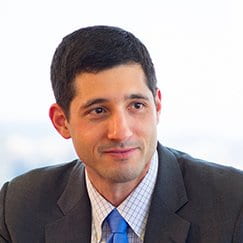
  • Robert Sutter, George Washington University | Drivers of US-Taiwan Relations
  • Jacob Stokes, Center for a New American Security | Taiwan’s Strategic and Political Impact on the Indo-Pacific
  • Moderator: Deepa Ollapally, Sigur Center for Asian Studies, George Washington University

Panel One Speakers

headshot of Rupert Hammond Chambers

Rupert Hammond-Chambers is President of the US-Taiwan Business Council. He began working for the US-Taiwan Business Council in October 1994. In March of 1998, he was promoted to Vice President of the Council with additional responsibilities for office management, oversight of the staff, financial bookkeeping and a clear mandate to build out the Council’s member/client base.

Mr. Hammond-Chambers was elected President of the Council in November 2000. As the trade relationship between the United States, Taiwan and China continues to evolve, he has worked to develop the Council’s role as a strategic partner to its members, with the continuing goal of positioning the Council as a leader in empowering American companies in Asia through value and excellence.

Mr. Hammond-Chambers is also the Managing Director, Taiwan for Bower Group Asia – a strategic consultancy focused on designing winning strategies for companies. He is also responsible for Bower Group Asia’s defense and security practice.

He sits on the Board of The Project 2049 Institute. He is a Trustee of Friends of Fettes College, and is a member of the National Committee on United States-China Relations.

headshot of fiona cunningham with black background

Fiona Cunningham is Assistant Professor of Political Science at the University of Pennsylvania. She is also a Faculty Fellow at Perry World House and affiliated with the Center for the Study of Contemporary China and the Christopher H.. Browne Center for International Politics at the University of Pennsylvania. Her research interests lie the intersection of technology and conflict, with an empirical focus on China. Fiona’s current book project explains how and why China threatens to use space weapons, cyber attacks and conventional missiles as substitutes for nuclear threats in limited wars. Her research has been published in International Security, Security Studies, The Texas National Security Review, and The Washington Quarterly, and has been featured in the New York Times and the Economist. Fiona’s work has been supported by the Stanton Foundation, Smith Richardson Foundation, and the China Confucius Studies Program. She has held fellowships at the Renmin University of China in Beijing, the Belfer Center for Science and International Affairs at Harvard University, the Center for International Security and Cooperation at Stanford University, and the Carnegie Endowment for International Peace. Fiona received her Ph.D. in Political Science from MIT in 2018. She holds a Bachelor of Arts from the University of New South Wales and a Bachelor of Laws from the University of Sydney, both with first class honors. From 2019 to 2021, she was an Assistant Professor of Political Science and International Affairs at the George Washington University.

headshot of Emily Weinstein

Emily S. Weinstein is a Research Fellow at Georgetown’s Center for Security and Emerging Technology (CSET), focused on U.S. national competitiveness in AI/ML technology and U.S.-China technology competition. She is also a Nonresident Fellow at the Atlantic Council’s Global China Hub and the National Bureau of Asian Research. In her previous role at CSET, Emily conducted research on China’s S&T ecosystem, talent flows, and technology transfer issues. Emily has previously testified before the U.S.-China Economic and Security Review Commission and the Wisconsin State Legislature’s Senate Committee on Universities and Technical Colleges. She has written on topics related to research security and China’s S&T developments in Foreign Policy, Lawfare, DefenseOne, and other outlets. Emily holds a BA in Asian Studies from the University of Michigan and an MA in Security Studies from Georgetown University.

Panel One Moderator

portrait of Gregg Brazinsky in professional attire

Gregg Brazinsky is Professor of History and International Affairs. He is director of the Asian Studies Program, acting director of the Sigur Center for Asian Studies, and acting co-director of the East Asia National Resource Center. He is the author of two books: Nation Building in South Korea: Koreans, Americans, and the Making of a Democracy and Winning the Third World: Sino-American Rivalry during the Cold War. His articles have appeared in numerous journals including Diplomatic History and the Journal of Korean Studies. He has written op-eds for The Washington Post, The Chicago Tribune and several other media outlets. He is currently working on two books. The first explores American nation building in Asia–especially Japan, Taiwan, and South Korea. The second explores Sino-North Korean relations during the Cold War.

Panel Two Speakers

headshot of Elbridge Colby

Elbridge Colby is co-founder and principal of The Marathon Initiative, a policy initiative focused on developing strategies to prepare the United States for an era of sustained great power competition. He is the author of The Strategy of Denial: American Defense in an Age of Great Power Conflict (Yale University Press), which The Wall Street Journal selected as one of the top ten books of 2021.

Previously, Colby was from 2018-2019 the Director of the Defense Program at the Center for a New American Security, where he led the Center’s work on defense issues.

Before that, he served as the Deputy Assistant Secretary of Defense for Strategy and Force Development from 2017-2018. In that role, he served as the lead official in the development and rollout of the Department’s preeminent strategic planning guidance, the 2018 National Defense Strategy (NDS). The NDS shifted the Department of Defense’s focus to the challenges to U.S. military superiority and interests posed by China in particular followed by Russia, prioritizing restoring the Joint Force’s warfighting edge against these major power competitors. He also served as the primary Defense Department representative in the development of the 2017 National Security Strategy.

Robert Sutter, pictured in professional attire

Robert Sutter is Professor of Practice of International Affairs at the Elliott School of George Washington University (2011-Present). He also served as Director of the School’s main undergraduate program involving over 2,000 students from 2013-2019. His earlier full-time position was Visiting Professor of Asian Studies at Georgetown University (2001-2011). A Ph.D. graduate in History and East Asian Languages from Harvard University, Sutter has published 22 books (four with multiple editions), over 300 articles and several hundred government reports dealing with contemporary East Asian and Pacific countries and their relations with the United States. His most recent book is Chinese Foreign Relations: Power and Policy of an Emerging Global Force, Fifth Edition (Rowman & Littlefield, 2021). Sutter’s government career (1968-2001) saw service as senior specialist and director of the Foreign Affairs and National Defense Division of the Congressional Research Service, the National Intelligence Officer for East Asia and the Pacific at the US Government’s National Intelligence Council, the China division director at the Department of State’s Bureau of Intelligence and Research and professional staff member of the Senate Foreign Relations Committee.

headshot of Jacob Stokes

Jacob Stokes is a Fellow for the Indo-Pacific Security Program at the Center for New American Security, where his work focuses on U.S.-China relations, Chinese foreign policy, East Asian security affairs, and great-power competition. He previously served in the White House on the national security staff of then-Vice President Joseph R. Biden, where Stokes was senior advisor to the national security advisor, as well as acting special advisor to the vice president for Asia policy. He has also worked in the U.S. Congress as a professional staff member for the U.S.-China Economic and Security Review Commission, and as foreign and defense policy advisor for Senator Amy Klobuchar (D-MN).

Outside of government, Stokes has been a senior analyst in the China program at the U.S. Institute of Peace and with the National Security Network. His writing has appeared in Foreign Affairs, Lawfare, Politico Magazine, War on the Rocks, Democracy, The Washington Quarterly, and The Guardian, and his analysis has been featured in TIME, USA Today, The Economist, The Washington Post, The Los Angeles Times, Vox, and Bloomberg. Stokes is a Term Member of the Council on Foreign Relations. He holds an MA from the Walsh School of Foreign Service at Georgetown University and undergraduate degrees from the University of Missouri.

Panel Two Moderator

Deepa Ollapally, in professional attire against white background

Deepa M. Ollapally is a political scientist specializing in Indian foreign policy, South Asian security, India-China relations, and Indo-Pacific regional and maritime security. She also directs the Rising Powers Initiative, a major research program which tracks and analyzes foreign policy debates in aspiring powers of Asia and Eurasia. She is the author of five books and is currently working on a manuscript titled Big Power Competition for Influence in the Indo-Pacific, which assesses the shifting patterns of geopolitical influence by major powers in the region since 2005 and the drivers of these changes. She holds a Ph.D. in Political Science from Columbia University.

Sigur Center logo with line art of Asian landmarks

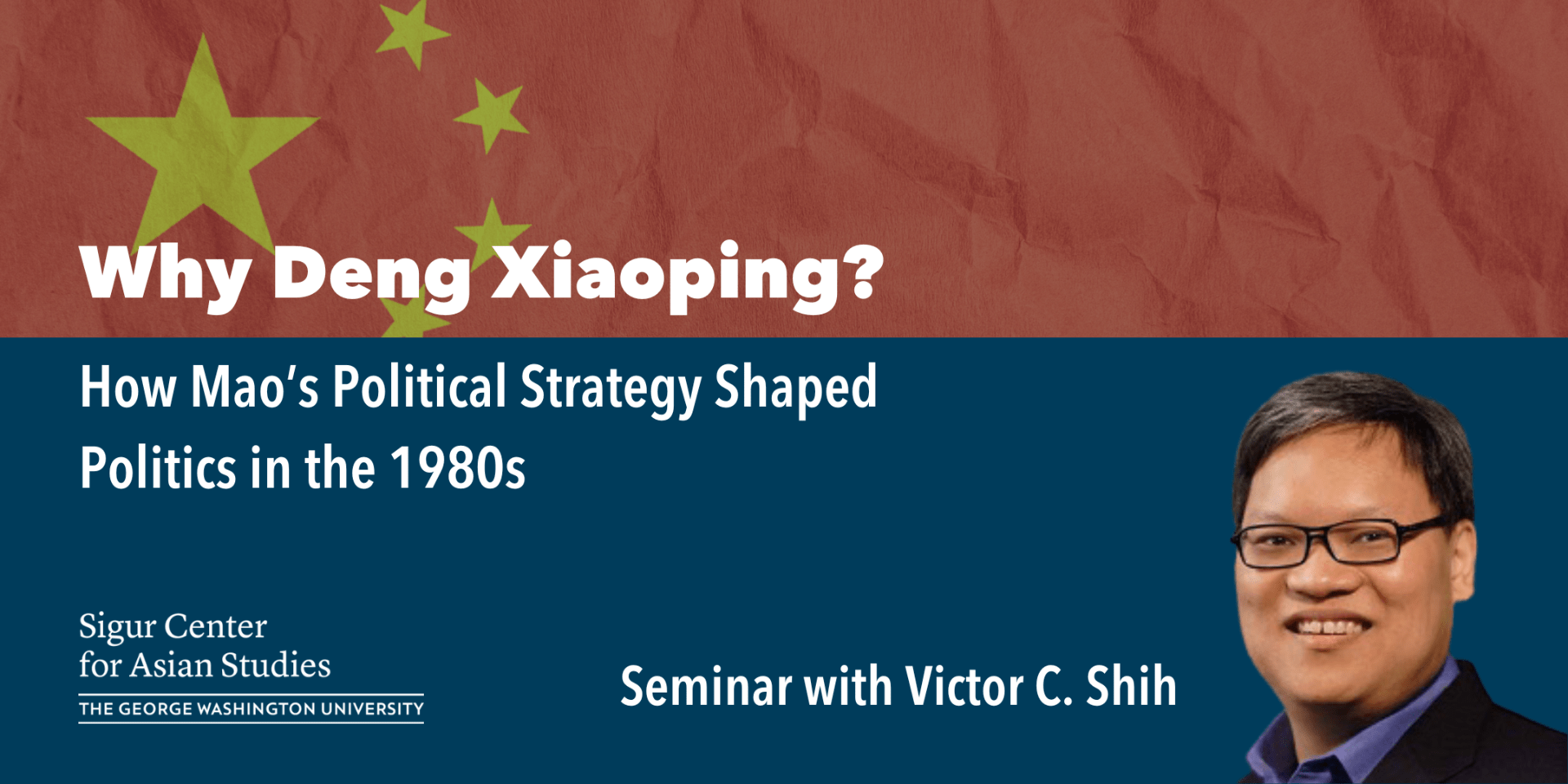
9/14/2022 | Why Deng Xiaoping? How Mao’s Political Strategy Shaped Politics in the 1980s

event banner for seminar with Victor Shih

Wednesday, September 14th, 2022

12:30  – 2:00 PM EDT

Room 505

1957 E ST NW

In-Person ONLY

NOTE: All non-GW affiliated attendees attending the event IN-PERSON must comply with GW’s COVID-19 policy in order to attend this event, including showing proof of vaccination and masking indoors. For frequently asked questions, please refer to GW’s guidance

About

After the Lin Biao incident in 1971, Mao rehabilitated Deng Xiaoping and immediately thrust him into the powerful position of the vice chairman of the Central Military Commission. This position set him on a course to be “first among equals” in the 1980s, despite later dismissal by Mao. Why did Mao put Deng in charge of the PLA when there were more plausible candidates from the perspective of military experience? This talk will discuss the historical backdrop of Mao’s “Coalitions of the Weak” strategy which led to Deng’s rehabilitation. Deng’s emergence as a powerful politician with military support in turn shaped how politics in the 1980s unfolded.

Registration

The event is free and open to the public. If you have already registered but will no longer be able to attend, please cancel your registration.
Speaker

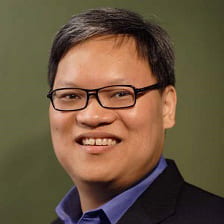
headshot of Victor Shih

Victor C. Shih is Ho Miu Lam Chair Associate Professor in China and Pacific Relations at the School of Global Policy and Strategy at the University of California, San Diego specializing in China. He is the author of a book published by the Cambridge University Press entitled Factions and Finance in China: Elite Conflict and Inflation and also a new book Coalitions of the Weak: Elite Politics in China from Mao’s Stratagem to the Rise of Xi. He is also editor of Economic Shocks and Authoritarian Stability: Duration, Institutions and Financial Conditions, published by the University of Michigan Press. This book uses comparative cases to explore how authoritarian regimes respond to economic crises. He is further the author of numerous articles appearing in academic and business journals, including The American Political Science Review, Comparative Political Studies, Journal of Politics, and The Wall Street Journal. Shih served as principal in The Carlyle Group’s global market strategy group and continues to advise the financial community on China related issues. Shih graduated summa cum laude at the George Washington University and received his Ph.D. in government from Harvard University. He is currently working on several papers using quantitative data to analyze the Chinese political elite and China’s defense industry.

Moderator

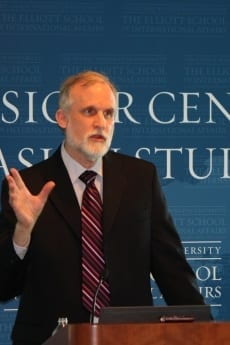
Bruce Dickson speaking at a podium during an event

Bruce Dickson received his B.A. in political science and English literature, his M.A. in Chinese Studies, and his Ph.D. in political science from the University of Michigan. He joined the faculty of The George Washington University and the Elliott School in 1993. Professor Dickson’s research and teaching focus on political dynamics in China, especially the adaptability of the Chinese Communist Party and the regime it governs. In addition to courses on China, he also teaches on comparative politics and authoritarianism. His current research examines the political consequences of economic reform in China, the Chinese Communist Party’s evolving strategy for survival, and the changing relationship between state and society. His research has been supported by the National Science Foundation, the Smith Richardson Foundation, the US Institute of Peace, and the Woodrow Wilson International Center for Scholars.

Sigur Center for Asian Studies Logo
logo of the Elliott School of International Affairs at GW

8/17-8/18/2022 | Culminating Conference

event banner for the culminating conference for the Rising Powers Initiative

Regional Architecture for Partnerships in the Indo-Pacific: The Role of the US & India in Security and the Commons

Hosted by the Department of International Studies, Political Science and History at CHRIST University, Co-sponsored by the Rising Powers Initiative, Sigur Center for Asian Studies, Elliott School of International Affairs at the George Washington University

Wednesday, August 17, 2022

6:30 – 8:00 PM IST | 9:00 – 10:30 AM EDT

Thursday, August 18, 2022

6:30 – 8:00 PM IST | 9:00 – 10:30 AM EDT

Webex Event

This two-day conference is being held in partnership with the George Washington University, the US Department of State, and CHRIST (Deemed to be University).

Conference Program

Day 1: Wednesday, August 17, 2022 | Regional Architecture for Security in the Indo-Pacific

6:30 – 6:45 PM IST | 9:00 – 9:15 AM EDT — Opening Remarks

Welcome: N. Manoharan, CHRIST (Deemed to be University)

Inaugural Address: Alyssa Ayres, Elliott School of International Affairs, George Washington University

Introduction: Deepa M. Ollapally, Rising Powers Initiative and Research Professor of International Affairs, Elliott School of International Affairs, George Washington University


6:45 – 7:30 PM IST | 9:15 – 10:00 AM EDT — Panel One

Jeff Smith, Heritage Foundation

Lisa Curtis, Center for New American Security (CNAS)

Adml (Retd.) Arun Prakash, Former Chief of Naval Staff, India

7:30 – 8:00 PM IST | 10:00 – 10:30 AM EDT — Open Discussion


Day 2: Thursday, August 18, 2022 | Regional Architecture for the Commons in the Indo-Pacific

6:30 – 6:35 PM IST | 9:00 – 9:05 AM EDT — Opening Remarks

Introduction: Deepa M. Ollapally, Rising Powers Initiative and Research Professor of International Affairs, Elliott School of International Affairs, George Washington University


6:35 – 7:20 PM IST | 9:05 – 9:50 AM EDT — Panel Two

Jason Donofrio, The Ocean Foundation

Cornell Overfield, Center for Naval Analyses (CNA)

Abhijit Singh, Observer Research Foundation (ORF)


7:20 – 7:50 PM IST | 9:50 – 10:20 AM EDT — Open Discussion


7:50 – 8:00 PM IST | 10:20 – 10:30 AM EDT — Closing Remarks

Valedictory Address: Joseph C.C., Department of International Studies, Political Science and History, CHRIST (Deemed to be University)

Conclusion: Deepa M. Ollapally, Rising Powers Initiative and Research Professor of International Affairs, Elliott School of International Affairs, George Washington University

Vote of Thanks: Madhumati Deshpande, CHRIST (Deemed to be University)

Speaker Bios

Alyssa Ayres, Dean of the Elliott School

Alyssa Ayres was appointed dean of the Elliott School of International Affairs and professor of history and international affairs at George Washington University effective February 1, 2021. Ayres is a foreign policy practitioner and award-winning author with senior experience in the government, nonprofit, and private sectors. From 2013 to 2021, she was senior fellow for India, Pakistan, and South Asia at the Council on Foreign Relations (CFR), where she remains an adjunct senior fellow. Ayres has been awarded numerous fellowships and has received four group or individual Superior Honor Awards for her work at the State Department. She speaks Hindi and Urdu, and in the mid-1990s worked as an interpreter for the International Committee of the Red Cross. She received an AB from Harvard College and an MA and PhD from the University of Chicago. She is a life member of the Council on Foreign Relations, a member of the Halifax International Security Forum’s agenda working group, and a member of the Women’s Foreign Policy Group board of directors.

headshot of Dr. Fr. Joseph CC with white background

Dr. Fr. Joseph C. C. (@ChristBangalore) is Pro-Vice Chancellor and Professor, Department of International Studies and History, CHRIST (Deemed to be University). He is also Director of Student Affairs, at the University. A noted expert on maritime history, Fr. Jose is a member of both the Indian History Congress and South Indian History Congress. He has authored or co-authored four books and numerous peer-reviewed articles on wide-ranging issues and presented papers at both national and international conferences. He recently edited a book, Revisiting a Treasure Trove: Perspectives on the Collection at St Kuriakose Elias Chavara Archives and Research Centre. One of his latest publications is “Organization Culture and Work Values of Global Firms: Merging Eastern and Western Perspectives.”

His areas of interest are Maritime Studies, Organizational Culture and Work Values.

Apart from history, Dr. Fr. Jose is well versed in theology and philosophy. He is a passionate teacher and an able administrator.

He holds a PhD in History from Pondicherry University, India.

headshot of Lisa Curtis

Lisa Curtis is a Senior Fellow and Director of the Indo-Pacific Security Program at CNAS. She is a foreign policy and national security expert with over 20 years of service in the U.S. government, including at the National Security Council (NSC), CIA, State Department, and Capitol Hill. Her work has centered on U.S. policy toward the Indo-Pacific and South Asia, with a particular focus on U.S.-India strategic relations; Quad (United States, Australia, India, and Japan) cooperation; counterterrorism strategy in South and Central Asia; and China’s role in the region.

Headshot of Madhumati Deshpande with white background

Madhumati Deshpande (@ChristBangalore) is the Department Coordinator and Assistant Professor in the Department of International Studies, Political Science and History, CHRIST (Deemed to be University), Bangalore.

Her areas of research interest include international relations and foreign policy analysis, Indian foreign policy, US foreign policy and political theory. Deshpande has previously been a graduate assistant and election observer in the Jimmy Carter Center in Atlanta, Georgia and observed elections in East Timor and Guyana. She also held the position of editor for Springer Reference works. She has published several articles in various peer reviewed journals and three book chapters.

She completed her Masters in Political Science from Karnataka University, Dharwad and holds a PhD from the School of International Studies, Jawaharlal Nehru University, New Delhi.

headshot of Jason Donofrio

Jason Donofrio is the External Relations Officer at the Ocean Foundation. He is a Phoenix native with a decade of experience fundraising, organizing and coordinating public campaigns. After graduating college Jason went on to work for public advocacy and environmental organizations in Arizona, Maryland, Vermont and Colorado, leading teams as large as sixty on crucial campaigns affecting environmental conservation, civic engagement, consumer protection and higher education affordability. As a Director of various development departments, he has helped oversee multi-million dollar fundraising campaigns, develop and advocate public policy, and has experience cultivating donors to support organizational programs.

headshot of N. Manoharan with white background

N. Manoharan (@ChristBangalore) is Director, Centre for East Asian Studies, CHRIST (Deemed to be University), Bengaluru. He earlier served at the National Security Council Secretariat (NSCS), Prime Minister’s Office, and Ministry of Defence, New Delhi. He was South Asia Visiting Fellow at the East-West Center Washington and is a recipient of Mahbub-ul Haq international award for research.

His areas of interest include internal security, terrorism, Sri Lanka, Maldives, human rights, ethnic conflicts, multiculturalism, security sector reforms and conflict resolution.

His main books include: Developing Democracies, Counter-terror Laws and Security: Lessons from India and Sri Lanka; ‘Security Deficit’: A Comprehensive Internal Security Strategy for India; India’s War on Terror; SAARC: Towards Greater Connectivity; Ethnic Violence and Human Rights in Sri Lanka. Manoharan’s forthcoming book is on Federal Aspects of Foreign Policy: The Role of Tamil Nadu Fishermen Issue in India-Sri Lanka Relations. He writes regularly for leading newspapers, websites and reputed peer-reviewed international journals.

Manoharan has a PhD from the School of International Studies, Jawaharlal Nehru University.

Deepa Ollapally, pictured in professional attire

Deepa M. Ollapally (@DeepaOllapally) is Research Professor of International Affairs and the Associate Director of the Sigur Center for Asian Studies at the Elliott School of International Affairs, The George Washington University. She directs the Rising Powers Initiative which tracks foreign policy debates in major powers of Asia and Eurasia.

She is a specialist on Indian foreign policy, India-China relations, Indo-Pacific regional and maritime security, and comparative foreign policy outlooks of rising powers and the rise of nationalism in foreign policy. Ollapally is the author of five books including Worldviews of Aspiring Powers (Oxford, 2012). Her current research focuses on maritime and regional security in the Indo-Pacific and is writing a book on Big Power Competition for Influence in the Indo-Pacific. She has won grants from Carnegie Corporation, MacArthur Foundation, Smith Richardson Foundation, Rockefeller Foundation and Asia Foundation for work related to India and Asia.

Ollapally has held senior positions in the policy world including US Institute of Peace, and National Institute of Advanced Studies, Bangalore, India. She holds a Ph.D. in Political Science from Columbia University.

headshot of Cornell Overfield

Cornell Overfield is Associate Research Analyst at the Center for Naval Analyses. He is an expert in transatlantic relations and international relations theory. At CNA, he has worked on projects covering Arctic security and economic activity, improved engagement with allies and partners, and data analytics. His work and writing on US national security strategy, Arctic affairs, and international maritime law have appeared in Foreign Policy, The Economist, Politico, Lawfare, and academic journals. Overfield has an MA in European and Russian studies from Yale and a BA in history and international relations from the University of Pennsylvania.

headshot of Arun Prakash

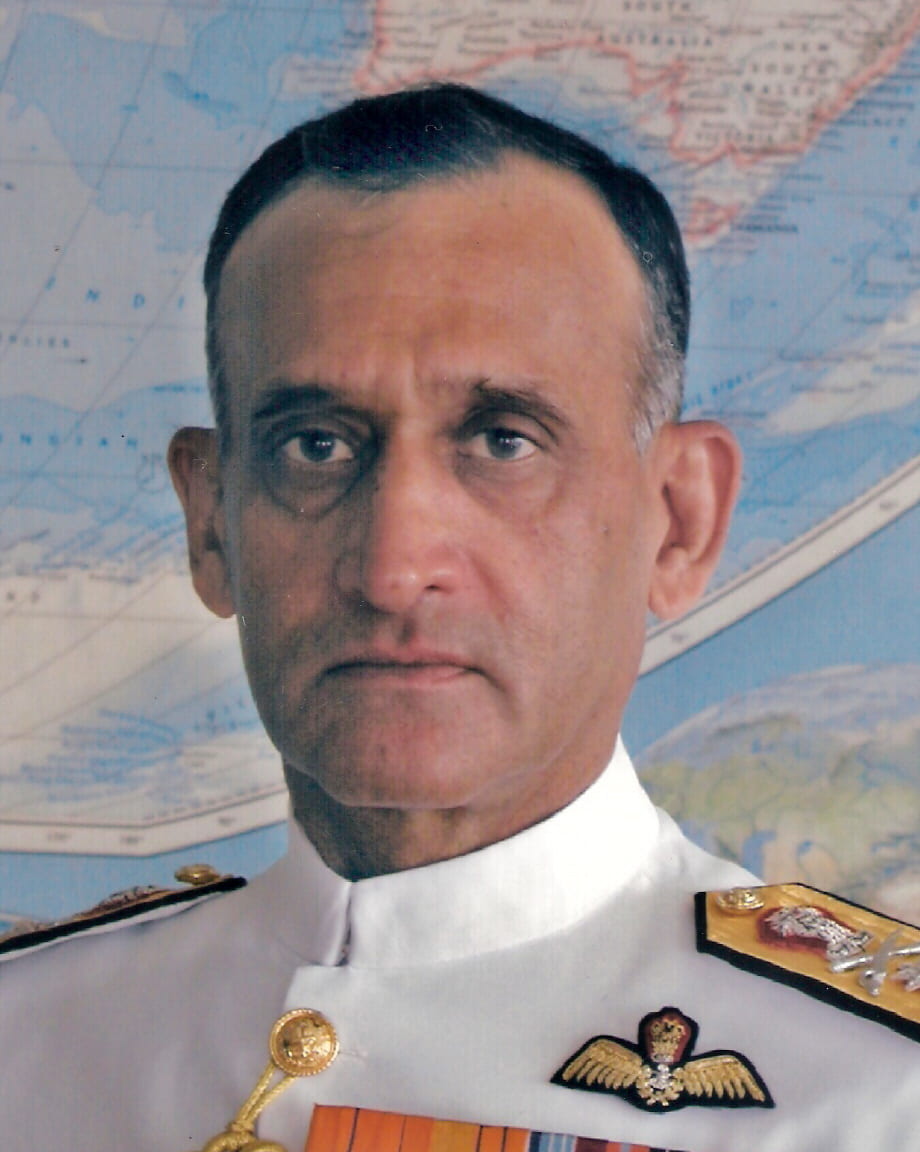
Admiral Arun Prakash, PVSM, AVSM, VrC, VSM is a former Flag Officer of the Indian Navy. He served as the Chief of the Naval Staff from 31 July 2004 to 31 October 2006 and as the Chairman of the Chiefs of Staff Committee from 31 January 2005 to 31 October 2006. He played an important role in developing a vision for India’s maritime strategy. He served on the 1999 Arun Singh Task Force as well as the Naresh Chandra Committee on national security reforms.

headshot of Abhijit Singh

A former naval officer, Abhijit Singh, Senior Fellow, heads the Maritime Policy Initiative at ORF. A maritime professional with specialist and command experience in front-line Indian naval ships, he has been involved the writing of India’s maritime strategy (2007). He is a keen commentator on maritime matters and has written extensively on security and governance issues in the Indian Ocean and Pacific littorals. His articles and commentaries have been published in the National Bureau for Asian Research (NBR), the Lowy Interpreter, the World Politics Review, the Diplomat and CSIS Pacific Forum.

headshot of Jeff Smith

Jeff M. Smith is a research fellow in Heritage’s Asian Studies Center, focusing on South Asia.

He is the author/editor of “Asia’s Quest for Balance: China’s Rise and Balancing in the Indo-Pacific” (2018), and of “Cold Peace: China-India Rivalry in the 21st Century” (2014). He has contributed to multiple books on Asian Security issues, testified as an expert witness before multiple congressional committees, served in an advisory role for several presidential campaigns, and regularly briefs officials in the executive and legislative branches on matters of Asian security.

His writing on Asian security issues has appeared in Foreign Affairs, The Wall Street Journal, Foreign Policy, the Harvard International Review, Jane’s Intelligence Review, The National Interest, and The Diplomat, among others. In recent years his expert commentary has been featured by The Economist, The New York Times, FOX News, The Washington Times, Reuters, and the BBC, among others. Smith formerly served as the Director of Asian Security Programs at the American Foreign Policy Council.

logo of the rising powers initiative
logo of the Sigur Center for Asian Studies
logo of the Elliott School of International Affairs at GW
logo of CHRIST deemed to be university in bangalore india

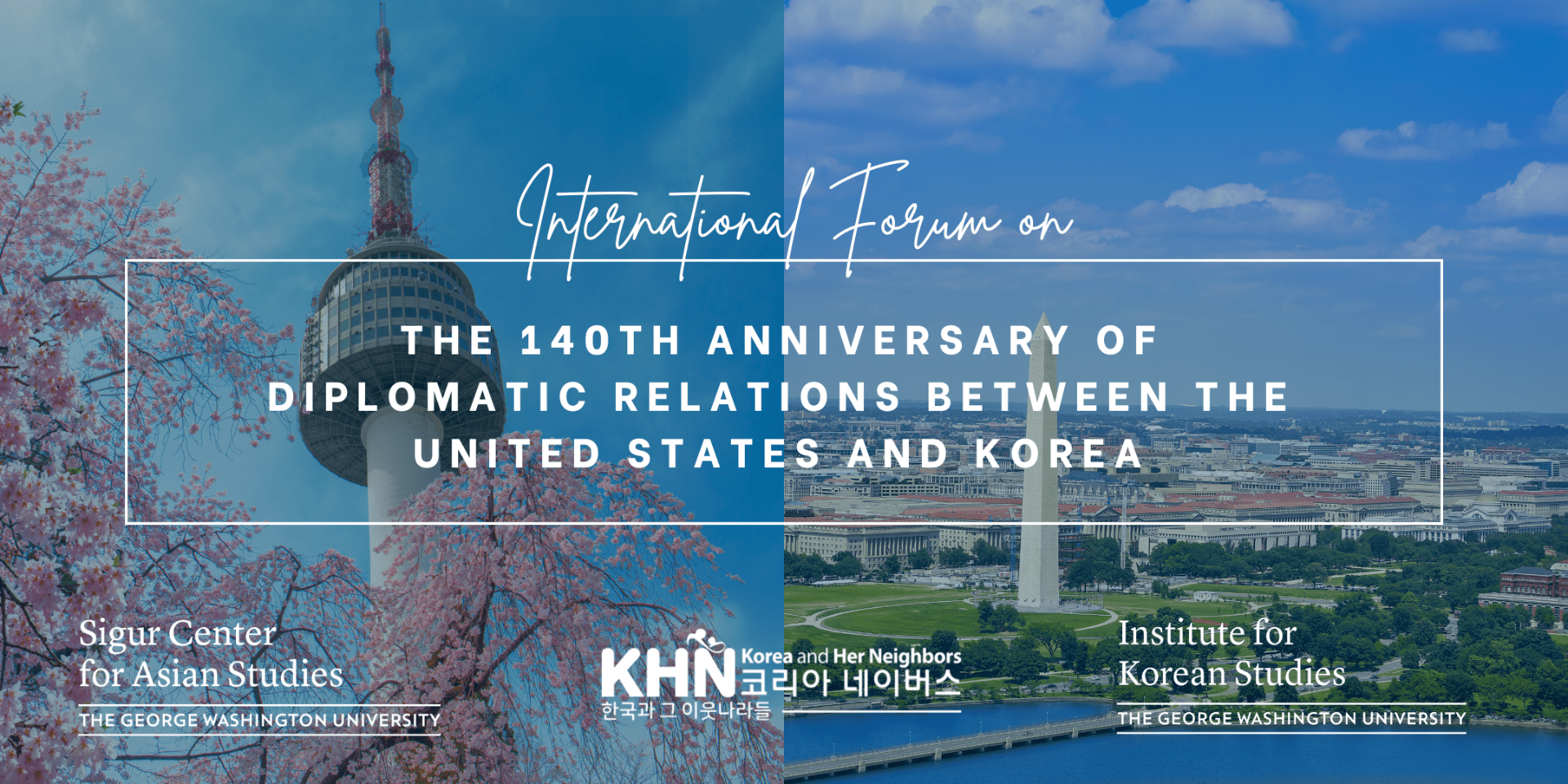
7/29/2022 | International Forum on the 140th Anniversary of US-ROK Relations

event banner for conference on the 140th anniversary of US-Korea relations

The Sigur Center for Asian Studies, KHN (Korea and Her Neighbors), and the GW Institute for Korean Studies

Presents

International Forum on the 140th Anniversary of Diplomatic Relations Between the United States and Korea

Friday, July 29th, 2022

9:20 AM – 4:00 PM EDT

State Room, 7th Floor

1957 E ST NW

In-Person ONLY

NOTE: All non-GW affiliated attendees attending the event IN-PERSON must comply with GW’s COVID-19 policy in order to attend this event, including showing proof of vaccination and masking indoors. For frequently asked questions, please refer to GW’s guidance

About

Please join us for an in person, international conference on 140 Years of US-Korean Relations. The conference is co-sponsored by KHN (Korea and Her Neighbors), the Sigur Center for Asian Studies, and the GW Institute for Korean Studies. The full program is below. The event will feature prominent policymakers and scholars from both the United States and South Korea. Registration is limited to 50 people.

Registration

The event is free and open to the public. If you have already registered but will no longer be able to attend, please cancel your registration.

Conference Schedule

09:20 AM Arrival and Registration
09:30 AM – 09:40 AM Opening Ceremony

Moderator: Dr. Si-young Choi

Dr. Lee Jeong-ik, Chairman of the Board, KHN

Dr. Alyssa Ayres, Dean, Elliott School of International Affairs, George Washington University

09:40 AM – 10:40 AM Keynote Speeches

Moderator: Dr. Si-young Choi 

H.E. Mr. Yun Byung-se, Former Minister of Foreign Affairs, ROK | Vision, Challenges and Agenda of the ROK-US Alliance for a New Era of Tectonic  Transformation

Dr. Robert Gallucci, Distinguished Professor in the Practice of Diplomacy at Walsh School of Foreign Service, Georgetown University, former U.S.  Deputy Secretary of State, the first special envoy to North Korea on the North Korean nuclear issue in 1994 | The ROK-US alliance in the broader context of both countries’ interests in Northeast Asia

10:40 AM – 11:55 AM Session I

Moderator: Dr. Choi Myung Deok, Chairman of the KHN

Prof. Ku Chun Seo, Hanil University | An Appraisal of the American Mission in Korea at the End of Yi Dynasty with Reference to the Social Transformation: Retrospect and Prospect  

Prof. Lee Wan Bom, The Academy of Korean Studies | Retrospect and Prospect on the 140th Anniversary of Korea-U.S. Diplomatic Relations: From Dependency to Interdependence  

Prof. Song Seok Won, Kyung Hee University | Korean-American: Life in the United States and its Relation with Motherland

11:55 AM – 01:00 PM Lunch
01:00 PM – 02:15 PM Session II 

Moderator: Dr. Choi Myung Deok (Chairman of the KHN)

Prof. Kim Seung Wook, Joongang University | Economic Development of Korea and the Role of U.S.A. 

Prof. Gregg A. Brazinsky, George Washington University | The US role in South Korea’s Economic Development

Prof. Chung Bum-Jin, Kyunghee University | The Role of President Syngman Rhee in Korean Atomic Energy and Future Direction  for Cooperation 

02:15 PM – 02:25 PM Break
02:25 PM – 04:05 PM  Session III

Moderator: Dr. Choi Myung Deok, Chairman of the KHN

Dr. Darcie Draudt, Post-Doctoral Fellow, Institute for Korean Studies, George  Washington University | Diplomacy and Domestic Politics in the US-ROK Alliance: Patterns and Prospects  

Prof. Cho Yun Young, Joongang University | US International Strategy and Northeast Asian Policy: Focusing on the Korean Peninsula 

Dr. Sharon Squassoni, Research Professor of the Institute for International Science and Technology Policy, Elliott School of International Affairs, George Washington University  | Nuclear Conundra in US-Korean Relations 

Prof. Lee Kyu Young, Sogang University | Diagnosis and Prospects of the Security Environment on the Korean Peninsula: Lessons from Europe’s Security Environment

04:05 PM – 04:10 PM Closing Session

Moderator: Dr. Namgoong Tae-joon

Commemorative photography  | Closing Declaration

Sigur Center for Asian Studies Logo
logo of Korea and Her Neighbors
GW Institute for Korean Studies official banner with transparent background

Associate Director Deepa Ollapally Interviewed for Voice of America

On July 13th, 2022, Associate Director of the Sigur Center and Director of the Rising Powers Initiative, Professor Deepa Ollapally, interviewed for Voice of America for an article titled “美中在东南亚较劲,专家:美渐占上风但拉锯战将持续 [US-China Competition in Southeast Asia, Expert: US gradually taking the lead but close contest to continue]“.

美中在东南亚较劲,专家:美渐占上风但拉锯战将持续

13 JULY 2022

by 锺辰芳

华盛顿 —
在与美国国务卿布林肯举行过双边会谈后,中国外长王毅接着对东盟发出警告说,要远离地缘政治算计,“不要当大国博弈的棋子”。专家说,如果要把美中两国竞争看成地缘政治棋局,那么美国在这盘棋局中正在迎头赶上,因为美国开始为这个地区提供中国之外的替代选项,不过东南亚国家并不愿在美中之间被迫做出选择,也不愿见到美中竞争白热化导致“后院发生热战”,因此美中拉锯战在可预见将来将持续下去。

王毅星期一(7月11日)在雅加达东盟秘书处发表演讲时说,包括东盟在内,不少地区国家受到“选边站队”的压力,地区战略环境面临被政治需要重塑的风险,东盟各国有必要“远离地缘政治的算计,远离丛林法则的陷阱,不当大国博弈的棋子,不受霸凌霸道的胁迫”。

王毅上周六才在印尼的20国外长会后与美国国务卿布林肯举行了5个多小时的双边会谈,两人都希望在美中关系紧张之际增加沟通机会,为两国关系加装“护栏”,同时也为接下来美中元首的谈话进行铺垫。

美中外长各持立场

王毅在会中对布林肯提出“要求美纠正错误对华政策和言行”、“中方关切的重点个案”、“中方重点关切的涉华法案”,以及“中美8个领域合作”等四份清单,希望美方“切实认真对待”。

布林肯在当天一场记者会上表示,他和王毅除了谈到美中可以在气候危机、粮食安全、全球卫生等领域合作外,也坦率地讨论了两国有重大分歧的议题,包括美国对北京在台海日益挑衅的言行、对香港、西藏和新疆打压自由人权措施的关切。

对于美中都在寻求扩大对东南亚地区的影响力、双方的外交较劲不断升温,分析人士说,当地国家都不希望见到这种竞争日益白热化,因为那将使他们处于非常困难的地位。

乔治华盛顿大学西格尔亚洲研究中心副主任迪帕·奥拉帕利(Deepa Ollapally)在接受美国之音采访时说,由于中国的“一带一路”倡议为地区注入庞大资金,再加上美国退出“跨太平洋伙伴关系协定”(TPP)以及以中国为首的“区域全面伙伴经济关系”(RCEP)包含了许多地区国家,但美国并不在其中,过去多年来美国在与中国的经济竞争上一直都是处于落后的局面。

美中较劲针锋相对

不过她说,在拜登政府启动超越“四方安全对话”(QUAD)机制的“印太经济框架”(IPEF)并宣布将投入庞大资金后,美国也开始在地区与中国展开经济上针锋相对的较劲。

“无论那些金钱是否会全部投入,或他们是否会募集到所有资金并将它落实,那是另一个问题。不过我认为信息是非常清楚的。所以我认为布林肯在这个局面中处于上风。比他以前更为有力。另外一点是我认为中国现在正处于守势。因为大多数在地区的伙伴和盟友,包括东南亚和更广泛的亚洲,对于中国的利益不断在增加都感到紧张。所以我认为中国现在正感到一些压力。”

奥拉帕利说,王毅在20国外长会后接着出访东南亚5个国家,其中还包括缅甸,这是自去年缅甸因军事政变遭到西方制裁后到访级别最高的中国官员,所以王毅的访问或许意味着中国想要将缅甸和其他任何可能的国家拉到其阵营中而不要失去任何一个朋友,因此在当前缅甸受到孤立时中国要对其提供援助,几年前美国和其他西方国家也对缅甸非常支持,但现在情势已经有了变化。

拉锯战美渐占上风

她说,类似缅甸这种美中之间的拉锯战今后人们还会不断见到,不过她认为美国的地位应该会越来越强,而中国则是越来越弱。

针对王毅告诉东盟国家不要当“大国博弈的棋子”,奥拉帕利说,东盟国家已经在与美中两国的关系中保持的非常平衡,它们在经济上与中国有许多联系。

“不过我不确定他们会尤其喜欢听一个像中国一样的大国来告诉他们,不要做这个,不要做那个,小心这里,小心这个国家。因为我认为,你知道,他们是非常自豪的民族主义国家。我认为公开的这么说显示中国认为东南亚国家在往美国阵营靠近的路上走得太远。这几乎像是一个警告。我不认为这种说法会得到好的反应,因为‘不要做一个棋子’听起来好像是认为东南亚国家不知道应该如何追求自己的外交政策利益。”

中国忧美组建联盟

德国马歇尔基金会亚洲项目主任葛来仪(Bonnie Glaser)在接受美国之音采访时说,美中竞争日益激烈是因为双方都试图争取区域国家的民心,中国外长王毅在出访南太平洋国家后接着又到东南亚国家访问,显示中国对美国在印太组建包括“奥英美三边安全协议”(AUKUS) 和“四方安全对话”(QUAD)的联盟机制越来越担心。

“这些都是中国会担忧的机制。我认为他们也担心印太经济框架有潜在可能提供在中国以外的替代选项。中国的目标,当然是成为区域最有支配力量的国家。他们希望见到美国的影响力减弱。很显然,现在的趋势不一定是他们想要见到的方向。所以我认为他们正在谋求加强他们与这些国家的关系,防止它们滑向美国。”

北京不仅担忧美国提供区域经济选项,中国国家主席习近平在今年博鳌论坛上提出的“全球安全倡议”还进一步宣示,中国不仅可以为全球提供发展援助,今后还将提供安全领域的合作,最近中国与所罗门群岛签署的安全协议,正是美中在全球安全竞争上正在升级的例子。

北京欲顶回美国安全领域角色

葛来仪说,“全球安全倡议”还在初始阶段,不过中国对美国传统上被视为是一个主要安全提供者越来越担忧,现在决定要对此做出反制。

她说:“过去中国被许多国家视为是它们的经济伙伴,但它们把美国视为安全伙伴。我认为中国担忧这个趋势将继续增长,担心它们将在安全上依赖美国。所以我认为中国已经决定,是时候顶回美国作为印太地区主要安全参与者及提供者的地位。我认为那是促成‘全球安全倡议’背后的因素。”

区域国家不要选边

至于未来美中竞争态势会如何发展,葛来仪说,这是一个复杂的动态过程,但大体而言,区域国家都不愿意被迫选边。

“它们也不愿见到它们后院发生热战。它们担心美中可能脱钩,或是美国施压要它们不要与中国做什么特定的事,或是中国施压要它们不要与美国做什么。这会使许多国家处于非常尴尬的处境。那些国家想要利用美中竞争极大化它们可操作的空间,而不是减小它们可操作的空间。”

乔治华盛顿大学的奥拉帕利也说,没有国家想要在美中大国竞争中当一个棋子,也没有国家想要当别人的典当品,美中竞争的白热化不会受到这些国家的欢迎,因为这会让它们处于非常困难的地位。

她说,过去20年来东南亚国家在经济上与中国接近,在战略上与美国接近,现在美中竞争日益激烈是一个新发展,这些国家也担忧它们可能会被迫在美中之间选边。

“我希望美国能够理解它们所处的地位,不要迫使它们必须做出选择。那会是美国做出的错误外交举措。”

区域国家保持平衡对美中有利

奥拉帕利说,她希望中国也一样不要迫使东南亚国家选边站,尽管美中都对区域做出表态,不过她认为这些国家在可预见的未来还是可能和过去一样,在经济上与中国要比与美国更为接近,但是在政治上和战略上他们会站在美国这一边。事实上,她认为从美中两国的角度来说,或许这些国家采取中立或平衡立场还是对他们比较有利,至少到目前为止美国并没有要求东南亚国家在美中之间做出选择。

布林肯上周六在巴厘岛的一场记者会上表示,在印太地区,美国并不是要各国做出选择,美国是在例如投资、基础设施和发展援助等领域提供它们一个选择。“在一个程度上,其实有很大空间让所有人去做这件事,因为需求非常巨大,尤其是在基础设施方面。

不过他说,美国要做到是确保所有参与者都能朝最高目标准标竞赛,而不是比赛往下到最低标准,例如美国提出的“印太经济框架”就是要确保美国对地区国家所做的投资能够以最高标准来进行,例如在投资基础设施时美国不会让那些国家承担过多债务,而是在推动对劳工、对环境的保障,以及不会助长腐败等等。

“我的希望是,如果中国在持续参与这些努力时能够争取做得最好,提升它的格局,那实际上对各方都好。”

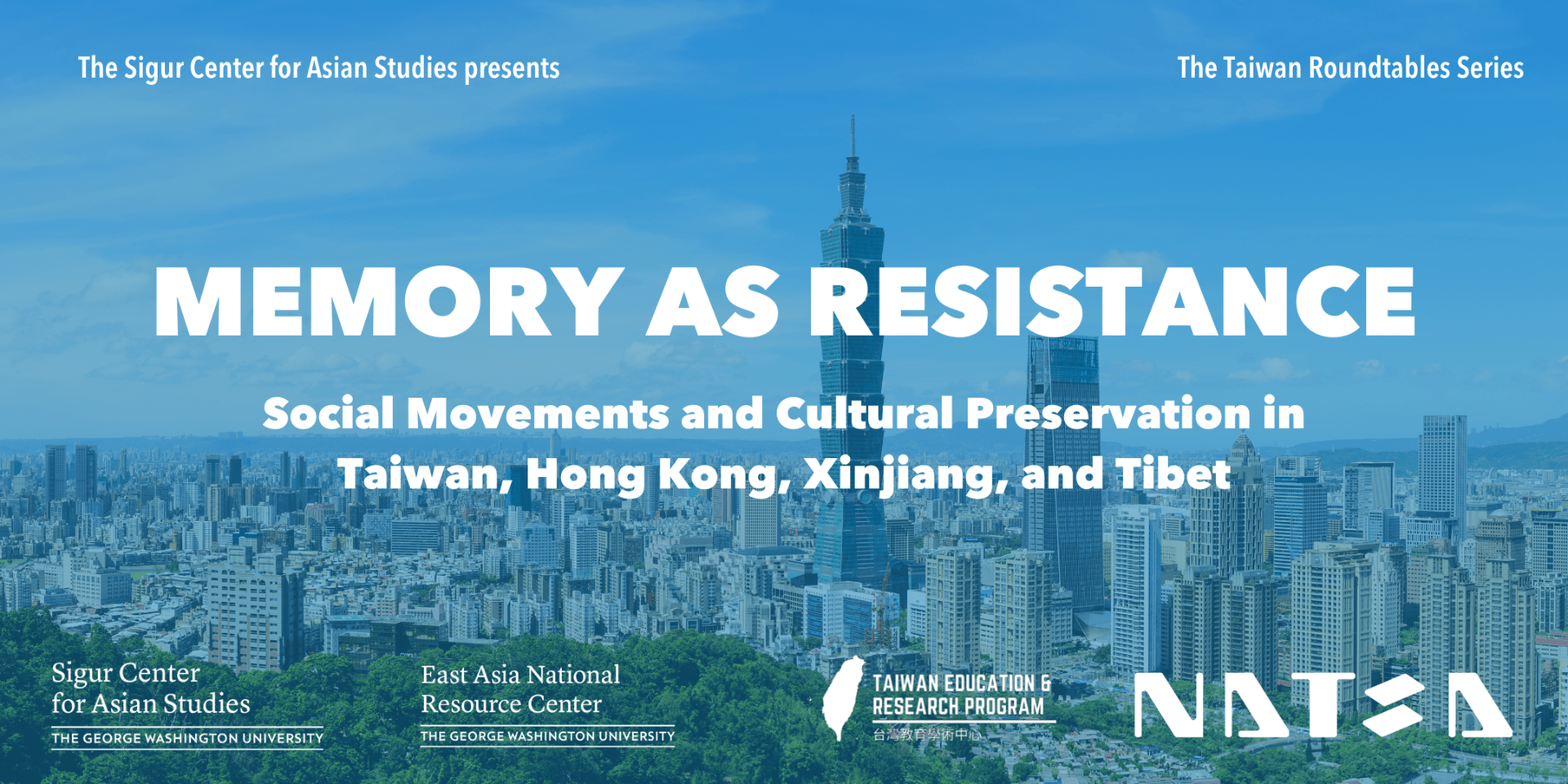
7/10/2022 | Memory as Resistance: Social Movements and Cultural Preservation in Taiwan, Hong Kong, Xinjiang, and Tibet

event banner for Taiwan roundtable on July 10, 2022

Sunday, July 10, 2022

10:45  AM – 1:00 PM EDT

Lindner Commons (RM 602)

Elliott School of International Affairs

1957 E ST NW, Washington, DC 20052

AND Online

“The struggle of man against power is the struggle of memory against forgetting.” – Milan Kundera

Memory has always been an essential form of resistance against power and hegemony. Such was the case in Taiwan during its decades-spanning period of authoritarian rule. Since democratization in the 1990s, various social movements in Taiwanese society have made considerable efforts to tell the unspoken or erased stories forged under authoritarian rule as part of a larger unpacking of historical trauma and shaping of Taiwanese identity. On the other side of the Strait, political dissidents and ethnic minorities inside of the People’s Republic of China continue to struggle to protect and preserve their respective cultures, ways of living, and identities against the backdrop of the Chinese Communist Party’s conception of a unified “Chinese culture.” Specifically for Tibetans, Uyghurs, and Hong Kongers, those who are still in China are facing increased restrictions of political and cultural expression. Maintaining the social memories of their respective political identities, cultural practices, languages, and histories have thus become critically important to the work of diasporic communities.

The Sigur Center and the North American Taiwan Studies Association (NATSA) are co-hosting a hybrid in-person and virtual Roundtable event to examine the different experiences among Taiwanese, Hong Kong, Uyghur, and Tibetan social movements and to foster dialogue between activists and scholars to explore ways of resisting authoritarian suppression through the power of social memories.

This Roundtable is free and open to the public and media. A recording of the Roundtable will be made publicly available in the days following the event. Additional support for this event is provided by GW East Asia National Resource Center and the Taiwan Education & Research Program.


Panelists

Anna Kwok, Strategy and Campaign Director, Hong Kong Democracy Council (HKDC)
Eric Schluessel, Assistant Professor of History and International Affairs, GW
Tsultrim Gyatso, Chinese Liaison Officer, Office of Tibet

Moderator

June Lin, Local Director of NATSA 2022 and Senior Program Officer for the Asia Program at Freedom House

Speakers

headshot of Anna Kwok

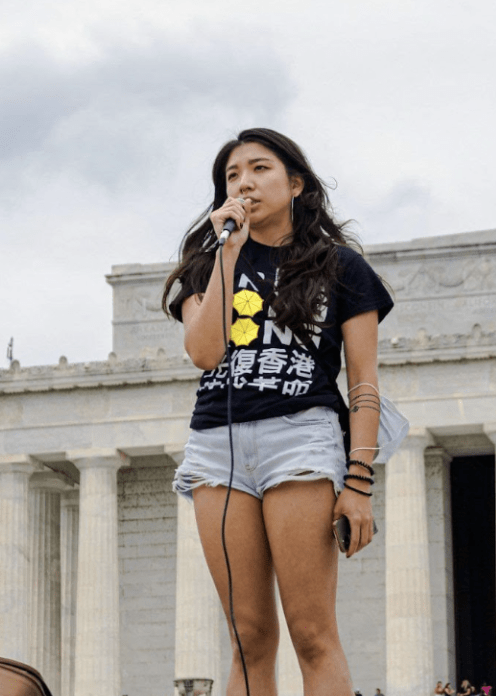
Anna Kwok is the Strategy and Campaign Director at Hong Kong Democracy Council (HKDC), where she develops strategic frameworks and implementation plans for the organization’s key work streams.

During the 2019 movement, Anna has lead and organized several international media campaigns as an innovative force in the decentralized movement.

She received her B.S. of Media, Culture and Communication with a double major in Philosophy at the New York University, where she founded NYU Hong Kong Student Advocacy Group to organize advocacy events around New York City.


Eric Schluessel, Assistant Professor of History

Eric Schluessel is a social historian of China and Central Asia, and his work focuses on Xinjiang (East Turkestan) in the nineteenth and twentieth centuries. Land of Strangers, his first monograph, uses local archival and manuscript sources in Chinese and Chaghatay Turkic to explore the ramifications of a project undertaken in the last decades of the Qing empire to transform Xinjiang’s Turkic-speaking Muslims into Chinese-speaking Confucians.

Schluessel is currently pursuing two research projects: Saints and Sojourners explores the economic history of the Uyghur region from the 1750s through the 1950s as seen from below, through the records of merchants, farmers, and managers of pious endowments. It ties changes at the village level to shifts in the global economy in places as far away as Manchester and Tianjin. Exiled Gods delves into Han Chinese settler culture and religion to illuminate the history of a diasporic community of demobilized soldiers and their descendants that spanned the Qing empire.

headshot of Tsultrim Gyatso

Tsultrim Gyatso was born in Tibet and escaped to India when he was thirteen years old. He immigrated to United States later and received his education in New York City. Tsultrim has been active in promoting youth involvement in the Tibetan Movement and he started engaging in Sino-Tibet dialogue when he was in High School. He is currently working as the Chinese Liaison Officer at the Office of Tibet, DC.


Moderator

June Lin speaking in front of the Lincoln Memorial

June Lin is the 2022 NATSA Local Director and Senior Program Officer at Freedom House for Asia programs. Before her career in D.C., June was a Sunflower Movement activist with professional experience in the non-profit, political and legislative sectors in Taiwan. In 2016, June moved to Washington, D.C., joining the Formosan Association for Public Affairs as a Policy Associate, where she convened Taiwanese Americans’ grassroots efforts in promoting U.S.-Taiwan relationships through congressional advocacy. In 2018, she started her career in the democracy, human rights, and governance sector at Freedom House, focusing on supporting the civil society actors in China, Hong Kong and Taiwan, as well as other diasporic communities subjected to human rights atrocities. In 2020, she joined the International Republican Institute as a North Asia Program Coordinator before returning to Freedom House in 2021.

logo of the Sigur Center for Asian Studies with transparent background
logo of the east asia national resource center
logo of the Taiwan Education and Research Program
logo of the North American Taiwan Studies Assocation