[Gaston Sigur Memorial Lecture] The Future of American Policy Towards Southeast Asia

Tuesday, April 9, 2024

4:30 pm – 6:00 pm

City View Room

Elliott School of International Affairs

1957 E Street NW Washington, D.C. 20052

The lecture will analyze broad trends in the US approach towards Southeast Asia and the drivers of these trends in the context of global and regional developments. These developments include, but are not confined to, US-China strategic competition. It will suggest that American policy towards Southeast Asia and the region’s responses may offer clues towards the development of the broader Indo-Pacific.

Speaker
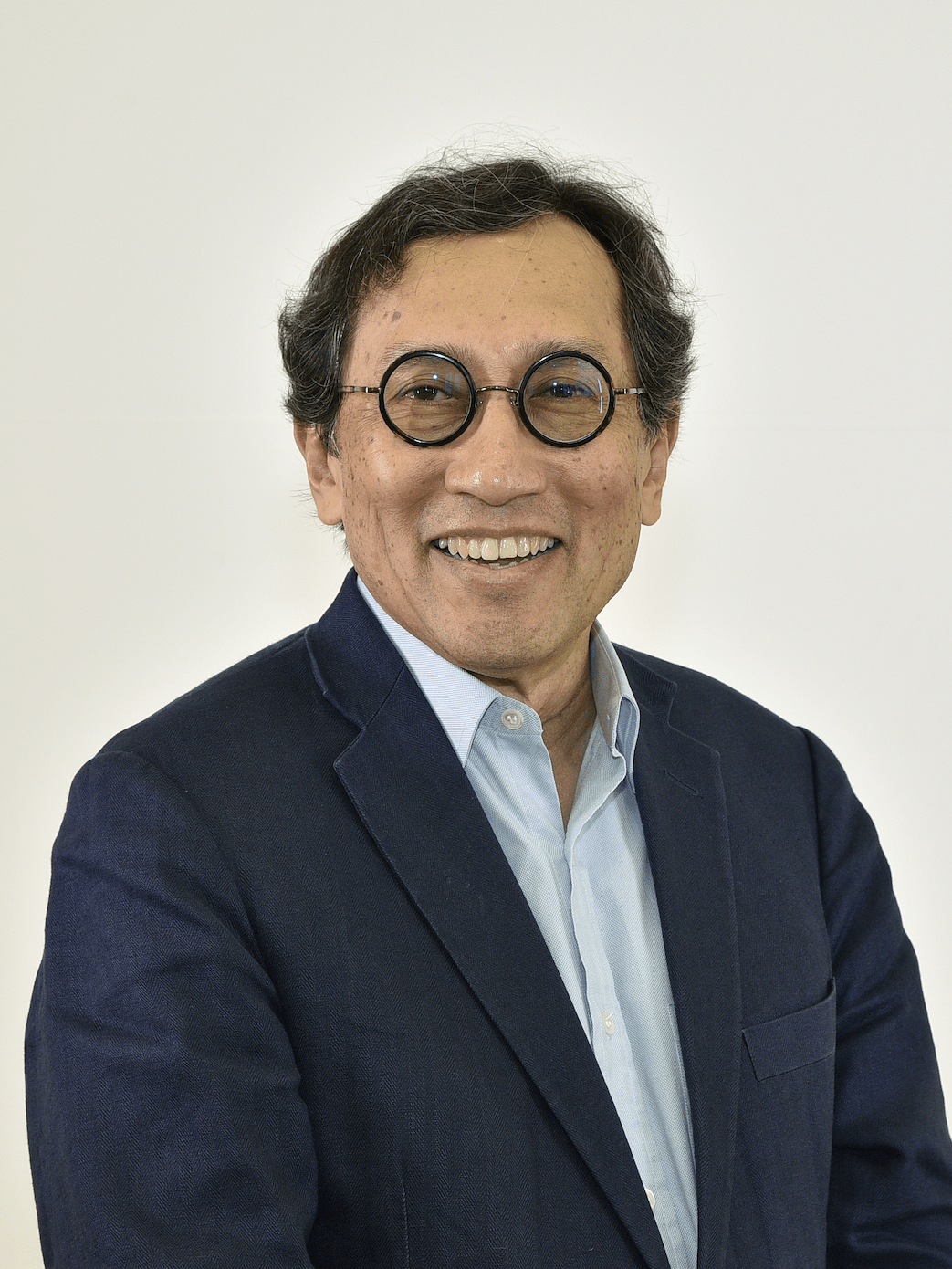
Bilahari Kausikan is a Singaporean academic and retired diplomat. He was Permanent Secretary at the Ministry of Foreign Affairs and the former ambassador to the UN and Russia. Bilahari is currently Chairman of the Middle East Institute at the National University of Singapore.

Bilahari Kausikan joined the civil service in 1981. He was appointed as Singapore’s ambassador to the newly formed Russian Federation in 1994, and subsequently as ambassador to the United Nations (1995 – 1998). Bilahari was appointed Second Permanent Secretary at the Ministry of Foreign Affairs in 2001, and promoted to Permanent Secretary in 2010.

After a 37-year career in Singapore’s foreign relations, Bilahari is known to speak his mind about the issues confronting the country and the wider region. He believes the civil service has become too accommodative and argues that ‘when you are polite, nothing gets done.’ He has called for Singapore to be more muscular in its own delicate diplomatic relations, saying that true neutrality means ‘knowing your own interests, taking positions based on your own interests and not allowing others to define your interests for you by default’. Furthermore, he warns of the danger of passivity in relation to the current US-China split, saying there is no ‘sweet spot’ to keep both the Chinese and Americans ‘happy’.

Bilahari studied political science at the University of Singapore before receiving a scholarship to embark on a PhD in international relations at Columbia University. However, he decided against an academic career and returned to Singapore to join the Foreign Ministry. He is the author of Singapore is Not an Island: Views on Singapore Foreign Policy (2017).


Moderator
A picture of William Wise

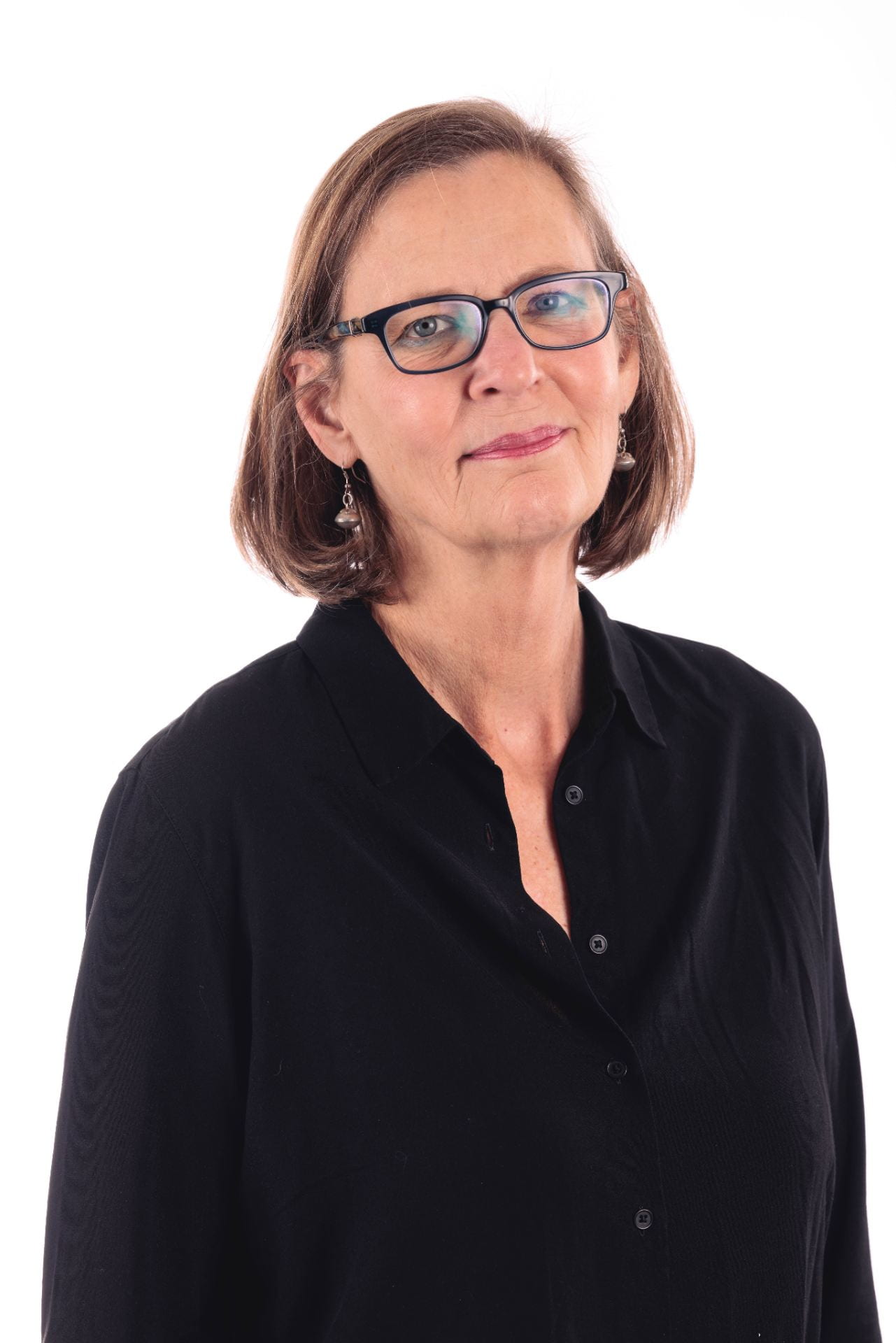
Janet Steele is professor of Media and Public Affairs and International Affairs, and the interim director of the Sigur Center for Asian Studies. She received her Ph.D. in History from the Johns Hopkins University, and focuses on how culture is communicated through the mass media.

Dr. Steele is a frequent visitor to Southeast Asia where she lectures on topics ranging from the role of the press in a democratic society to specialized courses on narrative journalism. Her book, “Wars Within: The Story of Tempo, an Independent Magazine in Soeharto’s Indonesia,” focuses on Tempo magazine and its relationship to the politics and culture of New Order Indonesia. “Mediating Islam, Cosmopolitan Journalisms in Muslim Southeast Asia,” explores the relationship between journalism and Islam in Indonesia and Malaysia.

Awarded two Fulbright teaching and research grants to Indonesia and a third to Serbia, she has served as a State Department speaker-specialist in Indonesia, Malaysia, Vietnam, Cambodia, Brunei, the Philippines, East Timor, Taiwan, Burma, Sudan, Egypt, India, Bangladesh, Jamaica, and Kosovo. The author of numerous articles on journalism theory and practice, her 2014 book, “Email Dari Amerika,” (Email from America), is a collection of newspaper columns written in Indonesian and originally published in the newspaper Surya. Her most recent book, forthcoming in October 2023, is called “Malaysiakini and the power of independent media in Malaysia.”
 

Sigur Center logo with line art of Asian landmarks

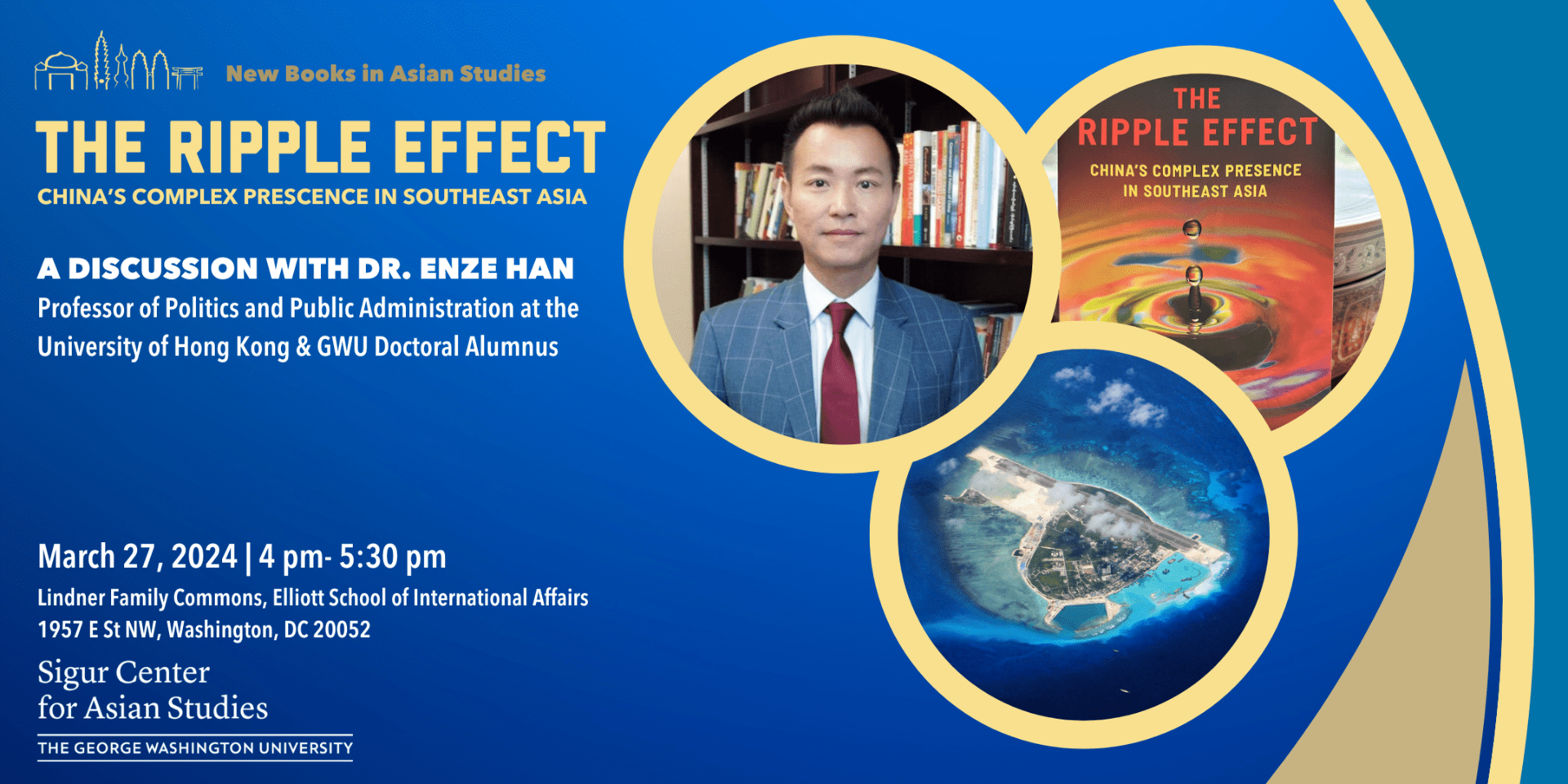
[3/27/24] NBAS: “The Ripple Effect: China’s Complex Presence in Southeast Asia”

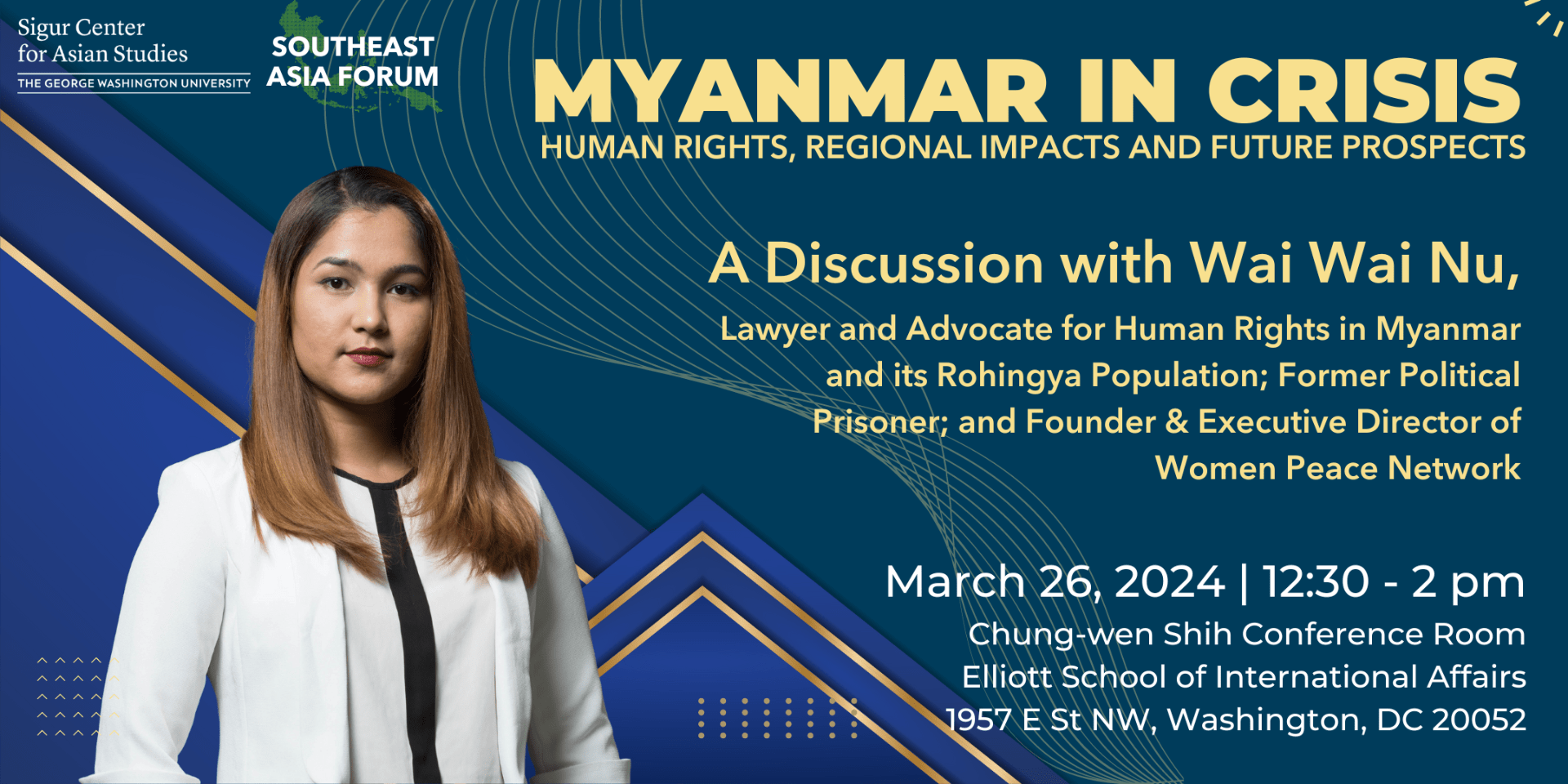
A graphic with the event name, title, and description

Wednesday, March 27, 2024

4:00 pm – 5:30 pm

Lindner Family Commons, Room 602

Elliott School of International Affairs

1957 E Street NW Washington, D.C. 20052

Many studies of China’s relations with and influence on Southeast Asia tend to focus on how Beijing has used its power asymmetry to achieve regional influence. Yet, scholars and pundits often fail to appreciate the complexity of the contemporary Chinese state and society, and just how fragmented, decentralized, and internationalized China is today. In The Ripple Effect, Enze Han argues that a focus on the Chinese state alone is not sufficient for a comprehensive understanding of China’s influence in Southeast Asia. Instead, we must look beyond the Chinese state, to non-state actors from China, such as private businesses and Chinese migrants. These actors affect people’s perception of China in a variety of ways, and they often have wide-ranging as well as long-lasting effects on bilateral relations. Looking beyond the Chinese state’s intentional influence reveals many situations that result in unanticipated changes in Southeast Asia.

Speaker

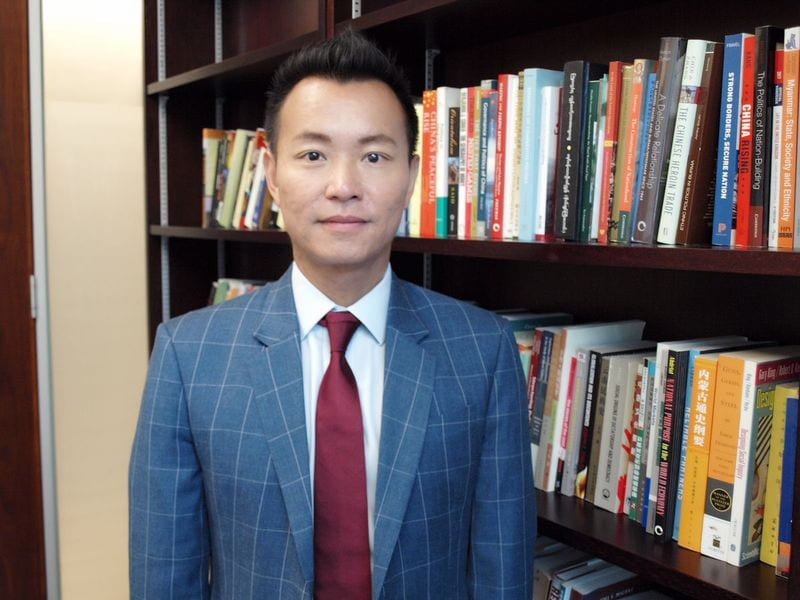
A picture of Enze Han wearing a suit
Enze Han is Associate Professor at the Department of Politics and Public Administration, The University of Hong Kong. His recent publications include Asymmetrical Neighbors: Borderland State Building between China and Southeast Asia (Oxford University Press, 2019), Contestation and Adaptation: The Politics of National Identity in China (Oxford University Press, 2013), and various articles appearing in International Affairs, World Development, The China QuarterlySecurity Studies, Conflict Management and Peace Science, Journal of Ethnic and Migration Studies among many others. During 2015-2016, he was a Friends Founders’ Circle Member of the School of Social Science at the Institute for Advanced Study in Princeton, United States. Dr. Han received his Ph.D. in Political Science from the George Washington University, and he was also a postdoctoral research fellow in the China and the World Program at Princeton University.
 

Moderator

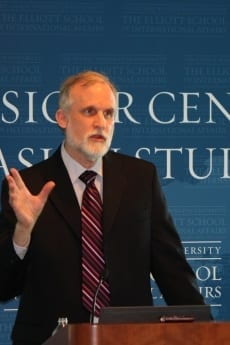
Bruce Dickson speaking at a podium during an event

Professor Bruce Dickson received his B.A. in political science and English literature, his M.A. in Chinese Studies, and his Ph.D. in political science from the University of Michigan. He joined the faculty of The George Washington University and the Elliott School in 1993.

Professor Dickson’s research and teaching focus on political dynamics in China, especially the adaptability of the Chinese Communist Party and the regime it governs. In addition to courses on China, he also teaches on comparative politics and authoritarianism.

His current research examines the political consequences of economic reform in China, the Chinese Communist Party’s evolving strategy for survival, and the changing relationship between state and society. His research has been supported by the National Science Foundation, the Smith Richardson Foundation, the US Institute of Peace, and the Woodrow Wilson International Center for Scholars.


Sigur Center logo with line art of Asian landmarks

[3/26/2024] Myanmar in Crisis: Human Rights, Regional Impacts, and Future Prospects

Tuesday, March 26, 2024

12:30 pm – 2:00 pm

Chung-Wen Shih Asian Studies Conference Room Suite 503

Elliott School of International Affairs

1957 E Street NW Washington, D.C. 20052

Three years after the military seized power from Myanmar’s elected government, a wide range of armed resistance groups continue to challenge the regime’s power.  Many parts of the country are no longer under the regime’s control, while 2.7 million civilians have been displaced from their homes. Neighboring countries are confronting challenges of their own as ever more Myanmar citizens attempt to flee across borders. In conversation with Christina Fink, Wai Wai Nu will discuss the human rights implications of the regime’s and resistance groups’ policies and practices, neighboring countries’ responses, and the prospects for peace and a political settlement.
 
RSVP today! Free lunch will be provided.

Speaker

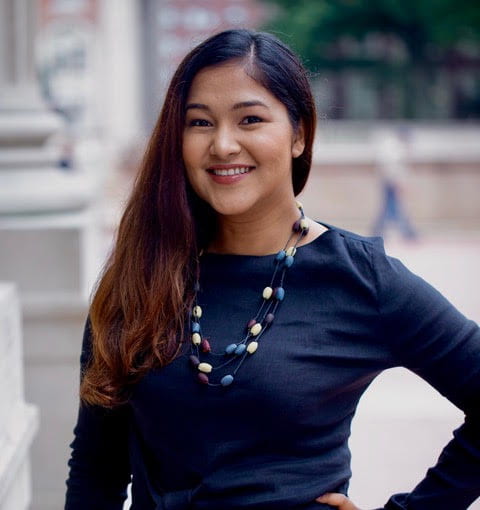
Wai Wai Nu is the founder and Executive Director of the Women’s Peace Network (WPN) and a counselor at the National Unity Consultative Council in Myanmar. She spent seven years as a political prisoner in Burma. Since her release from prison in 2012, she has devoted herself to promoting democracy and human rights. Through WPN, Wai Wai works to build peace and mutual understanding between Myanmar’s ethnic communities and aims to empower and advocate for the rights of marginalized women throughout Myanmar. To engage youth in the peacebuilding process and promote democracy education, Wai Wai founded the Yangon Youth Center, where young people from diverse backgrounds can come together to learn, share, and explore their ideas and promote leadership in social justice, political movements, and peace-building. She organized the My Friend Campaign, which involved hundreds of youth from different communities, that aimed to promote tolerance and reduce discrimination among diverse groups.
 
Wai Wai has been recognized as a Champion of Prevention by the United Nations Office of the Prevention of Genocide and Responsibility to Protect. She is an Obama Foundation Scholar at Columbia University and a Bush Institute Liberty Leadership Scholar. Wai Wai is the recipient of various awards, including the N-Peace Awards (2014), Democracy Courage Tributes, World Movement for Democracy (2015), Hillary Rodham Clinton Award (2018), City of Athens Democracy Award (2021), and International DVF Award (2021). She was also named a Young Global Leader by the World Economic Forum; among “100 Top Women,” by BBC (2014); among 100 World Thinkers, by Foreign Policy Magazine (2015); Next Generation Leader, by Time Magazine (2017); Women of the Year, Financial Times (2018).
 
Wai Wai obtained her Bachelor’s degree in Law from the University of Yangon in Myanmar and her Master’s degree in Law (LLM) from UC Berkeley’s School of Law. In recent years, she was a visiting scholar at UC Berkeley’s Human Rights Center.
 

Discussant

A picture of Christina Fink smiling and looking at the camera

Christina Fink joined the Elliott School in 2011 as an associate professor in the International Development Studies Program. Since 2022, she has also been serving as the Director of the BA and BS in International Affairs Program.

She received her B.A. in International Relations from Stanford University and her M.A. and Ph.D. in Social/Cultural Anthropology from the University of California at Berkeley.

She has combined research, teaching, and international development work throughout her career. Primarily based in mainland Southeast Asia from 1995-2010, her full-time positions and program evaluation consultancies addressed civil society capacity building in Myanmar with particular attention to gender and social inclusion, and political, economic, and social reforms. During this time, she also wrote Living Silence in Burma: Surviving Under Military Rule (Zed Books: 1st edition 2001, 2nd edition 2009) and served as a lecturer and program associate at the International Sustainable Development Studies Institute in Thailand.

In recent years she has contributed to the development of the GenderPro capacity-building and credentialing program run by GW’s Global Women’s Institute in partnership with UNICEF. She also served on the United States Institute of Peace senior study group on Myanmar which produced two reports: China’s Role in Burma’s Internal Conflicts (2018) and Anatomy of the Military Coup and Recommendations for the US Response (2022).Her latest publications have addressed the position of religious and ethnic minorities in Myanmar, anti-Muslim violence and the role of Facebook, and the many facets of civil society engagement in development in Myanmar. 

Moderator

A picture of William Wise

William M. Wise chairs the Southeast Asia Forum, a project to promote the study of Southeast Asia at colleges, universities and research centers in the Mid-Atlantic region. He is a former Non-Resident Fellow at the Stimson Center, affiliated with the Southeast Asia Program.

Professor Wise’s government and teaching career focused on defense, security and intelligence issues in Asia. From 2005 to 2019 he managed the Southeast Asia Studies program at the School of Advanced International Studies (SAIS), Johns Hopkins University, and taught courses on Southeast Asia and intelligence problems in Asia. Prior to teaching at SAIS, he was Adjunct Professor of the Practice of International Affairs at the Elliott School of International Affairs (ESIA), George Washington University. He was a Public Policy Scholar at the Woodrow Wilson Center in Washington in 1999.

Professor Wise’s government experience spanned more than three decades. He was Deputy National Security Advisor to the Vice-President; Chief of Policy at the U.S. Pacific Command (now U.S. Indo-Pacific Command); and Deputy Director, for Policy Planning, East Asia & Pacific Region, Office of the Secretary of Defense. Earlier, he served in various positions in the U.S. Intelligence Community in Washington and overseas. He retired from the U.S. Air Force as a Colonel in 1997.

Professor Wise received his undergraduate degree from Amherst College and master’s degree from the University of Hawaii.

Sigur Center logo with line art of Asian landmarks