
Mark Warburton, B.A. International Affairs, Political Science 2023
Sigur Center 2022 Asian Language Fellow
National Taiwan University, Taiwan
Taiwan’s Amazing Food Culture
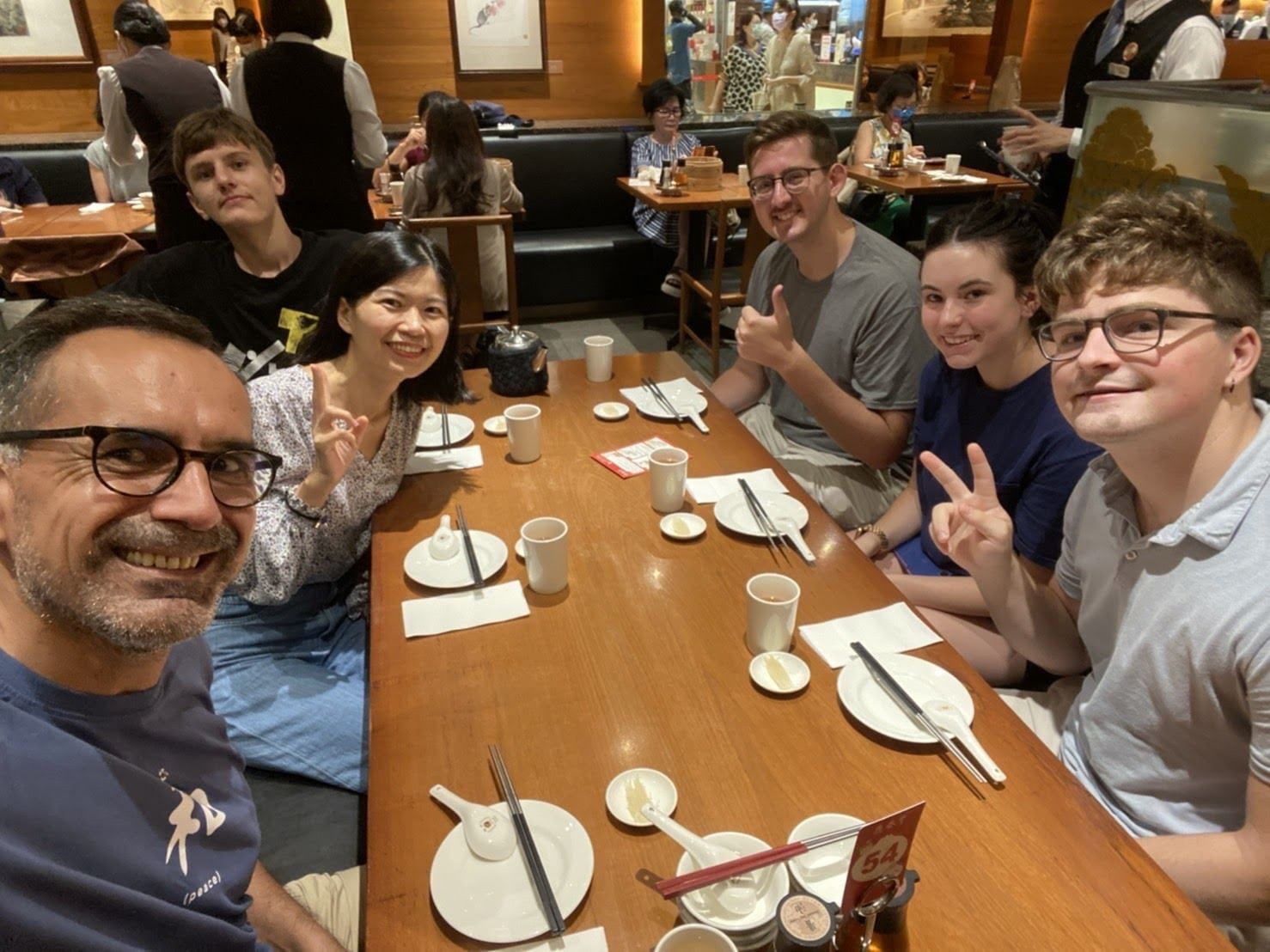
Only 100 miles away from China, it would be easy to assume that Taiwan would only have Chinese food. While it is true that Taiwan’s cuisine shares a heavy resemblance to China, Taiwan’s eating scene is as rich as its culture and stands as a symbol of pride to many of its inhabitants. Over the centuries, Taiwan’s rich indigenous cuisines have combined with Fujian and Cantonese flavors, to create a new style of Asian cuisine, one whose rich umami flavor and sweet undertones welcome new opportunities for culinary exploration.
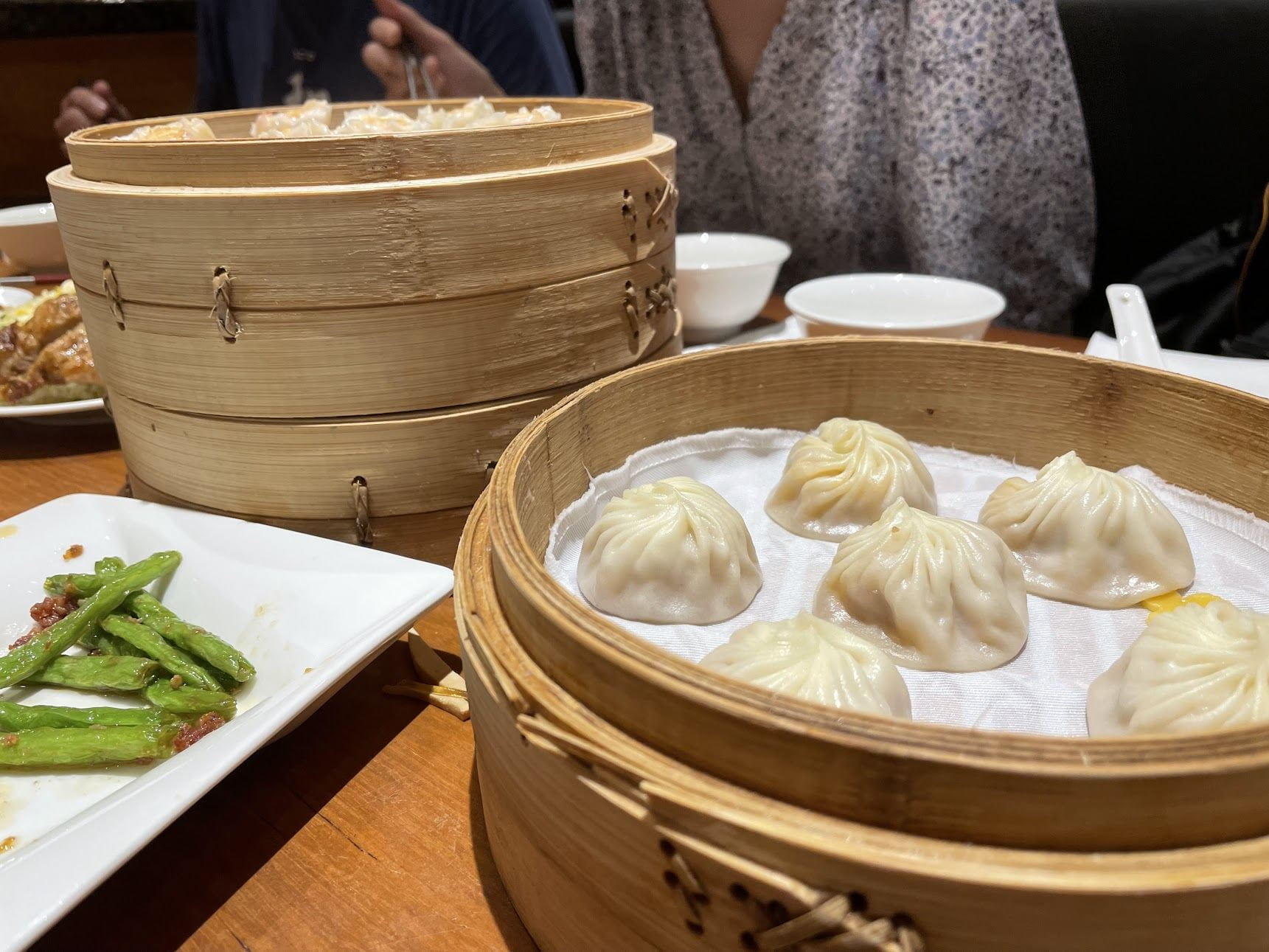
Photo caption: Delicious soup noodles at one of Taiwan’s famous Din Tai Fung 鼎泰豐
At the same time, Taiwan’s global economy has invited millions of people from all over Asia, most of whom have brought along their tastes and flavors. Taiwan’s culinary environment is rich with global influences from Europe, Africa, and the Americas, not to mention local Asian cuisines from South, East, and Southeast Asia. No matter the appetite, be it Bolognese, Vindaloo, Injera, or Congee, a quick trip down the street is sure to satisfy.
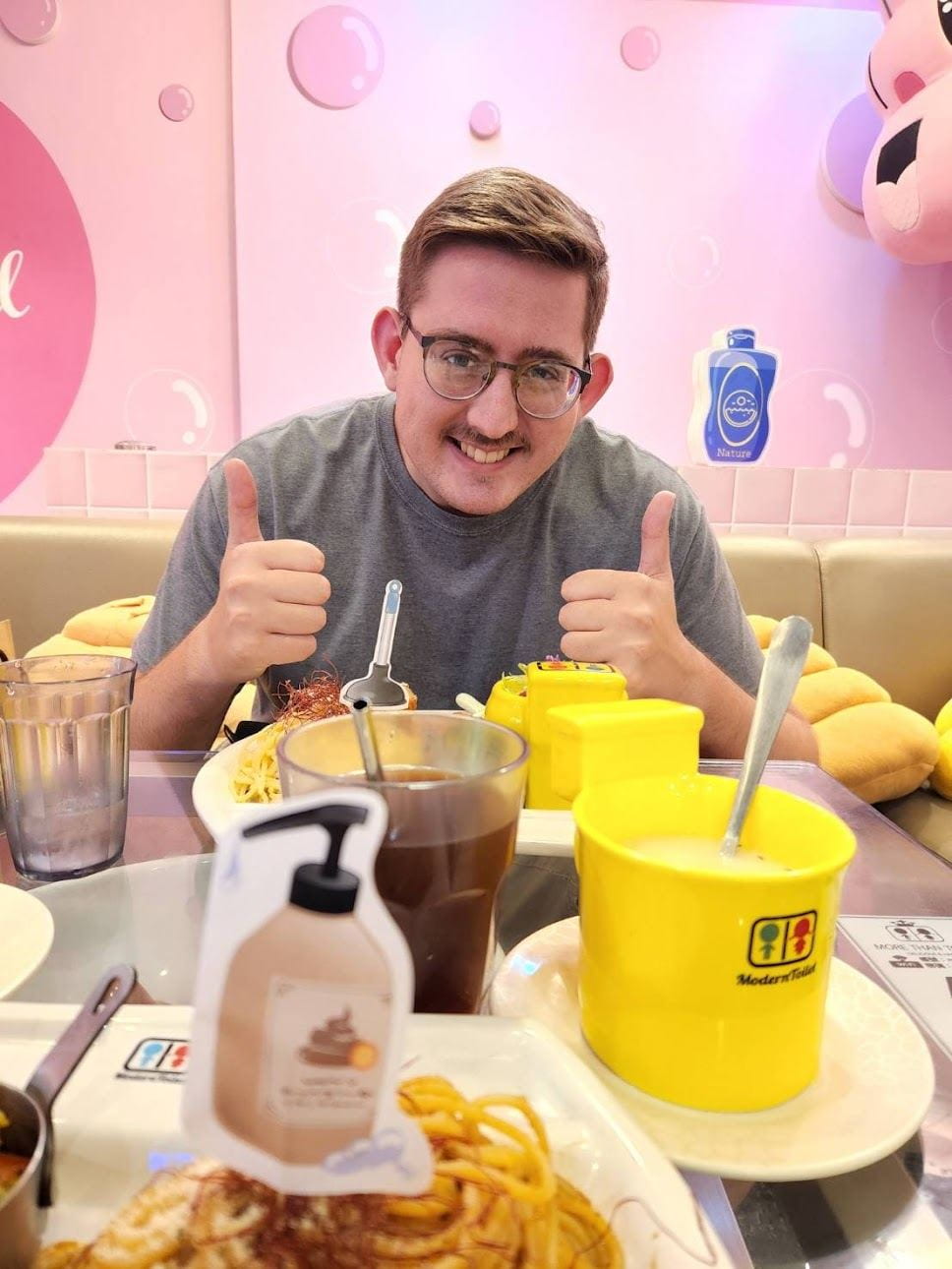
Photo caption: Modern Toilet Restaurant in Taipei, a poop and toilet inspired café! One of the many wacky themed restaurants around Taiwan
In big cities like Taipei, Taichung, and Kaohsiung, the economic and cultural hearts of the island, tastes from across the globe are as easy to find as bubble tea shops. In the rural west coast outskirts or the mountainous east coast villages, delicious Taiwanese barbecues and stews await more adventurous travelers.
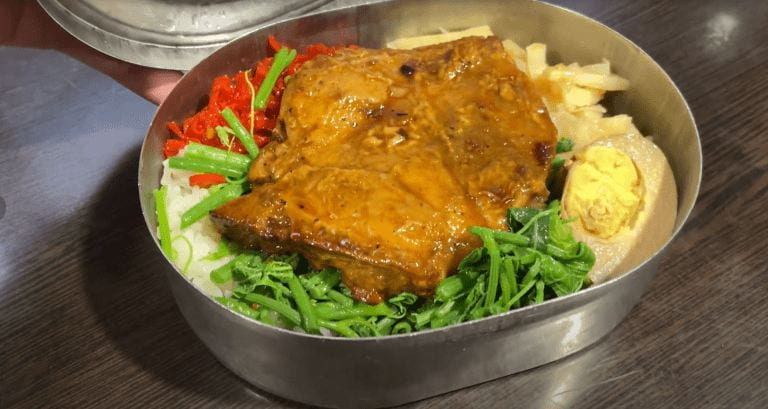
Photo caption: Old-fashioned bento box meal for workers who used to cut wood on the old Alishan Forest Railway
Taiwan’s numerous night markets also provide plentiful appealing delights for tourists and locals alike. Even the convenience stores showcase a wide swath of healthy and tasty treats from all over the world, assuring that no matter the time or the place, you’ll never go hungry in Taiwan.
Unlike similar stores in the United States, Taiwan has given convenience stores a whole new meaning. On nearly every street corner of any major city, you’re bound to find a 7eleven, Hi Life, or Family Mart, waiting eagerly to satisfy your insatiable snack cravings, chips, candy, and drinks galore. Many convenience stores have eating areas with benches and seats for patrons to enjoy their snacks in place. Moreover, many of these stores also have premade dinners, fresh salads, and bite-sized breakfasts that make stopping in for a meal cheap and, well, convenient.
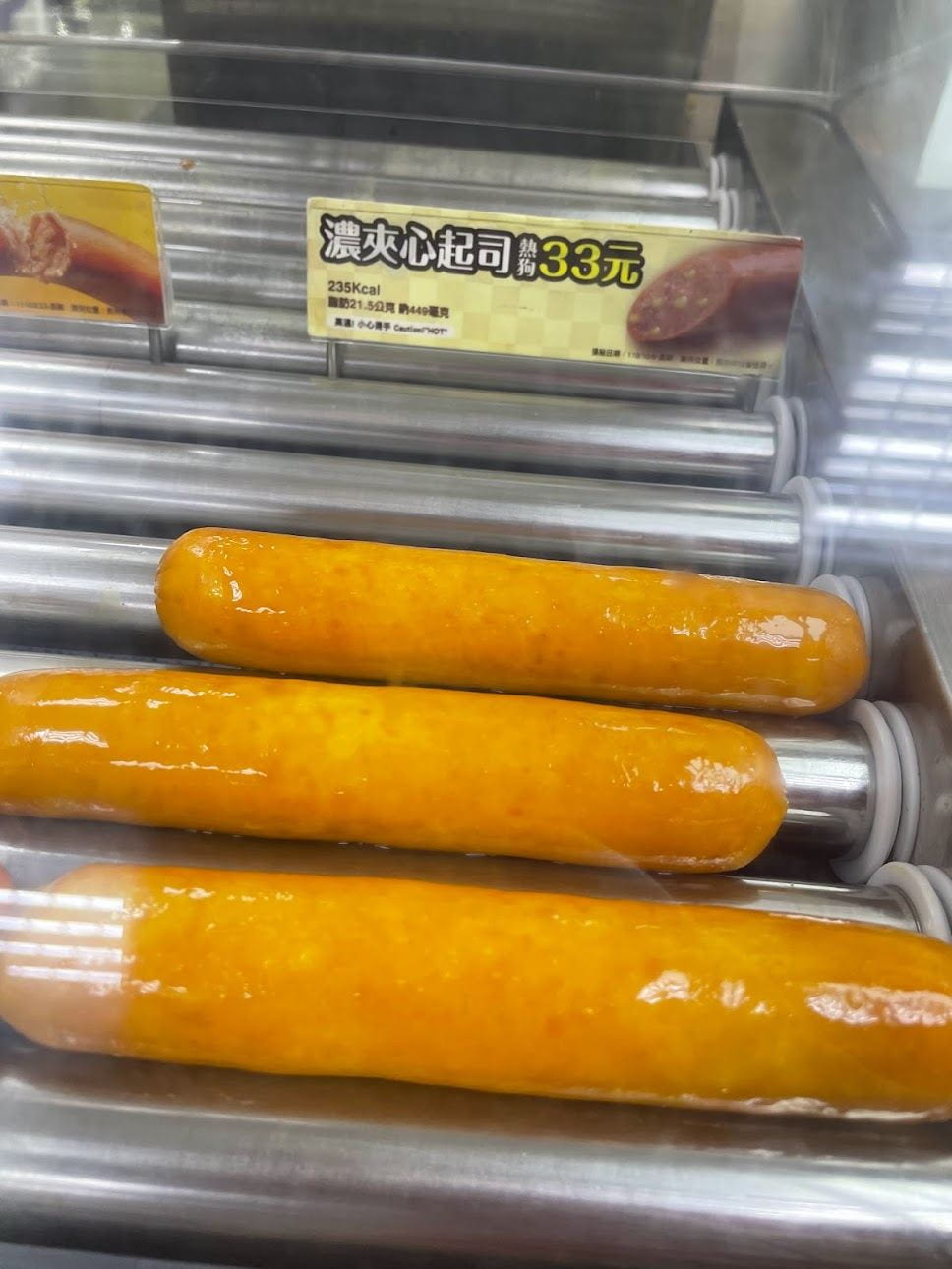
Photo caption: Of course, no convenience store would be complete without rotisserie hotdogs. These ones in particular are cheese flavored!
However, to find the perfect example of Taiwan’s excellent food culture, look no further than the classic nighttime venue for locals and tourists alike: night markets, a classic amalgamation of outdoor feasting activities, combined into a single place for everyone to enjoy. Of course, besides the usual gamete of Taiwanese staple foods, including Stinky Tofu (臭豆腐), Sweet Potato Balls (地瓜求), Oyster Omelets (蚵仔煎), and Bubble Tea (珍珠奶茶), night markets attract a huge array of delightful foreign foods including Italian pasta, Indian Curries, and South American tamales, just to name a few.
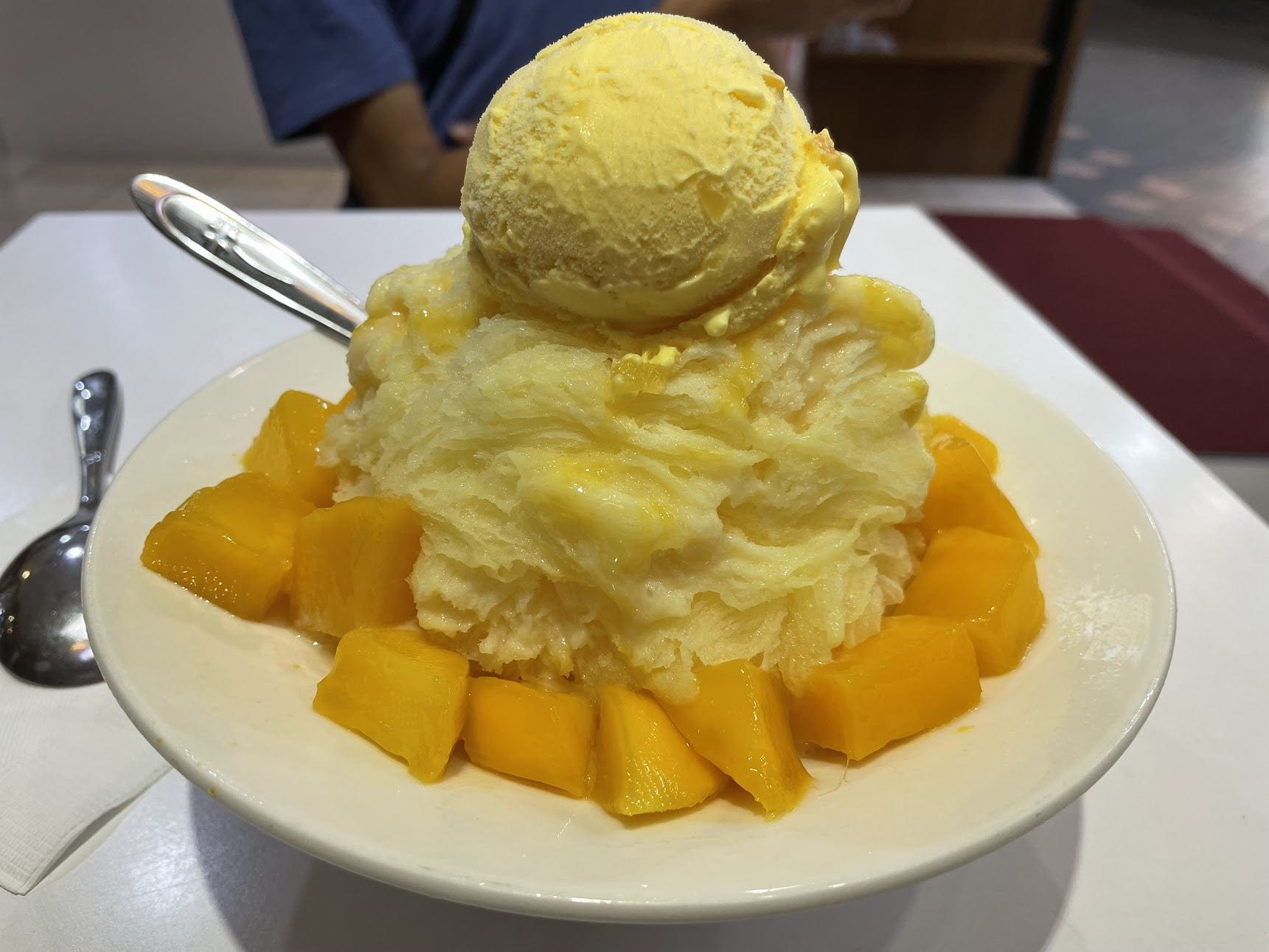
Photo caption: One of my favorite Taiwanese desserts: Taiwan Shaved Ice. This one here is mango flavored.
Imagine state fair snacks and games, farmers’ market produce, and flea market stalls, all clumped together in the same place, every night, 365 days a year. Night markets provide the perfect setting to try new treats and discover a whole new culinary palate, both fresh and fried (and sometimes on a stick).
While night markets and convenience stores highlight the wide diversity in tastes and flavors, they are only the tip of the culinary iceberg. No matter where you go in Taiwan, you’re bound to discover new and exciting meals. Every Taiwanese person has their own peculiar set of tastes that ultimately affect Taiwan’s cuisine. Taiwan’s food culture is in a constant ebb and flow, shifting with the times and tastes of its people. Nonetheless, Taiwan’s rich history and the situation in the increasingly globalized world ensure that no matter where one visits the country, they are bound to find something delicious.
Mark Warburton, B.A. International Affairs, Political Science 2023
Sigur Center 2022 Asian Language Fellow
National Taiwan University, Taiwan
Biking 30 KM around Taiwan’s Sun Moon Lake
Enjoying the best of Taiwan by bicycle 🚲🚲🚲 Sun Moon Lake is one of Taiwan’s most beautiful scenic areas, rich in nature, culture, and history. Join me as I take a little tour through lush mountain roads and sweeping lakeside views. 🏞🚵♂️🌲
Thank you George Washington University’s Sigur Center for Asian Studies for making it all possible.
Mark Warburton, B.A. International Affairs, Political Science 2023
Sigur Center 2022 Asian Language Fellow
National Taiwan University, Taiwan
Summer 2022 Language Fellow – My first few months in Taiwan

Before this summer, I had never gone outside of the country. I had been a scholar of international affairs with no international scholarly experience. My friends, all of who had been out of the country at least once, warned me of the inbound culture shock I was sure to experience. They told stories of shadowy burglars and cunning pickpockets who targeted foreigners or shop vendors who willingly scammed naïve Americans for an extra buck.
“Go to Europe! It’ll feel much more like home. I hear London is very friendly toward Americans.”
“I don’t understand why you have to go to Asia! I hear it is very dangerous.”
They told me that the world was not a friendly place for American tourists. They said I would need to walk carefully, bag and belongings kept tight to my person, were I to avoid becoming another scare-story for other worried-sick tourists.
Nonetheless, despite these stories, I packed my bags and set off to my home away from home on the other side of the world.
Traveling to Taiwan this summer, I was one of 70 students to make the flight across the pacific, the first cohort of international students in over two years since the pandemic started. The program coordinator said we were making history. During the first week of my stay, I explored the far corners of my hotel room, counting the tiles on the ceiling, and waiting for the day I’d be free of the Marriott. The mandatory 7-day quarantine period felt like seven years as I paced around my hotel bed, trying desperately to spur some creative flow. But despite the gorgeous view from my 6th-floor room, there are only so many hours you can watch the clouds before you start to get bored.
Since early 2020, Taiwan has led the world in successful COIVD-19 mitigation practices. Throughout 2020 and 2021, as the rest of the world became bombarded by the Alpha and Omicron variants, Taiwan stayed closed, avoiding the unforeseen loss of life, but at the cost of social frustration and economic slowdown.
Walking along the streets, Taipei felt like a city out of hibernation; preparing for a new life three years deep into the “new normal.” During the majority of the pandemic, the government ordered residents to stay inside, limit contact with others, and if that was not possible, manage their own “social distance” even as the rest of the world forwent their restrictions and ushered in their new normal, albeit with significant growing pains
I traveled with CET, a study abroad program for students looking to improve their language skills in a target region. CET handled all the heavy lifting: housing, insurance, and tuition fees for the language program, amongst other odds and ends that ensured that our trip abroad was as painless as possible. They organized hikes, calligraphy classes, mediation workshops, and a whole host of activities to make students feel both engaged with their host culture and at home with their classmates.
But growing pains from COVID-19 still lingered. Unlike in the United States, where face coverings became a topic of political and social discordance, quickly shelved upon the CDC’s first word of unnecessity, indoor and outdoor mask usage has become the new normal, setting a trend that will likely stay for the foreseeable future. Of course, CET’s reentry into the post-COVID world also necessitated a few changes, such as the withdrawal of organized multiday activities, and a switch from housing with local students to solely with the CET cohort, all of which served as a constant reminder of the on-going COVID-19 pandemic.
Nonetheless, I am incredibly grateful I have been afforded this opportunity. The past two months I’ve spent in Taiwan have been a blast and a well-needed course in cultural immersion. I’m looking forward to spending more time abroad and sharing all of my experiences with friends back home.
Mark Warburton, B.A. International Affairs, Political Science 2023
Sigur Center 2022 Asian Language Fellow
National Taiwan University, Taiwan