[04/15/2025] Gaston Sigur Memorial Lecture: India’s Foreign Policy and the China Factor

Tuesday, April 15, 2024

5:00 pm – 6:30 pm

City View Room

Elliott School of International Affairs

1957 E Street NW Washington, D.C. 20052

The weight of the China factor in India’s foreign policy is evolving. New Delhi continues to see China as a primary geopolitical rival. How will tensions along the Line of Actual Control evolve? What about trade tensions and the contest for regional influence in South Asia? This brewing conflict is playing out during an unpredictable new period of U.S.-China relations. In this changing geopolitical environment and in an attempt to balance against China, India must reassess its foreign policy and role in the Indo-Pacific. Former Indian Ambassador to China and the United States Nirupama Rao will discuss India’s policy options, the changing strategic bilateral and multilateral space, and India’s place in the world.

Opening Remarks
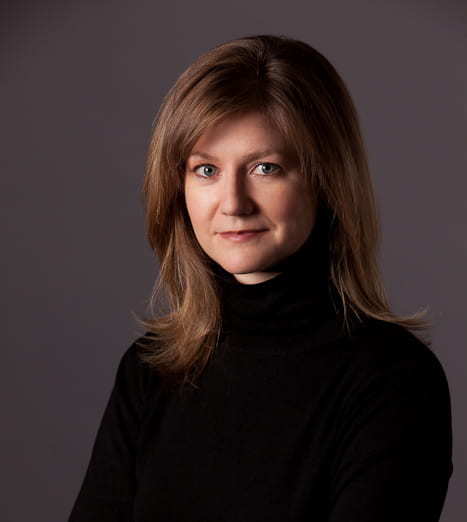
Alyssa Ayres, Dean of the Elliott School

Alyssa Ayres was appointed dean of the Elliott School of International Affairs and professor of history and international affairs at George Washington University effective February 1, 2021. She is the first woman to serve in the role of permanent dean at the school.  Ayres is a foreign policy practitioner and award-winning author with senior experience in the government, nonprofit, and private sectors. From 2013 to 2021, she was senior fellow for India, Pakistan, and South Asia at the Council on Foreign Relations (CFR), where she remains an adjunct senior fellow. 

Her work focuses primarily on India’s role in the world and on U.S. relations with South Asia in the larger Indo-Pacific. Her book about India’s rise on the world stage, Our Time Has Come: How India is Making Its Place in the World, was published by Oxford University Press in January 2018 and was selected by the Financial Times for its “Summer 2018: Politics” list. An updated paperback edition was released in 2019. Ayres is also interested in the emergence of subnational engagement in foreign policy, particularly the growth of international city networks, and her current book project (working title, “Bright Lights, Biggest Cities: The Urban Challenge to India’s Future,” under contract with Oxford University Press) examines India’s urban transformation and its international implications. 

From 2010 to 2013 Ayres served as deputy assistant secretary of state for South Asia. During her tenure at the State Department in the Barack Obama administration, she covered all issues across a dynamic region of 1.3 billion people at the time (Bangladesh, Bhutan, India, Maldives, Nepal, and Sri Lanka) and provided policy direction for four U.S. embassies and four consulates. Before serving in the Obama administration, Ayres was founding director of the India and South Asia practice at McLarty Associates, the Washington-based international strategic advisory firm, from 2008 to 2010, and served as a part-time senior advisor to the firm from 2014 to 2021. From 2007 to 2008, she served as special assistant to the undersecretary of state for political affairs as a CFR international affairs fellow. Prior to that she worked at the University of Pennsylvania’s Center for the Advanced Study of India and at the Asia Society in New York.

Originally trained as a cultural historian, Ayres has carried out research on both India and Pakistan. Her book on nationalism, culture, and politics in Pakistan, Speaking Like a State, was published worldwide by Cambridge University Press in 2009 and received an American Institute of Pakistan Studies book prize for 2011–2012. She has coedited three books on India and Indian foreign policy: Power Realignments in Asia; India Briefing: Takeoff at Last?; and India Briefing: Quickening the Pace of Change

Ayres has been awarded numerous fellowships and has received four group or individual Superior Honor Awards for her work at the State Department. She speaks Hindi and Urdu, and in the mid-1990s worked as an interpreter for the International Committee of the Red Cross. She received an AB from Harvard College and an MA and PhD from the University of Chicago. She is a member of the Council on Foreign Relations, the Trilateral Commission, and the Halifax International Security Forum agenda group, and she serves on the boards of the National Endowment for Democracy and the Women’s Foreign Policy Group. In 2021 and 2022, the Washingtonian included her as one of their “most influential people shaping policy.”

Speaker

Ambassador Rao looking at the camera

Nirupama Rao is a former Indian Foreign Service officer. She retired as Foreign Secretary to the Government of India, the senior most position in the Foreign Service, being the second woman to occupy the post (2009-2011). She was the first woman spokesperson (2001-02) of the Indian foreign office. She served as India’s first woman High Commissioner (Ambassador) to Sri Lanka (2004-2006) and to the People’s Republic of China (2006-2009). She was Ambassador of India to the United States from 2011 to 2013.

In retirement she has taught at various universities, including as a Senior Visiting Fellow in International and Public Affairs at the Watson Institute at Brown University where she taught an undergraduate seniors course on “India in the World” and as George Ball Adjunct Professor at Columbia University’s School of International and Public Affairs. Her book entitled The Fractured Himalaya: India Tibet China, 1949 to 1962, was published by Penguin India in October 2021.

Ambassador Rao was a Fellow at the India-China Institute of The New School, New York in 2016, Public Policy Fellow at The Wilson Center, Washington D.C. in 2017 and Pacific Leadership Fellow at the School of Global Politics and Strategy, University of California at San Diego in 2019. She is a Global Policy Fellow of the Wilson Center. She was a Jawaharlal Nehru Fellow from 2015-2016 and a Practitioner-in-Residence at the Rockefeller Foundation’s Bellagio Center in Italy in 2017. She is a member of the Board of Governors of the Indian Institute of Management, Bangalore, a member of the Advisory Council of the National Institute of Advanced Studies (NIAS), Bangalore, on the Board of the Indian Council for Research in International Economic Relations (ICRIER), and a Councilor on the World Refugee and Migration Council. She is also a Member of the Board of Directors of the US India Business Council and heads the Board of Trustees of the India board of the American India Foundation (AIF). She has an honorary degree of Doctor of Letters (2012) from Pondicherry University, India.

She is a staunch believer in the power of social media as an advocacy platform for policy and currently has over 1.3 million followers on Twitter. Ambassador Rao is the recipient of a number of awards recognizing her contributions in public service. She received the K.P.S Menon Memorial Award in 2010, the Sree Chithira Thirunal Award in 2011, the Vanitha Ratna Award of the Government of Kerala in 2016 and the Citizen Extraordinaire Award of Rotary International in 2018. She is also the recipient of the Fellowship of Peace Award of the Mahatma Gandhi Memorial Center in Washington D.C in 2018.

Ambassador Rao is a Founder-Trustee of The South Asian Symphony Foundation (SASF) (www.symphonyofsouthasia.org) – a not-for-profit Trust which is dedicated to promoting mutual understanding in South Asia through the creation of a South Asian Symphony Orchestra (SASO).


Moderator

Ambassador Rao looking at the camera

Eric Schluessel is a social historian of China and Central Asia, and his work focuses on Xinjiang (East Turkestan) in the nineteenth and twentieth centuries. Land of Strangers, his first monograph, uses local archival and manuscript sources in Chinese and Chaghatay Turkic to explore the ramifications of a project undertaken in the last decades of the Qing empire to transform Xinjiang’s Turkic-speaking Muslims into Chinese-speaking Confucians. It won the 2021 John K. Fairbank Prize from the American Historical Association.

Schluessel is currently pursuing two research projects: Saints and Sojourners explores the economic history of the Uyghur region from the 1750s through the 1950s as seen from below, through the records of merchants, farmers, and managers of pious endowments. It ties changes at the village level to shifts in the global economy in places as far away as Manchester and Tianjin. Exiled Gods delves into Han Chinese settler culture and religion to illuminate the history of a diasporic community of demobilized soldiers and their descendants that spanned the Qing empire.

Thanks to grants from the National Endowment for the Humanities and the American Council of Learned Societies, Schluessel has also completed a translation and critical edition of the Tārīkh-i Ḥamīdī of Mullah Mūsa Sayrāmī, which is an important Chaghatay-language chronicle of nineteenth-century Xinjiang.
Schluessel previously taught at the University of Montana in Missoula and spent the 2018–2019 academic year at the Institute for Advanced Study in Princeton, NJ. Schluessel has also completed a translation and critical edition of the Tārīkh-i Ḥamīdī of Mullah Mūsa Sayrāmī, which is an important Chaghatay-language chronicle of nineteenth-century Xinjiang.

 
Sigur Center logo with line art of Asian landmarks

[3/4/2025] Taiwan Roundtable: Bills, Budgets, and Brawls: Understanding Taiwan’s Legislative Crisis

Tuesday, March 4th, 2025

12:00 PM – 2:00 PM ET

Lindner Family Commons

Elliott School of International Affairs

1957 E Street NW Washington, D.C. 20052

Taiwan’s Legislative Yuan has long been characterized by intense partisan competition, high-stakes negotiations, and, at times, dramatic confrontations. Recent legislative crises—including controversial cuts and freezes to the operating budgets of several ministries—have highlighted the complex interplay between budgetary politics, institutional constraints, and evolving party dynamics, raising critical questions about the resilience and functionality of Taiwan’s democratic system and constitutional order. At the same time, civil society groups, open-government advocates, and civic tech communities in Taiwan have played active roles in developing participatory mechanisms and transparency tools meant to enhance public engagement and citizen oversight in legislative affairs, but face a variety of resource and outreach constraints. The current legislative dilemma may also have substantial impacts on Taiwan’s diplomatic, national security, and geoeconomic efforts during a time of critical international exposure.

To address these timely and salient topics, please join the Sigur Center for Asian Studies for a panel discussion that brings together leading experts and practitioners to analyze the roots and ramifications of Taiwan’s ongoing legislative turbulence. Scholars, students, and policymakers interested in Taiwan’s democratic development, legislative politics, and governance will find this discussion particularly valuable in assessing both the challenges and resilience of Taiwan’s governing institutions.

Lunch (12:00—12:30)

Roundtable Discussion (12:30—2:00)

“Digital Civic Engagement in Taiwan’s Legislative Crisis,” Ipa (Hsiao-wei) Chiu, Co-founder of g0v.tw community

Wei Ping-Li, Postdoctoral Associate, the University of Maryland, “Manufacturing Consent (or disconsent)? Disinformation and the 2025 Taiwan Budget Debate”

“A Constitutional Crisis during a Time of Global Crises,” Thomas J. Shattuck, Senior Program Manager, Perry World House

Speakers

A picture of Dominik Mierzeejewski, smiling and looking at the camera

Ipa is co-founder of g0v.tw, a civic tech community in Taiwan starting from 2012. She is a writer and documentary director. She focuses on citizen engagement and public participation for the past 12 years, with the g0v community, which promotes online collaboration through open source culture between civil society and public sectors. She will publish her second book at the end of 2024, which is about her sociologist father and the intellectual community during Taiwan’s democratization process in the 1990s.

A picture of Dominik Mierzeejewski, smiling and looking at the camera

Dr. Wei-Ping Li is a is a postdoctoral researcher at the Philip Merrill College of Journalism at the University of Maryland and a research fellow at the Taiwan Factcheck Center. Dr. Li holds a Ph.D. degree from the Philip Merrill College of Journalism at the University of Maryland and an LL.M. degree from the University of Pennsylvania Law School. Her research focuses on disinformation, fact-checking, social media content moderation, and privacy issues in the digital era. Dr. Li is admitted to the practice of law in New York State.

A picture of Dominik Mierzeejewski, smiling and looking at the camera

Thomas J. Shattuck is a Senior Program Manager at the University of Pennsylvania’s Perry World House. He is a 2024-25 non-resident WSD-Handa Fellow at the Pacific Forum a 2024-25 non-resident Research Fellow at the Modern War Institute at West Point, and a 2025 fellow with Atomic Anxiety in the New Nuclear Age. His research focuses on cross-Strait relations, Taiwanese and Chinese domestic and foreign affairs, Taiwan’s semiconductor industry, and the US role in the Indo-Pacific. Shattuck is a Non-Resident Research Fellow at the Global Taiwan Institute, Non-Resident Fellow at the Foreign Policy Research Institute, member of Foreign Policy for America’s NextGen Foreign Policy Initiative, and the Pacific Forum’s Young Leaders Program, where he participated in the 2022 US-Philippines Next-Generation Leaders in Security Initiative.

Moderator

A picture of Dominik Mierzeejewski, smiling and looking at the camera

Richard J. Haddock is the Assistant Director of the Sigur Center for Asian Studies at the George Washington University, where he leads the Center’s robust Taiwan affairs programming, outreach, and curriculum development. He is also a member of the UC Berkeley U.S.-Taiwan Next Generation Working Group, where his research focuses on U.S.-Taiwan education diplomacy and exchange. Previously, he has held positions at the GW East Asia National Resource Center, the National Democratic Institute’s Asia team, the American Institute in Taiwan’s Public Diplomacy Section, and the U.S. Department of State. Mr. Haddock is currently pursuing a PhD in Public Policy and Public Administration at The George Washington University, focusing on digital democracy and e-governance development in the Asia-Pacific. He holds an MA in Asian Studies from the Elliott School, with a concentration on domestic politics and foreign policy of East Asia. He graduated from the University of Central Florida with a BA in Political Science and minors in Asian Studies and Diplomacy.

Sigur Center logo with line art of Asian landmarks

[03/24/2025] NBAS: “State Building in Cold War Asia: Comrades and Competitors on the Sino-Vietnamese Border”

NBAS State Building graphic

Monday, March 24th, 2025

4:00 PM – 5:00 PM ET

Online via Zoom

How did two Cold War-era revolutionary states—China and Vietnam—and their people collaborate and compete along their shared border? GW alumna Qingfei Yin dove into archives to unearth the intersections of grand strategy and daily life in China and Vietnam, 1949–1976.

Zoom Webinar Link: https://us02web.zoom.us/j/82352435507?pwd=wrbxaqbTMY3qbysu0m8bRhYi96Uira.1

Passcode: 538678

Speaker

Dr. Quingfei Yin headshot

Dr. Qingfei Yin is an Assistant Professor of International History (China and the World) at LSE. As a historian of contemporary China and inter-Asian relations, her research focuses on China’s relations with its Asian neighbors, Asian borderlands, and the Cold War in Asia. She is particularly interested in how the global Cold War interacted with state-building projects in Asia. Her first book State Building in Cold War Asia: Comrades and Competitors on the Sino-Vietnamese Border (Cambridge University Press, 2024) weave together international, national, and transnational-local histories to present a new approach to the highly volatile Sino-Vietnamese relations, centering on the two modernizing revolutionary powers’ competitive and collaborative state building on the borderlands and local responses to it. Subsequent projects are a history of China’s ocean shipping industry and the historical memory of the Sino-Vietnamese Cold War partnership in the two countries. Her research has been funded by the Association for Asian Studies China and Inner Asia Council and the Henry Luce Foundation/ACLS Program in China Studies.

Qingfei is an alumna of the LSE-Peking University Double MSc in International Affairs Programme. She studied International Politics and History at Peking University for her undergraduate degrees and completed her PhD in History at George Washington University. Before returning to LSE, she was Assistant Professor of History at Virginia Military Institute. She also serves as the Book Review Editor of Journal of Military History and on the Editorial Board of Cold War History.

Qingfei is a passionate scholar-teacher. She has been nominated for the LSESU Teaching Awards multiple times. In 2024, she is among the recipients of the LSE Excellence in Education Award.

Moderator

Dr. Quingfei Yin headshot

Gregg A. Brazinsky works on U.S.-East Asian relations and East Asian international history. He is interested in the flow of commerce, ideas, and culture among Asian countries and across the Pacific. He is proficient in Mandarin Chinese and Korean. He is the author of two books: Winning the Third World (2017), which focuses on Sino-American Rivalry in the Third World and Nation Building in South Korea (2007), which explores U.S.-South Korean relations during the Cold War. Currently, he is working on two other book projects. The first examines American nation-building in Asia during the Cold War. The second explores Sino-North Korean relations between 1949 and 1992 and focuses specifically on the development of cultural and economic ties between the two countries. He has received numerous fellowships to support his research including the Kluge Fellowship from the Library of Congress, the Smith Richardson Foundation junior faculty fellowship, and a fellowship from the Woodrow Wilson Center. Professor Brazinsky also currently serves as the director of the George Washington Cold War Group.

As director of the Asian Studies Program, Professor Brazinsky has attracted some of the brightest students from around the country and the world who share a commitment to pursuing careers related to Asia. He helped to launch a special mentoring program for Asian Studies MA students and has worked to expand fellowship and professional opportunities for students in the program.

Sigur Center logo with line art of Asian landmarks