[11/18/24] Pulse Check on Taiwan’s Democratic Resilience: Institutions, Domestic Debate, and New Governance Frontiers

Graphic for Pulse Check on Taiwan's Democratic Resilience with pictures of speakers.

Monday, November 18th, 2024

10:30 AM – 2:00 PM ET

The State Room

Elliott School of International Affairs

1957 E Street NW Washington, D.C. 20052

“Democracy is never a thing done,” wrote poet Archibald MacLeish. “Democracy is always something that a nation must be doing.” In a similar vein, Taiwan’s vibrant democracy continues to be shaped and tested by dynamic internal and external pressures. This year, Taiwan’s January elections resulted in its first divided government since 2004, with no party winning an outright majority in the Legislative Yuan. Social movements have emerged in Taiwan in response to domestic political developments, including the Bluebird Movement, which formed in protest of a set of contentious legislative reform bills and produced the largest civil society demonstration since the 2014 Sunflower Movement. At the same time, exogenous factors such as the 2024 U.S. presidential election, ongoing cross-Strait tensions, and major military exercises conducted this year by the People’s Republic of China have left indelible marks on domestic political discourse in Taiwan. All the while, cross-sector social and digital innovations, such as civic technologies designed to counter disinformation, position Taiwan as a pioneer in new forms of democratic governance. How are Taiwan’s democratic institutions adapting to this wide array of internal and external social, political, and security challenges?
Join the Sigur Center for Asian Studies for a timely conversation with a group of multidisciplinary experts to unpack, explore, and assess the current state of domestic political discourse in Taiwan, the robustness and resiliency of Taiwan’s democratic institutions, and the newly emerging democratic frontiers confronting Taiwan and beyond.

Agenda:

Welcome Remarks: Dr. Eric Schluessel, Director, Sigur Center

Conference Introduction: Richard Haddock, Assistant Director, Sigur Center

Panel 1: Elections, Political Upheavals, and Domestic Discourse in Taiwan (10:30 AM-12:00 PM)

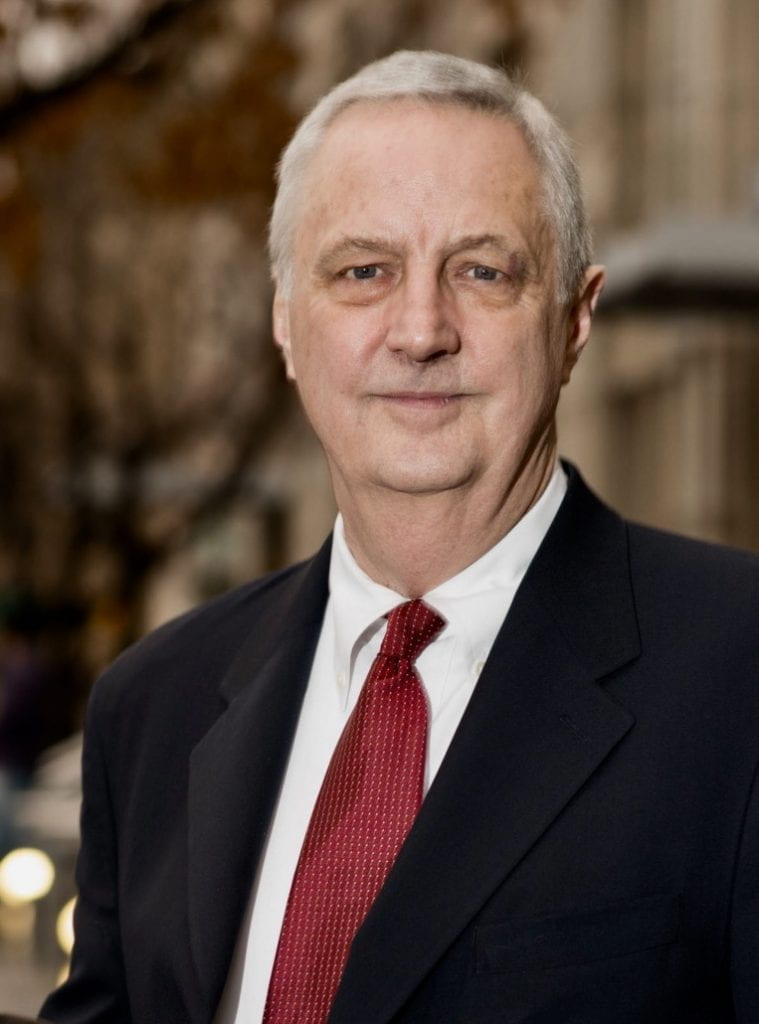
  • Dr. Chiaoning Su, Associate Professor in Communication, Journalism and Public Relations
    • “Six Months In: Evaluating President Lai’s Leadership and Changing Political Dynamics”
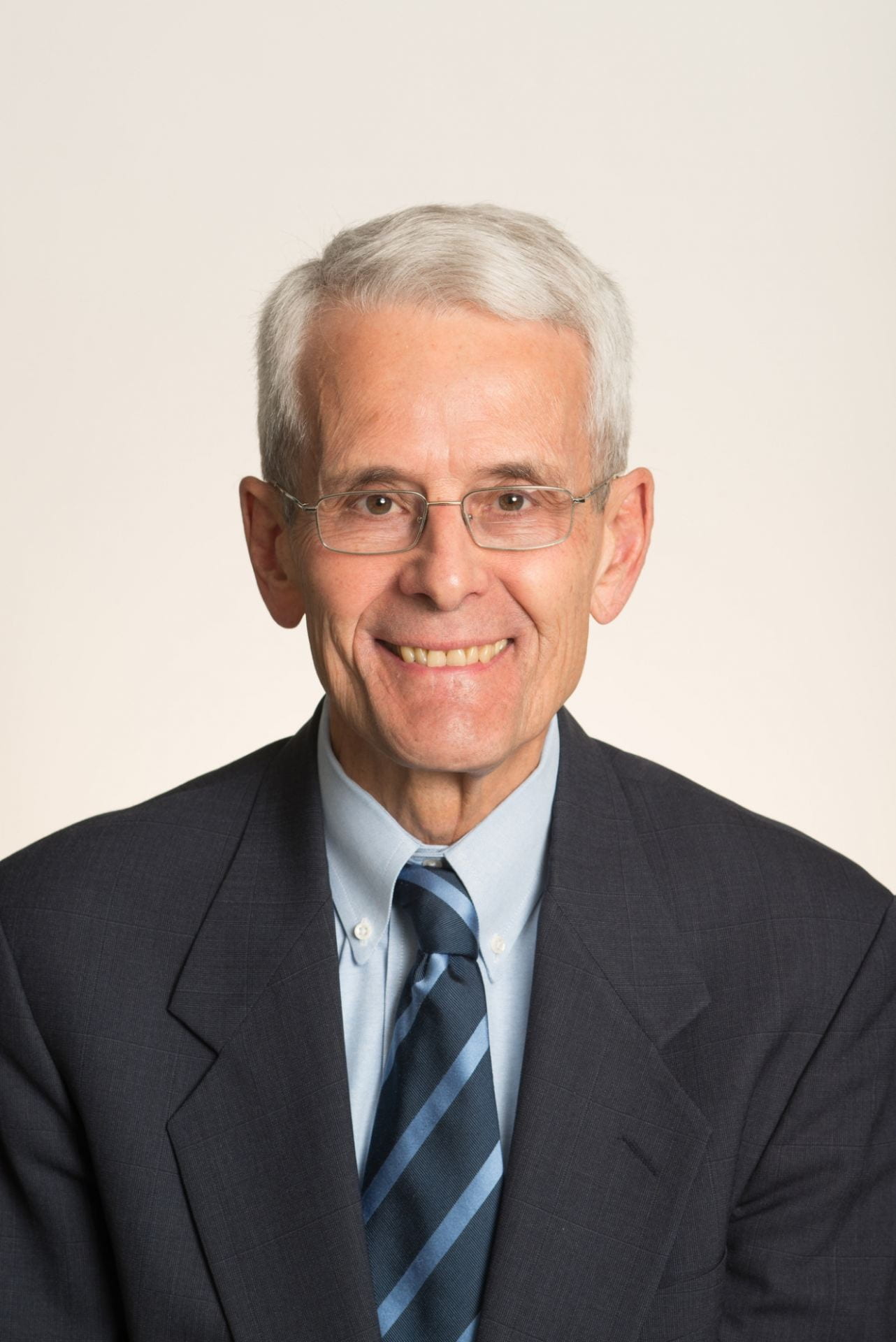
  • Dr. Dennis Lu-Chung Weng, Associate Professor of Political Science.
    • “Reassessing Taiwan’s Opposition: Why the U.S. and Democratic Allies Must Recognize Its Strategic Value Beyond Stereotyped Labels”
  • Dr. Austin Horng-En Wang,  Associate Professor of Political Science.
    • “Public Opinion in Taiwan and its implications to US-China-Taiwan relations”

Lunch Break (12:00-12:30 PM)

Panel 2: The Health and Future Frontiers of Taiwan’s Democratic Institutions (12:30-2:00 PM)

  • Dr. Li-Yin Liu, Associate Professor of Political Science
    • “Strengthening Democratic Governance in Times of Crisis: Taiwan’s COVID-19 Response, State Capacity, and the Impact of Policy Design and Bureaucratic Expertise”
  • June Lin, Senior Program Manger for the Asia-Pacific programs
  • Dr. Kharis Templeman, Research Fellow at the Hoover Institution
    • “Making Democracy Work under Divided Government”

Panel One

A picture of Chiaoning Su looking at the camera with her arms crossed

Dr. Chiaoning Su is an associate professor in Communication, Journalism and Public Relations at Oakland University. She also serves as the director of the Public Relations program and the Klein Center for Culture and Globalization, as well as PRSSA’s academic advisor. Beyond OU, Su served as the 2018-2020 President of the Association for Chinese Communication Studies, and the non-resident fellow of the Taiwan NextGen Foundation.

Su received her Ph.D. in media and communication from Temple University in 2015. Her research focuses on two distinct yet interconnected research lines: journalism of crisis and journalism in crisis. While the first line examines the representation and production of crisis news, the second focuses on journalism in public life during an era of waning democracy. Her work has been published in Media, Culture and SocietyInternational Journal of CommunicationAsian Journal of Communication, and Taiwan Journal of Democracy, and Communication Review. She is the recipient of the 2020 Honors College Inspiration Award and the 2021 Teaching Excellence Award at Oakland University.

Prior to her academic career, Su worked as a communication specialist at Ogilvy Public Relations and for several political campaigns in Taiwan. Through these professional experiences she developed expertise in media pitches and crisis management. In recent years, her research attracted increasing international media attention. AlJazeeraDeutsche Welle, Radio Free Asia, and Voice of America have interviewed her on U.S.-China-Taiwan relations, press freedom in East Asia, China’s wolf warrior diplomacy, and Taiwan’s nation branding. Additionally, she appeared on several Taiwanese radio programs to discuss strategic narratives to amplify Taiwan’s international visibility. 

 
Asfandyar Mir in a suit smiling facing forward

Dr. Dennis Lu-Chung Weng joined the department of political science at Sam Houston State University in 2017. Dr. Weng’s research and teaching interests are in the fields of comparative politics, Asian Politics, political behavior, and survey research. His articles have appeared in the Electoral Studies, Japanese Journal of Political Science, Asian Journal of Comparative Politics, Asian Journal of Political Science, Journal of Southeast Asian Studies, and several News Media in Asia.

Dr. Weng was a business consultant and journalist in Taiwan prior to his academic career. Before coming to SHSU, he taught at The State University of New York at Cortland, Wesleyan University (CT), and The University of Texas at Dallas. He is the recipient of several teaching awards from previous institutions. Weng holds degrees in Political Science (Ph.D., MA) from the University of Texas at Dallas, International Relations (MA), and Business Administration (BA) from Tamkang University (Taiwan).

Marzia Hussaini in a suit smiling and looking forward

Dr. Austin Horng-En Wang is an Associate Professor of Political Science at the University of Nevada, Las Vegas. He is also an associate political scientist at the RAND corporation. He received his doctoral degree in political science from Duke University in 2018, his bachelor’s degree in Electrical Engineering in 2009, and master’s degree in Public Administration in 2012 from National Taiwan University.

His research and teaching interests focus on voting behavior, East Asia, and political psychology. His dissertation examines the relationship between temporal discounting and political participation through survey and experiments in the U.S., Taiwan, and Ukraine. His ongoing and sponsored research projects explore the long-term effect of political repression and attitude toward war in East Asia.

His research articles had published in several journals such as Political Research Quarterly, Electoral Studies, Asian Survey, and Social Science Research. He also has written book chapters about voting advice application and party politics in Taiwan. His comments on Asian politics had appeared in Washington Post, The National Interest, and Huffington Post, among others.

 Panel Two

A picture of Ambassador Said Jawad looking at the camera

Dr. Li-Yin Liu received her B.A. in Public Management and Policy and MPA from Tunghai University in Taiwan. She then received her Ph.D. degree in Political Science from Northern Illinois University, where her first field was Public Administration with specialization in public policy and nonprofit management.

Liu’s research interests are centered around science-intensive public policies, including environmental sustainability and COVID-19 policies. Her current research focuses on environmental nonprofit organizations’ influence in policy-making and citizen engagement in environmental policy implementation. In light of the COVID-19 public health crisis, she also participates in several collaborative research teams, examining the institutional determinants of COVID-19 policy configurations and the Taiwanese government’s comprehensive response to COVID-19. 

In addition to her primary research interests, Liu is also committed to advancing gender equity through her collaborative projects. She has been recognized for this focus and was selected as a Gender Equity Research Fellow for the 2023-24 academic year at the University of Dayton.

Liu’s teaching interests are in advanced/introductory public administration theory, public policy, nonprofit management, research methods, program evaluation and environmental governance and policy.

Prior to joining the University of Dayton, Liu was a Visiting Assistant Professor in the Department of Public Administration at Northern Illinois University, and she worked for the Legislative Yuan (Congress) and non-governmental organizations in Taiwan before moving to the United States.

A picture of Dr Sebastein Peyrouse looking at the camera

June Lin is the senior program manager for Asia-Pacific programs at National Democratic Institute (NDI), overseeing the institute’s Hong Kong, Taiwan, and Asia-Pacific regional programs to counter China’s illiberal influence. With over eight years of experience in the non-profit sector in the US and Taiwan, Ms. Lin began her endeavors in the democracy, rights, and governance sector as an activist in the 2014 Taiwan Sunflower Movement. In 2016, Ms. Lin moved to the United States and joined the Formosan Association for Public Affairs (FAPA)  as a policy expert focusing on US-Taiwan relations. Before joining NDI, she worked at Freedom House and the International Republican Institute (IRI), focusing on supporting civil society actors in China, Taiwan, Hong Kong, and the Uyghur communities. In her personal capacity, Ms. Lin also serves as the Board Secretary of the Hong Kong Democracy Council (HKDC), and as an advisor to Doublethink Lab (DTL).

Naheed Sarabi smiling with her arms crossed

Dr. Kharis Templeman is Research Fellow at the Hoover Institution and the manager of the Project on Taiwan in the Indo-Pacific Region. He is also a Lecturer at the Center for East Asian Studies at Stanford University.

From 2013-19, he was a social science research scholar in the Freeman Spogli Institute for International Studies at Stanford University, where he was the program manager of the Taiwan Democracy and Security Project (TDSP) in the Shorenstein Asia-Pacific Research Center (APARC). (Prior to fall 2017, the TDSP was known as the Taiwan Democracy Project and was part of the Center on Democracy, Development, and the Rule of Law).

Outside of Stanford, he is a member of the U.S.-Taiwan Next Generation Working Group, and he was a 2019 National Asia Research Program (NARP) Fellow at the National Bureau of Asian Research (NBR). He has also served since 2012 as a contributor to the Varieties of Democracy project, and from 2016-18, he was the coordinator of the Conference Group on Taiwan Studies (CGOTS), a Related Group of the American Political Science Association.

He holds a Ph.D. in political science from the University of Michigan, and a B.A. from the University of Rochester.

 Moderaters
A picture of Eric Schluessel, smiling in glasses and lookin gat the camera

Eric Schluessel is a social historian of China and Central Asia, and his work focuses on Xinjiang (East Turkestan) in the nineteenth and twentieth centuries. Land of Strangers, his first monograph, uses local archival and manuscript sources in Chinese and Chaghatay Turkic to explore the ramifications of a project undertaken in the last decades of the Qing empire to transform Xinjiang’s Turkic-speaking Muslims into Chinese-speaking Confucians. It won the 2021 John K. Fairbank Prize from the American Historical Association.

Schluessel is currently pursuing two research projects: Saints and Sojourners explores the economic history of the Uyghur region from the 1750s through the 1950s as seen from below, through the records of merchants, farmers, and managers of pious endowments. It ties changes at the village level to shifts in the global economy in places as far away as Manchester and Tianjin. Exiled Gods delves into Han Chinese settler culture and religion to illuminate the history of a diasporic community of demobilized soldiers and their descendants that spanned the Qing empire.

Thanks to grants from the National Endowment for the Humanities and the American Council of Learned Societies, Schluessel has also completed a translation and critical edition of the Tārīkh-i Ḥamīdī of Mullah Mūsa Sayrāmī, which is an important Chaghatay-language chronicle of nineteenth-century Xinjiang.
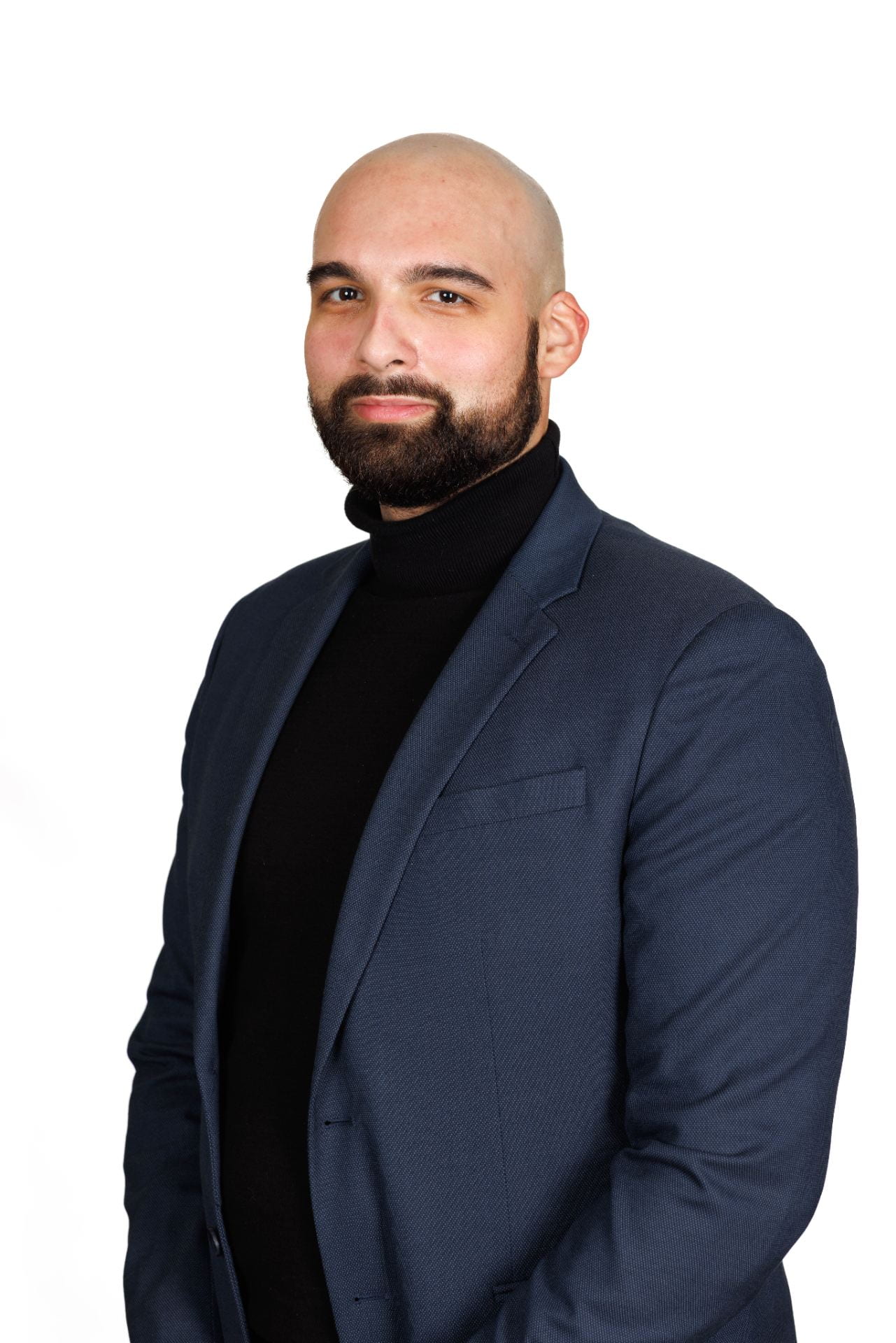
Schluessel previously taught at the University of Montana in Missoula and spent the 2018–2019 academic year at the Institute for Advanced Study in Princeton, NJ. Schluessel has also completed a translation and critical edition of the Tārīkh-i Ḥamīdī of Mullah Mūsa Sayrāmī, which is an important Chaghatay-language chronicle of nineteenth-century Xinjiang.

professional portrait of Richard Haddock

Richard J. Haddock is the Assistant Director of the Sigur Center for Asian Studies at the George Washington University, where he leads the Center’s robust Taiwan affairs programming, outreach, and curriculum development. He is also a member of the UC Berkeley U.S.-Taiwan Next Generation Working Group, where his research focuses on U.S.-Taiwan education diplomacy and exchange. Previously, he has held positions at the GW East Asia National Resource Center, the National Democratic Institute’s Asia team, the American Institute in Taiwan’s Public Diplomacy Section, and the U.S. Department of State. Mr. Haddock is currently pursuing a PhD in Public Policy and Public Administration at The George Washington University, focusing on digital democracy and e-governance development in the Asia-Pacific. He holds an MA in Asian Studies from the Elliott School, with a concentration on domestic politics and foreign policy of East Asia. He graduated from the University of Central Florida with a BA in Political Science and minors in Asian Studies and Diplomacy.
Sigur Center logo with line art of Asian landmarks

6/23/24 Harris or Trump: What difference does it make to India?

On October 22nd, 2024, Dr. Deepa Ollapally, Research Professor of International Affairs and Director of the Rising Powers Initiative, authored an article for 360Info titled “Harris or Trump: What difference does it make to India?”

Harris or Trump: What difference does it make to India?

With the ‘Trumpification’ of US politics, there is a convergence of sorts between the Democrat and Republican candidates on several key policy issues.

Originally published in 360Info | 22 October 2024

US Presidential hopeful Donald Trump delivered a significant economic policy speech in Detroit this month where he singled out India as the “biggest charger of all.”

He was referring to India’s tariffs on foreign products.

Trump promised to impose a reciprocal tax if elected.

His rival, vice-president Kamala Harris, has stated that she is not a “protectionist Democrat” but tellingly, the Biden administration has not reversed Trump’s decision to revoke India’s Generalized System of Preferences (GSP) status, which had previously exempted many Indian products from import duties.

This unusual convergence of sorts between Democrats and Republicans has been described as the “Trumpification of American policy.”

Regardless of who wins the election, India is likely to feel the “Trumpification”.

However, India and the US have much to gain from their strengthening defence and strategic technology ties, which may help ease tensions in trade and immigration, even if India’s expectations are not fully met.

Economic challenges

India’s biggest vulnerability lies in Trumpian economics. Of its top ten trading partners, the US is the only one with which India has a trade surplus.

This year, the US became India’s top trading partner. At the same time, India registered its largest trade deficit with China, its second-biggest trading partner. India’s deficit with China reached $US41.6 billion in January-June 2024.

In an interesting mirroring, India’s exports to the US during the same period stood at $US41.6 billion.

Indian exports to the US are diversified and benefit several sectors of the economy, from labour-intensive textiles to capital-intensive electronics and engineering.

Trade with the US is a big source of India’s foreign exchange which India can’t afford to lose. India’s dependence has only increased over the last decade as the US trade share rose from 10 percent to 18 percent of its total exports.

Although India’s trade surplus with the US is well below ten others, it can certainly expect to be a target under Trump.

The Joe Biden and Harris administration has also been shifting toward a new protectionism which has gained momentum during this election season. Harris’s platform keeps most of Trump’s tariffs in place.

The recent call by Harris to block a Japanese company from buying US Steel on national security grounds shows that the Democrats won’t give even their closest ally a pass, and is not above playing politics with economics.

Talks on a general Free Trade Agreement with India have not made much progress over the last four years, unlike India’s negotiations with the EU for a pact.

Technological gains

Under Harris, India can expect to reap substantial benefits from the Biden administration’s steps to ensure the global technological balance of power shifts away from China.

In a long-term competitive gamble that converges with New Delhi’s concerns over China’s rise in Asia and hostilities on their border, America seems wedded to building up India’s capacity in strategic sectors.

The bilateral Initiative for Critical and Emerging Technology (iCET) opened a broad spectrum in areas including artificial intelligence, quantum technology, space, 6G mobile tech and semiconductor supply chain.

During Indian Prime Minister Narendra Modi’s visit last month for the Quad Summit hosted by Biden, the two countries announced a pathbreaking deal to set up a semiconductor fabrication plant in India.

This agreement has the potential to finally launch India onto the global semiconductor stage, something it had set its eyes on since making its chip ambitions known in 2021.

Designed to produce chips for military applications, critical telecommunications, and clean energy, the venture will be supported by the Indian Semiconductor Mission and involves Bharat Semi, 3rdiTech, and the US Space Force.

Harris is known to be deeply entrenched in the Silicon Valley world and tech cooperation is something that she will probably want to fast-track.

Trump’s confrontational approach to China will only lead to fine-tuning or even stepping up such competitive initiatives with partners such as India in the Indo-Pacific.

On the critical clean energy front, both countries are in principle aligned, but the candidates are not.

In the Biden-Modi meeting last month, innovative clean energy technology was another key area where bilateral cooperation was elevated.

They announced a new effort to “expand bilateral technical, financial, and policy support” in manufacturing and to promote greater partnerships in third countries, especially in Africa.

Funding is to be secured multilaterally through the World Bank, apparently to the tune of $US1 billion. Cleantech financing has previously come up against funding hurdles time and time again.

Rhetoric aside, it remains to be seen if the money materialises.

If Trump comes to power, this type of policy promise will no doubt be swept aside. Harris is now a convert to fracking which raises some questions about her commitment to climate change and clean energy options once in office.

Young India

India has the largest population of people under 24 – more than 600 million. By 2030, one out of every five working-age people will be Indian.

To meet employment demand created by the demographic dividend, it is estimated that India will have to create at least 115 million jobs over the next five years, a task experts describe as “Herculean” and something the Modi government has not been delivering on.

To young Indians eager to come to the West to study or work, the next US president’s immigration policies will matter.

Neither Harris nor Trump have clear and consistent stands. Trump may revive his hardline on immigration and restrict H1B visas by requiring additional biometrics, delayed processing times, and wage mandates making it financially less viable for companies to hire H1B workers.

Harris has projected herself as a supporter of more open immigration policies, including greater protection for undocumented immigrants and a better system for recruiting and retaining global talent.

However, she has remained silent on a country-wide green card cap, which poses a challenge for would-be immigrants.

Meanwhile, Trump promised, then his campaign retracted, his offer to provide automatic green cards to foreign students graduating from colleges in the US.

In 2024, the largest number of foreign students in the US are estimated to be from India. For the first time since 2010, India passed China last year as the source country for international graduate students in the US. The US is still the top choice for Indian students pursuing higher studies abroad.

How do the future “influencers” from India’s Gen Z view the US-India partnership?

Informal surveys from a sampling of Indian students in South India asked what they see as the top three convergences and divergences in the relationship.

It turns out that the convergences were strong and clear: the challenge of a rising China; climate change; defence tech cooperation.

Divergences were weaker and more diffuse, but wide-ranging and more direct: trade sanctions; intellectual property protocols; restrictive immigration; regional political instability; and concerns about data sharing.

Whether Harris or Trump wins in November, the rapid rise of bilateral relations in the strategic and defence sectors is expected to continue with little interruption.

What the next American president may need to be more alert to is the rising expectations of a jumbo generation of Indian Gen Z-ers who have grown up knowing only close US-India ties, and who expect more than just a transactional partnership between the two countries in the economic realm that can produce tangible and immediate benefits for them.

[11/8/24] NBAS: “At the Edge of Empire: A Family’s Reckoning with China”

A graphic for "At the Edge of Empire" with the location, date, time, and picture of the speaker

Friday, November 8th, 2024

4:30 PM – 6:00 PM ET

Lindner Family Commons

Elliott School of International Affairs

1957 E Street NW Washington, D.C. 20052

The son of Chinese immigrants in Washington, DC, Edward Wong grew up among family secrets. His father toiled in Chinese restaurants and rarely spoke of his native land or his years in the People’s Liberation Army under Mao. Yook Kearn Wong came of age during the Japanese occupation in World War II and the Communist revolution, when he fell under the spell of Mao’s promise of a powerful China. His astonishing journey as a soldier took him from Manchuria during the Korean War to Xinjiang on the Central Asian frontier. In 1962, disillusioned with the Communist Party, he made plans for a desperate escape to Hong Kong.

When Edward Wong became the Beijing bureau chief for The New York Times, he investigated his father’s mysterious past while assessing for himself the dream of a resurgent China. He met the citizens driving the nation’s astounding economic boom and global expansion—and grappling with the vortex of nationalistic rule under Xi Jinping, the most powerful leader since Mao. Following in his father’s footsteps, he witnessed ethnic struggles in Xinjiang and Tibet and pro-democracy protests in Hong Kong. And he had an insider’s view of the world’s two superpowers meeting at a perilous crossroads.

Wong tells a moving chronicle of a family and a nation that spans decades of momentous change and gives profound insight into a new authoritarian age transforming the world. A groundbreaking book, At the Edge of Empire is the essential work for understanding China today. Copies of the book will be sold at the event.


Speaker

A picture of Dominik Mierzeejewski, smiling and looking at the camera

Edward Wong is a diplomatic correspondent for The New York Times. In twenty-five years at the Times, he has reported from scores of countries and served as a war correspondent in Iraq and as the Beijing bureau chief. He is the winner of the Livingston Award for international reporting and was on a team of Pulitzer Prize finalists. He has been a Nieman Fellow at Harvard University and a visiting professor at Princeton University and U.C. Berkeley. He has done fellowships at the Wilson Center and the Belfer Center at Harvard Kennedy School. Wong speaks on global issues to television and radio outlets, including CBS, MSNBC, PBS, NPR, and BBC. He lives with his family in Washington, DC.

Moderator

A picture of Eric Schluessel, smiling in glasses and lookin gat the camera

Eric Schluessel is a social historian of China and Central Asia, and his work focuses on Xinjiang (East Turkestan) in the nineteenth and twentieth centuries. Land of Strangers, his first monograph, uses local archival and manuscript sources in Chinese and Chaghatay Turkic to explore the ramifications of a project undertaken in the last decades of the Qing empire to transform Xinjiang’s Turkic-speaking Muslims into Chinese-speaking Confucians. It won the 2021 John K. Fairbank Prize from the American Historical Association.

Schluessel is currently pursuing two research projects: Saints and Sojourners explores the economic history of the Uyghur region from the 1750s through the 1950s as seen from below, through the records of merchants, farmers, and managers of pious endowments. It ties changes at the village level to shifts in the global economy in places as far away as Manchester and Tianjin. Exiled Gods delves into Han Chinese settler culture and religion to illuminate the history of a diasporic community of demobilized soldiers and their descendants that spanned the Qing empire.

Thanks to grants from the National Endowment for the Humanities and the American Council of Learned Societies, Schluessel has also completed a translation and critical edition of the Tārīkh-i Ḥamīdī of Mullah Mūsa Sayrāmī, which is an important Chaghatay-language chronicle of nineteenth-century Xinjiang.

Schluessel previously taught at the University of Montana in Missoula and spent the 2018–2019 academic year at the Institute for Advanced Study in Princeton, NJ. Schluessel has also completed a translation and critical edition of the Tārīkh-i Ḥamīdī of Mullah Mūsa Sayrāmī, which is an important Chaghatay-language chronicle of nineteenth-century Xinjiang.

Sigur Center logo with line art of Asian landmarks

[11/15/24] New Books in Asian Studies: The Conscience of the Party: Hu Yaobang, China’s Communist Reformer

Promotional image for event

Friday, November 15th, 2024

12:30 PM – 1:30 PM ET

Room 505

Elliott School of International Affairs

1957 E Street NW Washington, D.C. 20052

and Online

Join the Sigur Center for Asian Studies and former intelligence analyst Robert L. Suettiner to discuss the definitive story of a top Chinese politician’s ill-fated quest to reform the Communist Party. When Hu Yaobang died in April 1989, throngs of mourners converged on the Martyrs’ Monument in Tiananmen Square to pay their respects. Following Hu’s 1987 ouster by party elders, Chinese propaganda officials had sought to tarnish his reputation and dim his memory, yet his death galvanized the nascent pro-democracy student movement, setting off the dramatic demonstrations that culminated in the Tiananmen massacre.
 
The Conscience of the Party is the comprehensive, authoritative biography of the Chinese Communist Party’s most avid reformer and its general secretary for a key stretch of the 1980s. A supremely intelligent leader with an exceptional populist touch, Hu Yaobang was tapped early by Mao Zedong as a capable party hand. But Hu’s principled ideas made him powerful enemies, and during the Cultural Revolution he was purged, brutally beaten, and consigned to forced labor. After Mao’s death, Hu rose again as an ally of Deng Xiaoping, eventually securing the party’s top position. In that role, he pioneered many of the economic reforms subsequently attributed to Deng. But Hu also pursued political reforms with equal vigor, pushing for more freedom of expression, the end of lifetime tenure for CCP leaders, and the dismantling of Mao’s personality cult. Alarmed by Hu’s growing popularity and increasingly radical agenda, Deng had him purged again in 1987.
 
Historian and former intelligence analyst Robert L. Suettinger meticulously reconstructs Hu’s life, providing the kind of eye-opening account that remains impossible in China under state censorship. Hu Yaobang, a decent man operating in a system that did not always reward decency, suffered for his principles but inspired millions in the process.

Speaker

Bob Suetteinger in suit looking straight ahead
Bob Suettinger is a historian with more than forty-five years of experience studying Chinese politics. Formerly an intelligence analyst and manager for the CIA and the US State Department, he was Director of Asian Affairs at the National Security Council under President Bill Clinton. He is the author of Beyond Tiananmen: The Politics of U.S.-China Relations, 1989-2000.
 

Discussant

David Shambaugh looking straight ahead in suit

David Shambaugh is an internationally recognized authority and award-winning author on contemporary China and the international relations of Asia. He is the Gaston Sigur Professor of Asian Studies, Political Science & International Affairs, and the founding Director of the China Policy Program in the Elliott School of International Affairs at George Washington University.

Professor Shambaugh previously served in the Department of State and on the National Security Council staff during the Carter administration (1977- 1979), was also a Nonresident Senior Fellow in the Foreign Policy Studies Program at The Brookings Institution from 1996-2016. Prior to joining the Elliott School and GWU faculty he was a Lecturer, Senior Lecturer, and Reader in Chinese Politics at the University of London’s School of Oriental & African Studies (SOAS) from 1987-1996, where he also served as Editor of the prestigious journal The China Quarterly. He has served on the Board of Directors of the National Committee on U.S.-China Relations, Advisory Board of the National Bureau of Asian Research (NBR), East-West Center Fellowship Board, is a life member of the Council on Foreign Relations and member of its Board of Studies, has been a participant in the Aspen Strategy Group, the Asia Society Task Force on U.S. China Policy, and other public policy and scholarly organizations. An active public intellectual and frequent commentator in the international media, he also serves on numerous editorial boards, and has been a consultant to governments, research institutions, foundations, universities, corporations, banks, and investment funds.

Professor Shambaugh has been selected for numerous awards and grants, including as a Distinguished Fellow at the Woodrow Wilson International Center for Scholars, Distinguished Fellow at the Hoover Institution, and a Senior Fulbright Scholar (in residence at the Chinese Academy of Social Sciences). He has received research grants from the Ford Foundation, Rockefeller Foundation, Smith Richardson Foundation, German Marshall Fund, Hinrich Foundation, the British Academy, and U.S. National Academy of Sciences. He has also been a visiting scholar or professor at universities in Australia, China, Denmark, Germany, Hong Kong, Italy, Japan, New Zealand, Russia, Singapore, Taiwan, and he has lectured all over the world. 

Moderator

Robert Sutter looking ahead smiling, in suit

Robert Sutter is Professor of Practice of International Affairs at the Elliott School of George Washington University (2011-Present ). He also served as Director of the School’s main undergraduate program involving over 2,000 students from 2013-2019. He has served as Special Adviser to the Dean on Strategic Outreach (2021-present). His earlier full-time position was Visiting Professor of Asian Studies at Georgetown University (2001-2011).

A Ph.D. graduate in History and East Asian Languages from Harvard University, Sutter has published 23 books (four with multiple editions), over 300 articles and several hundred government reports dealing with contemporary East Asian and Pacific countries and their relations with the United States. His most recent books are Chinese Foreign Relations: Power and Policy of an Emerging Global Force, Fifth Edition (Rowman & Littlefield, 2021), US-China Relations: Perilous Past, Uncertain Present, Fourth Edition (Rowman & Littlefield 2022), and Congress and China Policy: Past Episodic, Recent Enduring Influence (Lexington Books, 2024)

Sutter’s government career (1968-2001) saw service as senior specialist and director of the Foreign Affairs and National Defense Division of the Congressional Research Service, the National Intelligence Officer for East Asia and the Pacific at the US Government’s National Intelligence Council, the China division director at the Department of State’s Bureau of Intelligence and Research and professional staff member of the Senate Foreign Relations Committee.

 
Sigur Center logo with line art of Asian landmarks

[10/30/24] The Future of Regionalism: Afghanistan, South, and Central Asia

Wednesday, October 30th, 2024

1:00 PM – 7:00 PM ET

Lindner Family Commons

Elliott School of International Affairs

1957 E Street NW Washington, D.C. 20052

Can regional cooperation effectively address the traditional and non-traditional security challenges facing Afghanistan and its neighboring countries? Leading experts, scholars, and practitioners will examine these challenges and analyze regional frameworks for addressing critical issues such as climate change, education, drug trafficking, and terrorism. This discussion will also identify obstacles and explore potential strategies for advancing and enhancing collaboration in the region.

Agenda:

Registration (1:00-1:45 PM)

Welcome and Opening Remarks (1:45-2:00 PM)

Panel 1: Afghanistan’s Regional Complexities: Historical Context, Present-day Rivalries, and Key Transnational Challenges (2:00-4:00 PM)

Objectives: The objective of this panel is to examine overarching issues faced by Afghanistan and the surrounding region. The panel will analyze the historical context for current rivalries, the challenges facing each nation’s prospects for stability and prosperity, and the impact of regional powers’ interests and geopolitical strategies on Afghanistan’s internal dynamics. Specific transnational challenges will be explored, including water resource management, drug trafficking, refugees, climate change, and overall security dynamics. The audience will be invited to participate in a robust question-and answer session aimed at separating fact from assumptions and long-held beliefs about this dynamic region.

Panel 2: Search for Solutions: Security Cooperation, Economic Cooperation and Regional Mechanisms for Conflict Prevention (4:00-5:50 PM)

Objectives: The objective of this panel is to identify political challenges that hinder regional cooperation. It will discuss existing regional platforms aimed at enhancing security and economic cooperation in the region, along with the associated challenges. The panel aims to explore effective security cooperation measures to address common threats such as terrorism and transnational crime, thereby fostering stability and mutual trust. Discussions will also focus on promoting economic cooperation through trade facilitation, infrastructure development, and investment initiatives to stimulate regional growth and prosperity. Additionally, the panel will examine potential regional mechanisms for conflict prevention and resolution, aiming to enhance regional resilience against geopolitical tensions and internal conflicts.

Closing Remarks (5:50-6:00 PM)

Refreshments 

Panel One Speakers

A picture of Nader Nadery looking at the camera.

Mr. Nader Nadery is a seasoned leader with 22 years’ experience. His background spans civil society, private sector, institutional building,  government and research. He is an internationally known advocate for human rights and justice, and has firsthand experience in peacebuilding, having participated in UN peace talks for Afghanistan in 2001, track 1.5 peace processes for number of years and the 2020/21 peace talks between the Islamic Republic of Afghanistan and the Taliban. Nadery has served as a commissioner of the Independent Human Rights Commission, Chairman of Civil Service Commission, senior advisor to the Afghan president on strategic affairs and human rights. He also served as chief of party to the work of NPWJ in Libya to promote rule of law and justice in 2012. He is an associate fellow with Asser Institute, center for international and European law and fellow with Hoover Institution of Stanford University. Nadery’s views and writings regularly appears in major media outlets including New York Times, WSJ, Washington Post, BBC, CNN and others. He has received numerous accolades, including being named an “Asian Hero” by Time magazine, a Young Global Leader by the World Economic Forum, and received the Reebok Human Rights Award. Nadery holds a LLB from Kabul University, a MA in international relations from George Washington University and has studied leadership at the Kennedy School of Government. He speaks English, Pashtu, Dari/ Persian, Baluchi, Urdu and basic Dutch.

A picture of Michael Kugelman looking at the camera

Mr. Michael Kugelman, the Director of the South Asia Institute at the Wilson Center, is a leading specialist on Afghanistan, India, and Pakistan and their relations with the United States. The editor or co-editor of 11 books, he has written for The New York Times, Foreign Policy, Foreign Affairs, and other publications, covering topics ranging from U.S. policy in Afghanistan to terrorism to water, energy, and food security in the region.

 
Asfandyar Mir in a suit smiling facing forward

Dr. Asfandyar Mir is a Senior Expert in the Asia Center at the United States Institute of Peace. Previously, Dr. Mir held various fellowships at the Center for International Security and Cooperation at Stanford University. His research interests include the international relations of South Asia, U.S. counterterrorism policy and political violence — with a regional focus on Afghanistan and Pakistan. Dr. Mir’s research has appeared in peer-reviewed journals, such as International Security, International Studies Quarterly and Security Studies. He received his doctorate in political science from the University of Chicago and a master’s and bachelor’s from Stanford University.

Marzia Hussaini in a suit smiling and looking forward
Marzia Hussaini is a PhD scholar at Georgetown University, pursuing research in Water Security and Sustainable Development, and a PhD candidate at the National University of Iran (Shahid Beheshti University). She has served as a Water Diplomacy Advisor to the Minister of Foreign Affairs of Afghanistan and has experience as a university lecturer in Kabul. Her research focuses on water security, hydro-diplomacy, and regional conflicts, particularly in South and Central Asia. Marzia has published several articles on water policy and transboundary water conflicts and actively contributes to discussions on Afghanistan’s regional challenges and sustainable development
Fatemah Aman

Fatemeh Aman is a non-resident senior fellow at the Middle East Institute. She has written on Iranian, Afghan, and broader Middle Eastern affairs for over 25 years. She has worked and published as a journalist, analyst, and previously as an Atlantic Council non-resident senior fellow. Her writings have appeared in numerous publications including Jane’s Islamic Affairs Analyst, Jane’s Intelligence Review. Fatemeh has advised the US government and non-governmental organizations on Iranian regional policies. Fatemeh was a TV writer, producer, and anchor at Voice of America (VOA), and prior to that a correspondent with Radio Free Europe/Radio Liberty since 1999.

Ambassador in a suit looking at the camera

Ambassador Mohammed Ashraf Haidari is the Director-General of the South Asia Cooperative Environment Program (SACEP), and concurrently serves as the Ambassador of Afghanistan to Sri Lanka. He was the Director-General of Policy and Strategy of the Ministry of the Foreign Affairs of Afghanistan from 2015-2018. Prior to this, he served as Afghanistan’s Deputy Chief of Mission (Minister Counselor) to India for three years, before which he was Afghanistan’s Deputy Assistant National Security Advisor for Policy and Oversight. Haidari also served more than two terms at the Embassy of Afghanistan in the United States in various capacities including: Chargé d’Affaires, Deputy Chief of Mission, Political Counselor, and Acting Defense Attaché. Moreover, he formerly worked with the UN High Commissioner for Refugees (UNHCR) and the World Food Program (WFP) in Afghanistan and Switzerland.

Haidari is a writer and TV and radio commentator on Afghanistan, regional, and international affairs. He has held senior research and visiting fellowship-positions at the New America (NA) in Washington-DC; the Afghan Institute for Strategic Studies (AISS) in Kabul; the Observer Research Foundation (ORF) and Delhi Policy Group (DPG) in New Delhi, as well as the Institute of National Security Studies of Sri Lanka (INSSSL) in Colombo. He is a member of the editorial board of the Diplomatist Magazine in New Delhi and a blog-contributor at the Center for Public Diplomacy, University of Southern California.

Haidari holds a Master of Arts in security studies (international security and development) from the Georgetown University Edmund A. Walsh School of Foreign Service in Washington D.C., and a Bachelor of Arts in political science and international relations from Wabash College in Indiana. In both of his degree programs, focusing on international security and development, he extensively studied, researched, and wrote on environmental security and the adverse impact of climate change on sustainable development at the regional and global levels. During 2002-2003, Haidari was a Fellow in Foreign Service at the Georgetown University Edmund A. Walsh School of Foreign Service.

Haidari is the recipient of many public and academic awards, including: The Fredrick J. Urbaska Civic Service Award, National Association of Wabash Men (NAWM), Indiana, 2011; The Fellowship in Foreign Service Award; Georgetown University, Washington DC, 2002; and The F. Michael Cassel Award; Wabash College Political Science Department, Indiana, 1999. The life and achievements of Haidari have been publicly recognized and featured in numerous international publications.

Alongside Afghan President Ashraf Ghani, Haidari serves on the board of the Louis and Nancy Hatch Dupree Foundation. He also serves on the Advisory Board of the Biruni Institute, and previously served on the board of the Roots of Peace. In addition, he formerly served as a trustee of the Afghan Education Peace Foundation.


 Panel Two Speakers

A picture of Ambassador Said Jawad looking at the camera

Ambassador Said T Jawad is a senior diplomat and corporate/nonprofit executive. He has served as Chief of Staff to the President of Afghanistan (2001-2003), Ambassador to the USA, Mexico, Brazil, Columbia & Argentina (2003-2010), Ambassador to the UK & Ireland (2017-2020), Ambassador to Russia (2020-2022), the CEO of Capitalize LLC, a US strategic advisory firm (2010-2017), Chairman of the Foundation for Afghanistan, a non-profit organisation (2004-2014); and Global Political Strategist & Senior Counselor at APCO Worldwide (2010-2017).

He has served as Diplomat-in-Residence at Johns Hopkins University’s Paul H. Nitze School of Advanced International Studies (2010-2015), & Senior Fellow at Harvard University’s Future of Diplomacy Project at the John F. Kennedy School of Government (2010-2011). 

Sebestian Payrouse looking into camera

Dr. Sebastien Peyrouse, PhD, is the Director of the Central Asia Program and a Research Professor at the Institute for European, Russian, and Eurasian Studies at George Washington University. He is also a Researcher at EUCAM (Europe-Central Asia Monitoring) in Brussels. His expertise spans political systems in Central Asia, economic and social issues, Islam and religious minorities, as well as Central Asia’s geopolitical relations with China, India, and South Asia. He has authored, co-authored, and edited several books on the region, and his work has been published in Europe-Asia Studies, Nationalities Papers, Problems of Post-Communism, Eurasian Geography and Economics, China Perspectives, Religion, State & Society, and the Journal of Church and State.

Naheed Sarabi smiling with her arms crossed

Naheed Sarabi is a Nonresident Senior Fellow in the Center for Sustainable Development, housed within the Global Economy and Development program at the Brookings Institution, Washington D.C. She is also a director and co-founder of the Institute for Development and Economic Affairs (IDEA), a U.S.-based think-tank for the Afghan diaspora. Sarabi is a development practitioner with over 15 years of experience in development policy and planning. She served as the deputy minister for policy at the Ministry of Finance, Afghanistan from 2017 to 2020, the highest-ranking professional woman at the Ministry in the pre-Taliban administration. She has also worked as senior coordination and partnership advisor for Afghanistan’s Independent Directorate of Local Governance, the agency responsible for subnational governance, giving her hands-on experience with governance issues at all levels of public administration. Sarabi has a strong background in core issues of development strategy and the challenges of turning conceptual frameworks into operational policy, particularly in fragile and conflict-affected states where core systems are contested or underdeveloped and levels of aid dependency tend to be very high. Her experience is not limited to the government. She is an advisory board member of Rawadari, an Afghan human rights organization. She served as a board member of Open Society Afghanistan before the Taliban’s takeover of Kabul. After leaving the government, Sarabi served as assistant resident representative for the United Nations Development Program in Kabul.

Sarabi holds a bachelor’s in political science from the Indraprastha College for Women, Delhi University, India and a master’s degree in development management from Ruhr-University Bochum, Germany. Sarabi is a recipient of the DAAD (German Academic Exchange Service) scholarship and the Fulbright scholarship. She received her second master’s, in applied economics, from Western Michigan University, U.S.

A picture of Dr Ahmad Farid Tookhy looking at the camera

Dr. Ahmad Farid Tookhy holds a PhD in politics from Georgetown University and has taught at the universities of Georgetown and Ottawa. Dr. Tookhy’s research and intellectual interests include modern political formations, international relations, politics and religion, political sociology, and Middle Eastern history and politics. Previously, he served with the United Nations in Afghanistan, Sudan and South Sudan on electoral and political affairs.

Cecile Fruman in a suit looking to the front

Cecile Fruman is Director, Regional Integration and Engagement in the South Asia Region (SAR) at the World Bank Group. She is responsible for fostering  collaborative activities amongst SAR countries and managing partnerships and engagements with SAR and global development partners. Previously, Cecile was Senior Manager for Financial Intermediary Funds (FIFs) and Partner Relations in the Development Finance Vice-Presidency (DFi) where she oversaw a portfolio of FIFs that  disbursed in the order of $6 billion a year in grants for key global development  priorities to multiple implementation agencies and coordinated the World Bank’s  strategic engagement with development partners. 

Cecile has dedicated her career to international development with a focus on private  sector solutions. She was a Director in the World Bank Group’s Trade &  Competitiveness (T&C) Global Practice, a joint practice of IFC and World Bank, leading a  $5 billion lending portfolio and a vibrant portfolio of analytical and advisory work and  trust funds. She was also a manager in the World Bank Group Investment Climate  Department for several years, leading new business in the areas of climate change,  infrastructure, PPPs, health and education, e-Government solutions, and competition.  She has deep experience in strategy development, knowledge management, results  measurement, portfolio management, partnerships and donor relations. Cecile served  as Manager of the World Bank Change Team in 2013.  

A French national, Cecile started her career in microfinance and SME development,  spending four years in Mali managing a rural microfinance institution and several years  working on a World Bank global research program (Sustainable Banking with the Poor).  She has also worked on higher education, community driven development, and poverty  reduction programs. Cecile holds an MBA from ESCP Europe, one of France’s top business schools, and furthered her studies at the University of Osaka in Japan.

A picture of Hassan Abbas in a suit looking to the side

Dr. Hassan Abbas is Distinguished Professor of International Relations at the National Defense University in Washington DC. He serves as a senior advisor at Harvard University’s Divinity school project on Shiism and global affairs. His current research work focuses on building narratives for countering political and religious extremism & rule of law reforms in developing states.

Earlier he served as the Distinguished Quaid i Azam Professor at Columbia University. He held various fellowships including at Harvard Law School’s Islamic Legal Studies Program & Program on Negotiation; the Belfer Center for Science and International Affairs at the Harvard’s Kennedy School of Government; Asia Society in New York as Bernard Schwartz fellow.

He appeared on various television news shows on CNN, Fox News, etc as analyst on security related issues. He has also testified before the Foreign Relations Committee, US House of Representatives on “Women fighting for Peace: Lessons for Today’s Conflicts”, and before the United States Commission on International Religious Freedom at the U.S. Congress on “Protecting Houses of Worship and Holy Sites”. He delivered many keynote addresses in conferences and seminars including in Australia, China, India, Iraq, Pakistan, Germany, France, Turkey, UAE, Oman, Azerbaijan, Uzbekistan, and United Kingdom.

 His publications include The Taliban Revival: Violence and Extremism on the Pakistan – Afghanistan Frontier (Yale University Press, 2015); Pakistan’s Nuclear Bomb: A Story of Defiance, Deterrence and Deviance (Oxford University Press, 2018), The Prophet’s Heir: The Life of Ali ibn Abi Talib (Yale University Press, 2021) and most recently The Return of the Taliban: Afghanistan After the Americans Left (Yale University Press, 2023).

Sigur Center logo with line art of Asian landmarks

[10/28/24] New Books in Asian Studies: The War for Chinese Talent in America

David Zweig picture next to picture of new book The War for Chinese Talent in America, information about the event logistics

Monday, October 28th, 2024

3:30 PM – 5:00 PM ET

Linder Family Commons, Room 602

Elliott School of International Affairs

1957 E Street NW Washington, D.C. 20052

Join the Sigur Center for Asian Studies as Dr. David Zweig discusses his new book, The War for Chinese Talent in AmericaTo overcome their “brain drain,” some developing countries employ the “Diaspora Option,” encouraging their overseas nationals to use the knowledge they gained abroad to help their motherland. Since the mid-1990s, China’s party/state has vigorously used an extensive array of programs and incentives to persuade ethnic Chinese living in America to transfer their technological knowhow back home. Many Chinese working abroad facilitated this flow, some to strengthen their former homeland, others from self-interest. In 2018, the Trump Administration declared war on these efforts. Employing a McCarthy-like campaign called the “China Initiative,” the government investigated Chinese scientists across the U.S. Many individuals were arrested, only to have their cases dropped. Still, hundreds had their research disrupted or lost their jobs. The War for Chinese Talent in America documents China’s ‘no-holds-barred’ effort to access U.S. technology and America’s vigorous counterattack and its efforts to disrupt the transfer of U.S. technology to China. Six case studies include stories of unknown victims of that campaign whose cases were never made public. It highlights how the war has undermined Sino-American scientific collaboration and triggered the outflow of some top Chinese talent from America and back to China.

Speaker

David Zweig in white shirt with glasses looking straight ahead

David Zweig 崔大偉 is the leading scholar of China’s effort to build its talent pool. He’s researched Chinese studying abroad, programs to encourage them to return to China and the experiences of those who have returned. His books include Agrarian Radicalism in China, 1968-1981 (1989), China’s Brain Drain to the United States (1995), Freeing China’s Farmers: Rural Restructuring in the Reform Era (1997) and Internationalizing China (2002) Zweig has also co-edited New Perspectives on the Cultural Revolution (1991), China’s Reforms and International Political Economy (2007) and Sino-U.S. Energy Triangles (2016). Zweig is currently a Distinguished Visiting Professor at National Tsinghua University in Taiwan. He is a chair professor emeritus at Hong Kong University of Science and Technology where he taught for a quarter century and where he established its Center on China’s Transnational Relations. Prof. Zweig is a member of the USCI board of scholars and has spoken here a number of times (including “CCP and Talent Recruiting,” 2013 and “America Challenges China’s National Talent Programs,” 2020).

Moderator

Bruce Dickson speaking at a podium during an event

Bruce Dickson received his B.A. in political science and English literature, his M.A. in Chinese Studies, and his Ph.D. in political science from the University of Michigan. He joined the faculty of The George Washington University and the Elliott School in 1993.

Professor Dickson’s research and teaching focus on political dynamics in China, especially the adaptability of the Chinese Communist Party and the regime it governs. In addition to courses on China, he also teaches on comparative politics and authoritarianism.

His current research examines the political consequences of economic reform in China, the Chinese Communist Party’s evolving strategy for survival, and the changing relationship between state and society. His research has been supported by the National Science Foundation, the Smith Richardson Foundation, the US Institute of Peace, and the Woodrow Wilson International Center for Scholars.

Sigur Center logo with line art of Asian landmarks

[10/25/24] Nikah: A New Uyghur Film

A graphic for Nikah with the name, date, and location of the event

Friday, October 25th, 2024

5:00 PM – 7:00 PM ET

Harry Harding Auditorium, Room 213

Elliott School of International Affairs

1957 E Street NW Washington, D.C. 20052

Join the Sigur Center for Asian Studies’ Uyghur Studies Initiative for a film screening and discussion with the directors of the film Nikah! This film is an important part of the Uyghur diaspora’s artwork discussing the ongoing crisis in Xinjiang and how it uniquely impacts women.
 
Dilber is 27, and her mother wants to quickly find a husband for her — especially now that her younger sister Rena is settling into newly married life. But it’s 2017, a time when Uyghur people are being arrested without people knowing why. And one of those detained is Rena’s husband, questioned and held by the local district committee.

Subtle and carefully observed, Nikah is a powerful mid-length feature that captures the uncertainty of a young woman at a personal crossroads, while an immense tragedy of internment unfolds. As tensions rise and fears mount, Dilber’s regular FaceTime chats with a friend in Paris convince her that her best hope lies in marrying a young Uyghur man in France. But will that be enough?

Join the Sigur Center, the Inter Asian and Altaic Studies at Harvard University, and the Asia Society’s ChinaFile to discuss the film with the director.

Speakers

A picture of Dominik Mierzeejewski, smiling and looking at the camera
Mukaddas Mijit is an ethnomusicologist, filmmaker, dancer, and choreographer, born in Urumchi in the Uyghur region. She is currently a postdoctoral fellow at the Université Libre de Bruxelles, working on Uyghur artistic reaction in the diaspora after the human rights crisis in the Uyghur region. Nikah is her first medium-length film.
 
A picture of Dominik Mierzeejewski, smiling and looking at the camera
Bastien Ehouzan is co-founder of KIDAM, a film production company based in Bordeaux and Paris, founded in 2010. He has partnered with the production company L’Endroit since 2018. Nikah is his first medium-length film.
 
Sigur Center logo with line art of Asian landmarks