[10/8/24] Uyghur Identity and Culture: A Global Diaspora in a Time of Crisis

Tuesday, October 8th, 2024

5:00 PM – 6:30 PM ET

Lindner Family Commons, Room 602

Elliott School of International Affairs

1957 E Street NW Washington, D.C. 20052

Join the Sigur Center for Asian Studies for a talk with the editors of the new volume Uyghur Identity and Culture. Uyghur Identity and Culture brings together the work of scholars, activists, and native Uyghurs to explore the history and growing challenges that the Uyghur diaspora face across the globe in response to shifting government policies forbidding many forms of cultural expression in their homeland.

The collection examines how and why the Uyghur diaspora, dispersed from their homeland to communities across Australia, Central Asia, Europe, Japan, Türkiye, and North America, now has the responsibility to preserve their language and cultural traditions so that these can be shared with future generations. The book critically investigates the government censorship of Uyghur literatures and Western media coverage of the Uyghurs, while centralizing real reflections of those who grew up in the Uyghur homeland. It considers the geographical and psychological pressures that the Uyghur diaspora endure and highlights the resilience and creativity of their relentless battle against cultural erosion.

Uyghur Identity and Culture is a key contribution to diaspora literature and calls to attention the urgent need for global action on the ongoing human rights violations against the Uyghur people. It is essential reading for those interested in the history and struggles of the Uyghur diaspora as well as anyone studying sociology, race, migration, culture, and human rights studies.

Speakers

A picture of Dominik Mierzeejewski, smiling and looking at the camera
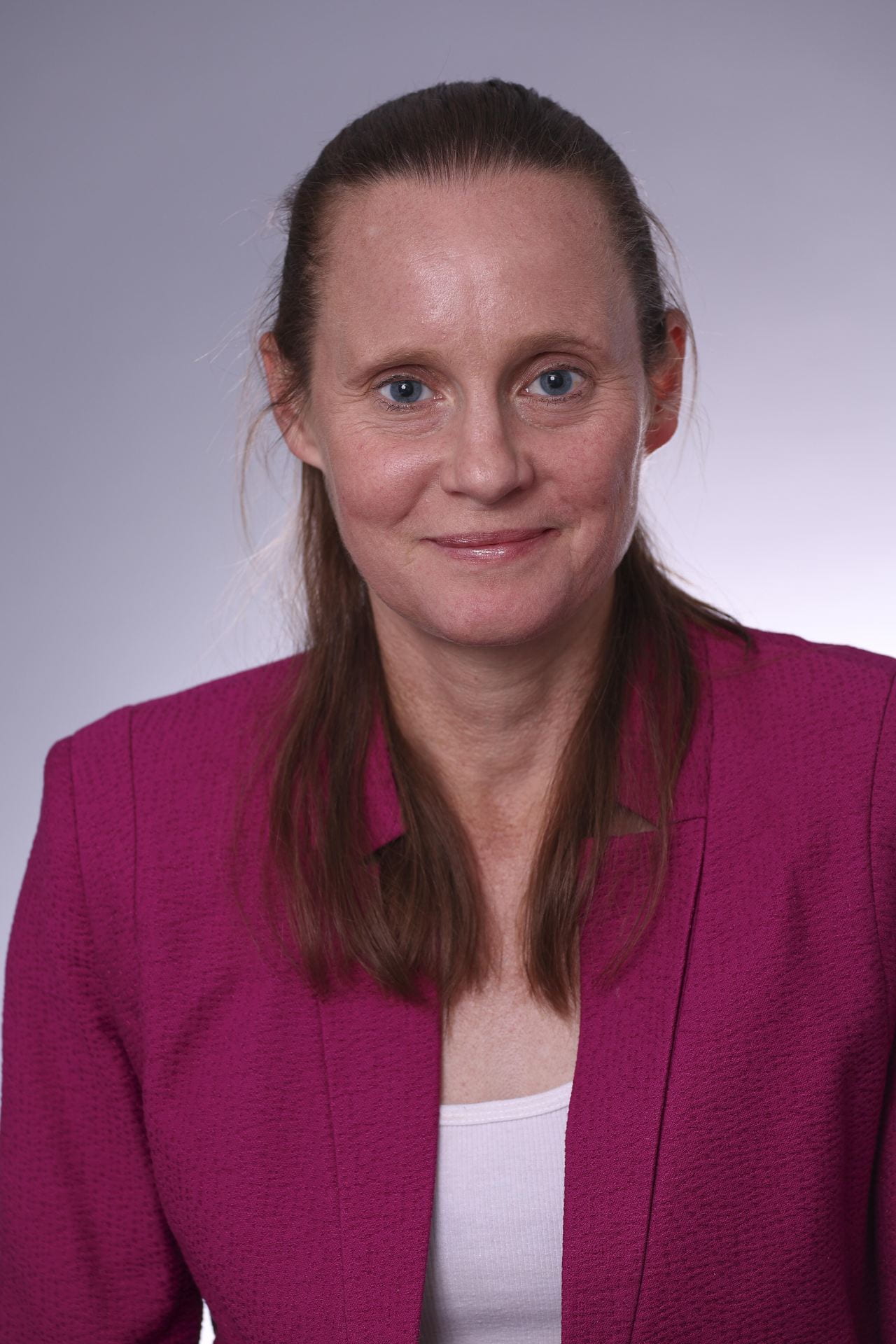
Rebecca Clothey is Professor and Head of Drexel University’s Department of Global Studies and Modern Languages.  Her current research on maintenance and transmission of Uyghur culture spans several countries, including China, the United States, and Türkiye.  She was a visiting scholar at Boğaziçi University in Istanbul in 2018-2019 and at Xinjiang Normal University in 2014. Dr. Clothey has been awarded two Fulbright Fellowships for her research, one to China and one to Uzbekistan, a Spencer Fellowship to study community-based schools in Argentina, and an NEH-ARIT Fellowship to study cultural transmission among the Uyghur diaspora in Türkiye.
 
A picture of Dominik Mierzeejewski, smiling and looking at the camera

Dilmurat Mahmut obtained a Ph.D. in Educational Studies from McGill University. He is a FRQSC postdoctoral fellow at Concordia University and a course lecturer at McGill University, Canada. His research interests include Muslim identity, education, violent extremism, and immigrant/refugee integration in the West. His publications include “Conflicting Perceptions of Education in Canada: The Perspectives of Well-educated Muslim Uyghur Immigrants” in Diaspora, Indigenous and Minority Education, 2021; “Lost in Translation: Exploring Uyghur Identity in Canada,” in Taboo: The Journal of Culture and Education, 2021 (with Waite); Revisiting Muslim Identity and Islamophobia, 2018 (book chapter).

Moderator

A picture of Dominik Mierzeejewski, smiling and looking at the camera

Eric Schluessel is a social historian of China and Central Asia, and his work focuses on Xinjiang (East Turkestan) in the nineteenth and twentieth centuries. He is the Director of the Sigur Center for Asian Studies, Co-Director of the East Asia National Resource Center, and an Associate Professor of History and International Affairs. Land of Strangers, his first monograph, uses local archival and manuscript sources in Chinese and Chaghatay Turkic to explore the ramifications of a project undertaken in the last decades of the Qing empire to transform Xinjiang’s Turkic-speaking Muslims into Chinese-speaking Confucians. Schluessel previously taught at the University of Montana in Missoula and spent the 2018–2019 academic year as a Mellon Fellow at the Institute for Advanced Study in Princeton, NJ. Schluessel has also completed a translation and critical edition of the Tārīkh-i Ḥamīdī of Mullah Mūsa Sayrāmī, which is an important Chaghatay-language chronicle of nineteenth-century Xinjiang.

 
Sigur Center logo with line art of Asian landmarks

[9/30/24] Objects in Disruption: Oppression in Thailand

Monday, September 30th, 2024

3:00 PM – 5:00 PM ET

Lindner Family Commons, Room 602

Elliott School of International Affairs

1957 E Street NW Washington, D.C. 20052

In April 2024, the US State Department released the 2023 report on the Human Rights Practices in Thailand. The report painted a grim picture of the Thai human rights situation at a critical juncture in which the then government of Srettha Thavisin failed to address the human rights problems and the monarchy continued to challenge the constitution leading to intensifying application of laws to suppress its critics. Since the release of the report, Thailand made another dangerous turn, with Srettha forced to step down, the pro-reform opposition Move Forward Party dissolved, and now with Paethongtarn Shinawatra becoming the prime minister.

This talk will focus on the human rights problems facing Thailand in a specific context of the excessive use of lèse-majesté law, or Article 112 of the Criminal Code, which forbids anyone to criticize the monarchy. Since the enthronement of King Vajiralongkorn in 2016, there has been a sharp increase of lèse-majesté cases, particularly against young activists who called for immediate reforms of the monarchy and Article 112. In May 2024, a young activist, Netiporn Sanesangkhom, charged with lèse-majesté, died in prison due to hunger strike. Her death reiterated the fact that the monarchy has remained at the heart of the Thai political crisis. Meanwhile, the new Paethongtarn government has announced that it would not support the reform of Article 112, supposedly because of its close partnership with the monarchy. The speaker will discuss the lèse-majesté situation and his own international advocacy in raising awareness of the problems of lèse-majesté law.

The speaker will also bring with him a mobile exhibition. Titled “Objects of Disruption,” this exhibition will showcase 10 images that convey the ongoing activism among Thais who have sought to “disrupt” the political status quo. The speaker has worked with a group of Thai artists in Thailand in the production of these artworks.

Speaker

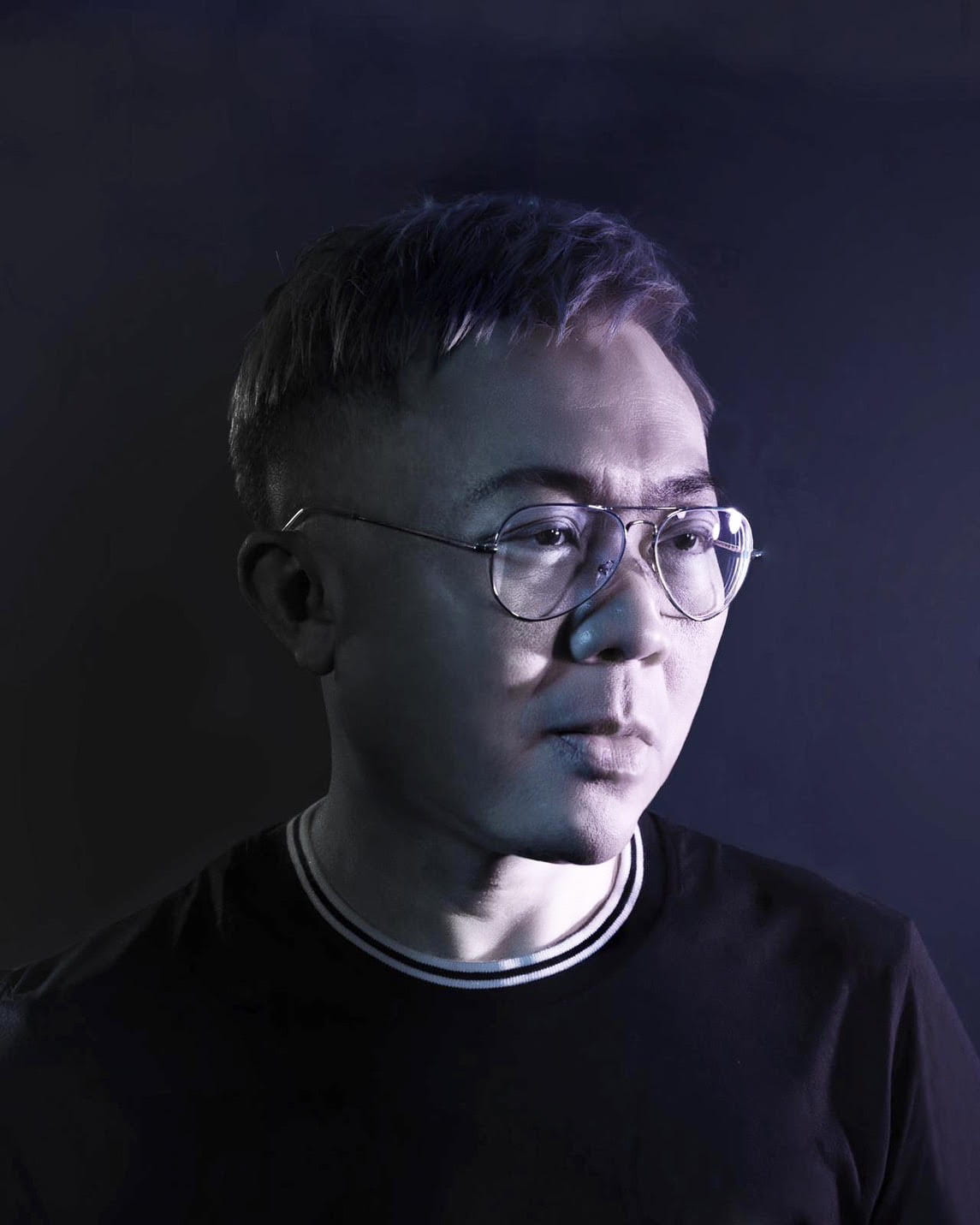
A picture of Pavin Chachavalpongpun in a black shirt looking to the left
Pavin Chachavalpongpun is professor at Kyoto University’s Center for Southeast Asian Studies. He is also the chief editor of the online journal, Kyoto Review of Southeast Asia, in which all articles are translated from English into Japanese, Thai, Bahasa Indonesia, Filipino, Vietnamese and Burmese. In the aftermath of the coup, Pavin was summoned by the junta to have his “attitude adjusted.” He rejected the summons. As a result, a warrant was issued for his arrest and his passport revoked, forcing him to apply for a refugee with Japan. In 2021, he set up his own project “112WATCH” as an international advocacy to raise awareness of the lèse-majesté issue in Thailand and to seek global support for the reform/abolition of this law.
 
Sigur Center logo with line art of Asian landmarks

[9/11/24] Okinawa’s Subnational Diplomacy: Promoting Cooperation and Preventing Conflict in East Asia

Wednesday, September 11th, 2024

4:00 PM – 5:15 PM ET

State Room

Elliott School of International Affairs

1957 E Street NW Washington, D.C. 20052

and Online

The security and economic environment surrounding Okinawa is becoming more uncertain and worrisome. In response, the Okinawa Prefectural Government recently launched its Subnational Diplomacy initiative to promote cooperation and prevent conflict in East Asia. Governor Denny Tamaki of Okinawa will discuss the basic thinking behind this Subnational Diplomacy, some of the concrete steps taken thus far, and the prospects for the future. Then a panel of prominent experts on Japan, international relations, and security policy will comment on Governor Tamaki’s remarks and assess the opportunities and constraints that Okinawa faces to develop and exert its influence in shaping the regional environment.

Speakers

A picture of Dominik Mierzeejewski, smiling and looking at the camera
Governor Denny Tamaki was first elected as Governor of Okinawa in October 2018 and  was re-elected again in September 2022 to serve another four-year term. He was a member of the House of Representatives of  Japan from 2009 to 2018 (4 terms). Prior to that, he was a member of the Okinawa City Assembly  from 2002 to 2005.  He graduated from Sophia School of Social Welfare.  He was born in Okinawa in 1959.
 
A picture of Dominik Mierzeejewski, smiling and looking at the camera

Sheila A. Smith is John E. Merow senior fellow for Asia-Pacific studies at the Council on Foreign Relations (CFR). An expert on Japanese politics and foreign policy, she is the author of Japan Rearmed: The Politics of Military Power, Intimate Rivals: Japanese Domestic Politics and a Rising China (released in Japanese as 日中 親愛なる宿敵: 変容する日本政治と対中政策), and Japan’s New Politics and the U.S.-Japan Alliance. She is also the author of the CFR interactive guide Constitutional Change in Japan. Smith is a regular contributor to the CFR blog Asia Unbound and a frequent contributor to major media outlets in the United States and Asia.

A picture of Dominik Mierzeejewski, smiling and looking at the camera
Dr. Jennifer Kavanagh is a senior fellow & director of military analysis at Defense Priorities. Kavanagh’s research examines U.S. military strategy, force structure and defense budgeting, the defense industrial base, and U.S. military interventions. Her most recent projects have focused on U.S. defense policy in Asia and the Middle East. Previously, Kavanagh was a senior fellow in the American Statecraft Program at the Carnegie Endowment for International Peace. She also worked as a senior political scientist at the RAND Corporation, where, among other roles, she served as director of RAND’s Army Strategy program. Her work has been published in Foreign Affairs, The New York Times, Foreign Policy, Journal of Conflict Resolution, The Washington Quarterly, Lawfare, Los Angeles Times, and War on the Rocks, among other outlets. Kavanagh received an AB in Government from Harvard University and a PhD in Political Science and Public Policy from the University of Michigan. She is also an adjunct professor in the Security Studies Program at Georgetown University.
A picture of Dominik Mierzeejewski, smiling and looking at the camera

Professor Mochizuki holds the Japan-U.S. Relations Chair in Memory of Gaston Sigur at the Elliott School of International Affairs at The George Washington University. Dr. Mochizuki was director of the Sigur Center for Asian Studies from 2001 to 2005. He co-directs the “Memory and Reconciliation in the Asia-Pacific” research and policy project of the Sigur Center. Previously, he was a Senior Fellow at the Brookings Institution. He was also Co-Director of the Center for Asia-Pacific Policy at RAND and has taught at the University of Southern California and Yale University.

Sigur Center logo with line art of Asian landmarks

[9/17/24] Deconstructing Racism “Denial” in Asia

A graphic for Racism "Denial" in Asia

Tuesday, September 17th, 2024

1:15 PM – 3:00 PM ET

Room 505

Elliott School of International Affairs

1957 E Street NW Washington, D.C. 20052

Join us for a focused discussion on research from the Stanford Next Asia Policy Lab (SNAPL), exploring the critical intersection of racism and nationalism in Asian contexts. As Asia becomes increasingly central to the global economy and culture, it faces significant challenges, including rising inequality, cultural intolerance, and institutional shortcomings. SNAPL is committed to addressing these issues through interdisciplinary, evidence-based, and policy-relevant research. This event will highlight SNAPL’s discourse analysis of reports submitted by 16 Asian countries to the United Nations’ Committee on the Elimination of Racial Discrimination (CERD). The research investigates how race and racism are conceptualized in these reports, uncovering patterns of “denial” and exploring how these perspectives align with or diverge from those in other global contexts. The discussion will also examine how historical identities and dominant social, political, and religious values shape national understandings of race in Asia. We aim to foster a deeper understanding of racism, often underdiscussed in the region, and promote the critical dialogue necessary for building a socially and culturally mature “Next Asia.” Two distinguished discussants—Dr. Hiromi Ishizawa from George Washington University and Dr. Erin Aeran Chung from Johns Hopkins University—will join us to share their insights, ensuring a lively and engaging conversation on these pressing issues.

Speakers

A picture of Dominik Mierzeejewski, smiling and looking at the camera

Gi-Wook Shin is the William J. Perry Professor of Contemporary Korea in Sociology; senior fellow at the Freeman Spogli Institute for International Studies; the director of the Walter H. Shorenstein Asia-Pacific Research Center since 2005; and the founding director of the Korea Program since 2001, all at Stanford University. As a historical-comparative and political sociologist, his research has concentrated on social movements, nationalism, development, democracy, migration, and international relations.

Shin is the author/editor of twenty-five books and numerous articles. His recent books include Korean Democracy in Crisis: The Threat of Illiberalism, Populism, and Polarization (2022); The North Korean Conundrum: Balancing Human Rights and Nuclear Security (2021); Shifting Gears in Innovation Policy from Asia (2020); Strategic, Policy and Social Innovation for a Post-Industrial Korea: Beyond the Miracle (2018); Superficial Korea (2017); Divergent Memories: Opinion Leaders and the Asia-Pacific War (2016); Global Talent: Skilled Labor as Social Capital in Korea (2015); Criminality, Collaboration, and Reconciliation: Europe and Asia Confronts the Memory of World War II (2014); New Challenges for Maturing Democracies in Korea and Taiwan (2014); Asia’s Middle Powers? (2013); Troubled Transition: North Korea’s Politics, Economy, and External Relations (2013); History Textbooks and the Wars in Asia: Divided Memories (2011); South Korean Social Movements: From Democracy to Civil Society (2011); One Alliance, Two Lenses: U.S.-Korea Relations in a New Era (2010); Cross Currents: Regionalism and Nationalism in Northeast Asia (2007); Rethinking Historical Injustice and Reconciliation in Northeast Asia (2006); and Ethnic Nationalism in Korea: Genealogy, Politics, and Legacy (2006). Due to the wide popularity of his publications, many have been translated and distributed to Korean audiences. His articles have appeared in academic and policy journals including American Journal of Sociology, World Development, Comparative Studies in Society and History, Political Science Quarterly, Journal of Asian Studies, Comparative Education, International Sociology, Nations and Nationalism, Pacific Affairs, Asian Survey, Journal of Democracy, and Foreign Affairs.

Shin’s latest book, Talent Giants in the Asia-Pacific Century, a comparative study of talent strategies of Japan, Australia, China, and India, will be published by Stanford University Press in 2025. In Summer 2023, Shin launched the Stanford Next Asia Policy Lab (SNAPL), which is a new initiative committed to addressing emergent social, cultural, economic, and political challenges in Asia. Across four research themes– “Talent Flows and Development,” “Nationalism and Racism,” “U.S.-Asia Relations,” and “Democratic Crisis and Reform”–the lab brings scholars to produce interdisciplinary, problem-oriented, policy-relevant, and comparative studies and publications. In May 2024, Shin also launched the new Taiwan Program at APARC.

Shin is not only the recipient of numerous grants and fellowships, but also continues to actively raise funds for Korean/Asian studies at Stanford. He gives frequent lectures and seminars on topics ranging from Korean nationalism and politics to Korea’s foreign relations and historical reconciliation in Northeast Asia and to talent strategies. He serves on councils and advisory boards in the United States and South Korea and promotes policy dialogue between the two allies. He regularly writes op-eds and gives interviews to the media in both Korean and English.

Before coming to Stanford in 2001, Shin taught at the University of Iowa (1991-94) and the University of California, Los Angeles (1994-2001). After receiving his BA from Yonsei University in Korea, he was awarded his MA and PhD from the University of Washington in 1991.

A picture of Dominik Mierzeejewski, smiling and looking at the camera
Junki Nakahara is a postdoctoral fellow at the Stanford Next Asia Policy Lab (SNAPL), housed within the Walter H. Shorenstein Asia-Pacific Research Center. Her research interests include nationalism and xenophobia, critical and cultural studies, feminist (digital) media studies, and postcolonial/decolonial international relations. She earned her PhD in Communication from the School of Communication (2023) and an MA in Intercultural and International Communication from the School of International Service (2019), both at American University. Her publications include contributions to New Media & SocietyAsia-Pacific Journal: Japan Focus, and Discourse Approaches to an Emerging Age of Populism (edited by I. Íñigo-Mora & Lastres-López).
 
As an inaugural member of SNAPL, she leads the “Nationalism and Racism” research track, focusing on two major projects: (1) Racism “Denial” in Asian State Party Reports to the UN CERD, and (2) Elite Articulation of “Multiculturalism” in Australia, Singapore, South Korea, and Taiwan. Using a combination of critical discourse analysis and computational textual analysis, the team examines how nationalism and racism intertwine to create various forms of suppression and intolerance across the Asia-Pacific region, where entanglements among race, ethnicity, nation, and postcoloniality complicate the related debates.

About the Discussants

A picture of Dominik Mierzeejewski, smiling and looking at the camera
After graduating from the University of Illinois at Urbana-Champaign, Professor Ishizawa spent two years as a post-doctoral research associate at the Minnesota Population Center (MPC) at the University of Minnesota. Her research interests are in the areas of social and family demography, immigration, sociology of language, and urban sociology. Her research focuses on the understanding of how immigrants integrate into American society. In particular, her work emphasizes the influence of context, such as family and neighborhood, on the process of integration. She has published work that examines many aspects of immigrant integration, including minority language maintenance, civic participation, health, sequence of migration within family units, intermarriage, and residential settlement patterns among minority language speakers. In addition, she conducts research on another immigrant destination country, New Zealand. Her work focuses on residential segregation and patterns of ethnic neighborhoods among recent immigrant groups and the indigenous Maori population. Additionally, her research project examines life satisfaction among immigrants in Japan.
 
A picture of Dominik Mierzeejewski, smiling and looking at the camera

Erin Aeran Chung is the Charles D. Miller Professor of East Asian Politics and Director of Undergraduate Studies in the Department of Political Science at Johns Hopkins University. She previously served as founding co-director of the Racism, Immigration, and Citizenship (RIC) Program and director of the East Asian Studies Program at Hopkins, and as co-president of the APSA Migration and Citizenship Section.

Professor Chung specializes in East Asian political economy, comparative citizenship and migration politics, civil society, and comparative racial politics. She is the author of Immigration and Citizenship in Japan (Cambridge, 2010, 2014; Japanese translation, Akashi Shoten, 2012) and Immigrant Incorporation in East Asian Democracies (Cambridge, 2020), which received the 2021 ASA Asia and Asian America Section Transnational Asia Book Award, Honorable Mention for the 2021 APSA Migration & Citizenship Section Book Award, and the 2021 Research Excellence Award from the Korea Ministry of Education and the National Research Foundation of Korea. She was awarded a five-year grant from the Academy of Korean Studies (AKS) to support the completion of her third book project on Korean Diasporic Citizenship: Three Tales of Political (Dis)Incorporation in the United States, Japan, and China.

Professor Chung is currently serving as co-editor of the Politics and Society of East Asia Elements series at Cambridge University Press and as founding co-director of the Initiative on Critical Responses to Anti-Asian Violence (CRAAV) at Hopkins. She has been a Mansfield Foundation U.S.-Japan Network for the Future Program Scholar, an SSRC Abe Fellow at the University of Tokyo and Korea University, an advanced research fellow at Harvard University’s Weatherhead Center for International Affairs Program on U.S.-Japan Relations, and a Japan Foundation fellow at Saitama University. At Hopkins, Professor Chung teaches undergraduate courses on Japanese, Korean, East Asian, and Asian American politics and graduate courses on civil society, citizenship and immigration politics, the political economy of development, democratization, and comparative racial politics.

Sigur Center logo with line art of Asian landmarks