4/26/2023 | Global Society Is David Shambaugh’s Classroom

On April 26th, 2023, Gaston Sigur Professor David Shambaugh was profiled in an article for GW Today titled “Global Society is David Shambaugh’s Classroom”.

Global Society is David Shambaugh’s Classroom

Originally published in GW Today | 26 April 2023

In the spring of 1974, David Shambaugh, B.A. ’77, boarded a train in Hong Kong bound for the border of mainland China.

A few days earlier, a British traveler had filled Shambaugh’s ears with stories of “Red China” and what it was like inside the country. Shambaugh, who was traveling the world while on a gap year from his undergraduate studies, wanted to see for himself.

As much as he could, anyway.

Despite a limited opening in the early 1970s highlighted by President Richard Nixon’s dramatic visit in 1972, the United States and China had not yet agreed to normalize relations—something they wouldn’t do until 1979. Shambaugh could only look across the border he was not yet allowed to cross and saw what he describes as a sea of barbed wire fences and rice patties—and mystery.

“[China] intrigued me because the Cultural Revolution was going on, and here was the biggest and most populous country on the planet, but foreigners in general and Americans in particular weren’t allowed to go there,” Shambaugh said. “That became a puzzle for me.”

That intrigue has burned for five decades, while he has become internationally recognized for his scholarly work involving contemporary China and international relations of Asia.

Shambaugh, the Gaston Sigur Professor of Asian Studies, Political Science and International Affairs and the founding director of the Elliott School’s China Policy Program at George Washington University, has been selected for many honorary awards and appointments. He has received research grants from the Ford Foundation, Rockefeller Foundation, Smith Richardson Foundation, German Marshall Fund, Hinrich Foundation, the British Academy and the U.S. National Academy of Sciences, and has been a visiting scholar or professor at universities in Australia, China, Denmark, Germany, Hong Kong, India, Italy, Japan, New Zealand, Russia, Singapore and Taiwan. He has delivered lectures all over the world.

In addition, Shambaugh has served on the board of directors of the National Committee on U.S.-China Relations, Advisory Board of the National Bureau of Asian Research (NBR), East-West Center Fellowship Board and other professional bodies. He is a life member of the Council on Foreign Relations and member of its board of studies and has been a participant in many public policy and scholarly organizations. His expertise is much sought after as he serves on numerous editorial boards and has been a consultant to governments, research institutions, foundations, universities, corporations, banks and investment funds.

Most recently, he was awarded two prestigious fellowships for the 2023-24 academic year. He will spend September through January as a distinguished fellow at the Woodrow Wilson Center for International Scholars in Washington, D.C. (He was previously a fellow from the Wilson Center from 2002 to 2003 and served as director of its Asia program from 1987 to 1988.) From February until June he will move to the west coast, where he has been appointed as a distinguished visiting fellow at Stanford University’s Hoover Institution. During both fellowships, Shambaugh, a prolific and award-winning author, will work on his next book project titled “Disillusionment & Disengagement: How China Lost America.

“The Hoover Institution is delighted to have appointed Professor David Shambaugh as a Distinguished Visiting Fellow during the 2023-2024 academic year,” said Hoover Institution Director and former Secretary of State Condoleezza Rice. “David is one of our nation’s leading scholars of China and U.S.-China relations, and his presence will contribute much to our community of scholars.”

His work has earned praise from some of the world’s most prominent leaders and organizations of international affairs, and GW has been a big part of his legacy.

The early years

After returning from his in 1974 from his trip around the world, Shambaugh felt inspired to focus his studies on Asia, and he wanted to be closer to politics and policy. Washington, D.C., made the most sense, so he applied to several local universities. While he got into all of them, he thought GW had the best Asia studies program, so he transferred in for his junior year from the University of New Mexico to study at the then School of Public and International Affairs (SPIA).

At the time he enrolled, GW was home to the Institute of Sino-Soviet Studies (ISSS), which was one of the leading U.S. institutes for the study of the communist world. He was intrigued not just by China, but communism as a political system. He studied under well-known faculty members. One of those was Gaston Sigur, the former director of ISSS and noted expert on Asia whose namesake is on the chair Shambaugh now holds—which he describes as quite an honor. Sigur is also memorialized in the university’s Sigur Center for Asian Studies. While at GW, he also met his wife of now 40 years Ingrid Larsen, B.A. ’76, in a Chinese class.

After graduation in 1977 Shambaugh was selected for an internship in the State Department’s Bureau of Intelligence and Research for a summer, which led to him being hired as a full-time analyst. There he first covered China, and then Indochina. That job propelled him to another opportunity to work for the National Security Council’s Asia Bureau at the White House during the Carter administration. This was during the immediate run-up to normalization of diplomatic relations between China and the United States, which he said was a fascinating and unique opportunity.

In fact, Shambaugh was on the South Lawn when China’s Vice Premier Deng Xiapong came to the White House in January 1979 to commemorate normalization, and he personally met the Chinese leader three times during his visit.

“For a young person coming out of GW, I wouldn’t have had that opportunity had I not gotten the internship in the State Department in the first place,” Shambaugh said. “GW really was instrumental in launching me not just in Asian studies, but also into the policy world.”

He went on to earn his master’s degree from Johns Hopkins University School of Advanced International Studies (SAIS) before enrolling at the University of Michigan’s Ph.D. program in political science. There he studied under Michel Oksenberg, with whom Shambaugh had worked under at the National Security Council.

Shambaugh studied and lived in China three times once Americans were allowed to do so: during the summers of 1980 and 1983 at Nankai University in Tianjin and Fudan University in Shanghai, and then for two full academic years between 1983 and 1985 at Beijing University. Shambaugh was the first foreigner allowed to study international relations at a Chinese university. He spent two years at Beijing University researching his doctoral dissertation, taking classes and playing on the university’s basketball team, which remains a great thrill in his life.

“We went 56-5 over two years, won two city championships and went to the national tournament twice (the Chinese equivalent of “March Madness”),” Shambaugh recalled. “I am still in touch with many of my teammates, and this was one of my best experiences getting to know Chinese people.”

Coming back

After completing his Ph.D. at the University of Michigan’s Department of Political Science, and a one year stint as Director of the Asia Program at the Smithsonian’s Woodrow Wilson International Center for Scholars, in 1988 Shambaugh accepted an appointment at the University of London’s School of Oriental and African Studies (SOAS) and its Department of Political Studies.

He said he very much enjoyed living in London, exploring England and the European continent. “I developed professional relationships across Europe that I maintain to this day,” he said. Not only was he thriving professionally—he was also appointed editor of the prestigious journal “The China Quarterly” during this time—but his two sons were born there, and it was going to take quite an opportunity to pry him out of London. Then one came calling.

There was an opening at the time for the directorship of the Sigur Center of Asian Studies at GW. Then Elliott School Dean Harry Harding, who held the post from 1995 until 2005, solicited Shambaugh’s application. After being selected by the search committee in GW’s Political Science Department and the Elliott School, for the 1997-98 academic year Shambaugh and his family moved back to the Washington area, where they have been ever since. He had returned home to GW.

“Had it been another university that had invited me to come back to the United States, I may not have done it,” he said. “But this was my alma mater, and the chance to really continue to build the Asian Studies program that Gaston Sigur and my mentors had established. That was just too hard an opportunity to decline.”

For 26 years, GW and the academic community have benefited from his three-pronged approach to academia. First and foremost, there is teaching. “I love the classroom, and I believe it is a very important public good to train students of the next generations and stimulating young people to study China and Asia,” Shambaugh said.

Second, research also drives him . His particular areas of research and publishing have been in Chinese domestic politics, China’s foreign relations, modern Chinese intellectual history, China’s military and security and the international politics of Asia. He has authored significant books and countless articles on all of these topics.

And third, there is public education. He feels it is a scholar’s responsibility and obligation to share their knowledge with the world around them. “I believe the public is also my classroom,” Shambaugh said. “I think the more educated our country is about international affairs, the more informed they are and the better our nation’s engagement with the world will be.”

As China has risen to become a major power in world affairs, demand for Shambaugh’s expertise has grown concomitantly. His expertise is solicited in every corner of the globe. He has lectured across the world so many times Dulles International Airport is a second home. He gives about 30 guest lectures a year, inside and outside the United States, and he has extensively shared his knowledge through countless op-eds, over 200 published articles and 35 books.

He has adopted this outward-looking approach with the China Policy Program, which he founded in 1998, which serves as an outreach program to the Washington, D.C., policy community, as well as China specialists around the world, the media and the public.

Shambaugh has found it very rewarding to watch and be a part of GW’s growth. That includes the Elliott School, which (at the time when it was SPIA) occupied a little townhouse on H Street that it shared with the criminology department when he first arrived as a student in 1974. Now, it is housed in a beautiful, state-of-the-art building on E Street across from the State Department. It is home to more than 2,800 current undergraduate and graduate students, quite the uptick from when he first arrived at Foggy Bottom. Over time, a regional studies center has been established for virtually every area of the world. It has taken hard work, he says, to build the Elliott School into a leading and truly comprehensive professional school of international affairs.

That includes growth in the Asian Studies program, which Shambaugh has experienced as both an undergraduate and now a chaired faculty member.

“We have an internationally renowned faculty offering multidisciplinary approaches to the study of Northeast, Southeast and South Asia,” Shambaugh said. “Our curriculum is also policy-focused, and our graduates gain employment in the U.S. and foreign governments, in consulting firms and NGOs, in business, journalism and other professions. GW prepared me well for a successful career in the field, and since then I and my faculty colleagues have trained new generations of Asianists.”

It is needed, he said, because today’s world needs the best and brightest to solve challenging issues in that key region of the world.

Today’s world

While being a scholar, contributing to the discourse on U.S. foreign policy is also important to him. He is frequently called upon to brief high-level administration officials. And right now, U.S.-China relations are quite tense. Military conflict between the two superpowers is not unimaginable, he says.

He describes experiencing the U.S. and China relationship since 1979 as a roller coaster. In the 1980s, he says there was a tremendous amount of hope, promise and enthusiasm between the two countries. Those positive strides ended temporarily with the Tiananmen Square protests and massacre in 1989, but gradually resumed in the mid-1990s and lasted a decade-plus.

He first noticed changing attitudes of the Chinese toward Americans when he was living in Beijing as a Senior Fulbright Scholar in 2009-10. After several decades of enthusiasm, positivity and dramatic growth in different dimensions of the relationship and participating in academic, student, NGO and economic exchanges, the relationship had become fraught. There has been a real seachange in American thinking about China, and my next book project will explore the reasons for it,” Shambaugh said.

He says China, which had become a much better global participant and global citizen, has more recently moved in a more assertive and concerning direction. China is working, he says, against the West and the liberal international order in favor creating a more diffuse but illiberal order.

“At minimum, they are competitors, at a maximum they are an adversary,” Shambaugh said.

Taiwan is a real potential flashpoint. He believes the American public should educate themselves on the history of the Taiwan issue and how it pertains to U.S.-China relations. Tensions over Taiwan’s status are rising, as China has vowed to unify the island with the mainland, using force if necessary. There is a growing fear that the U.S. and China could actually go to war over Taiwan, as Shambaugh asserts.

He wants to make it clear that current Sino-American tensions are between the governments, ruling parties and militaries. He says the Chinese people are “wonderful,” as he has experienced in his many trips to the country and six years of living there. He also says there has been a lot of good rapport between Americans and the Chinese over the decades.

This is why it as imperative as ever to continue sharing his knowledge with the world while teaching Chinese studies and East Asian studies to students, he said. He does his best to prepare students in the nuances of international affairs in Asia, and he incorporates his lived experiences and scholarly findings into lectures to provide students with substantive knowledge.

“Maybe I’m an old school professor, but I believe it’s incumbent upon us to actually substantively educate students. The classroom is for knowledge transmission. But I also try give them a set of real professional skills—each one of my assignments is geared to training a different skillset, such analytical writing, primary source research, teamwork, forecasting and other practices that they will encounter in the work place,” Shambaugh said.

In his 26 years on the faculty Shambaugh has contributed a great deal of knowledge and expertise to his students in Asian studies at GW, and he expects to continue for another 5 to 10 more years. He has lived out the university’s commitment to creating a better world.
4/19/2023 | Award-Winning Scholar Of Contemporary China David Shambaugh Joins Hoover Institution As Distinguished Visiting Fellow

David Shambaugh, an internationally recognized authority and award-winning writer about contemporary China, will join the Hoover Institution as a distinguished visiting fellow.


Hoover Institution (Stanford, California) – David Shambaugh, an internationally recognized authority and award-winning writer about contemporary China, will join the Hoover Institution as a distinguished visiting fellow. His appointment is effective February 1, 2024.

Shambaugh is the Gaston Sigur Professor of Asian Studies, Political Science, and International Affairs and also the founding director of the China Policy Program at the Elliot School of International Affairs at George Washington University in Washington, DC. Before joining the faculty at GWU, Shambaugh was a professor at the University of London School of Oriental and African Studies and editor of the school’s influential publication, China Quarterly.

In addition to his academic work, Shambaugh had a distinguished career in government, serving in both the Department of State and on the White House National Security staff during the administration of President Jimmy Carter.

A prolific author, Shambaugh has written or edited more than 30 books. His most recent works include International Relations of Asia (Rowman and Littlefield, third edition, 2022); China’s Leaders from Mao to Now (Polity, 2021); Where Great Powers Meet: America & China in Southeast Asia (Oxford University Press, 2021); and China & the World (Oxford University Press, 2020).

“The Hoover Institution is delighted to have appointed Professor David Shambaugh as a distinguished visiting fellow during the 2023‒24 academic year,” said Condoleezza Rice, Hoover Institution director and America’s 66th secretary of state. “David is one of our nation’s leading scholars of China and US-China relations, and his presence will contribute much to our community of scholars.”

Shambaugh’s appointment coincides with Hoover’s increased activity on developing policy research that addresses the People’s Republic of China’s efforts to reshape international norms and institutions, its strategic competition with the United States, and its threats to its democratic neighbors in the Indo-Pacific Region, most notably Taiwan.

In convening multidisciplinary teams of scholars, Hoover has been able to generate leading research on a host of issues related to China’s aggression and ambitions, including the Chinese Communist Party’s influence operations in the West and in the developing world; Beijing’s deployment of a digital currency and its challenge to the US dollar’s international dominance; and how Taiwan can develop effective deterrents against a potential invasion by China.

4/19/2023 | Three Elliott School Faculty Members Receive Prestigious Fellowship

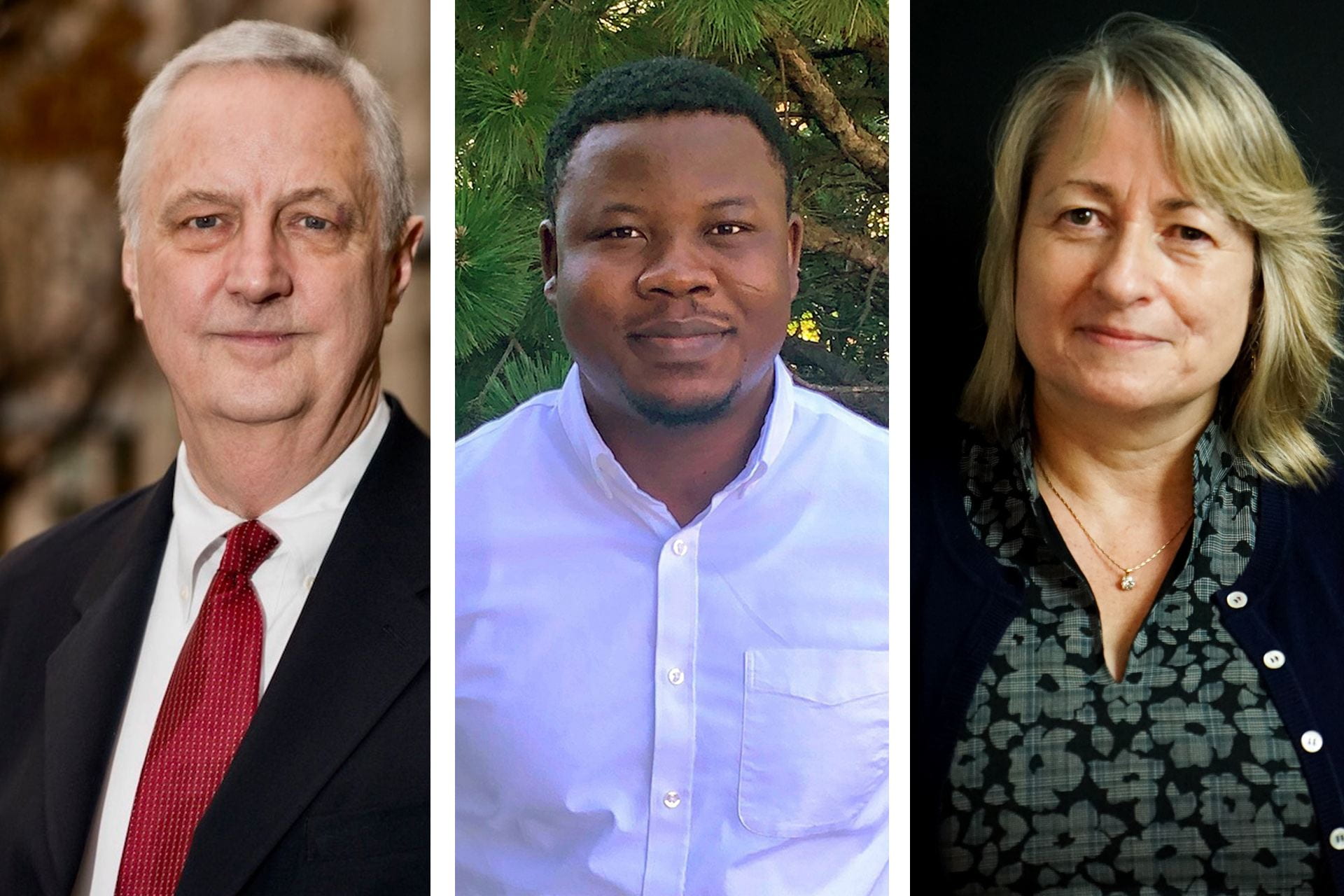
From left, David Shambaugh, Moses Kansanga and Joanna Spear.

David Shambaugh, Moses Kansanga and Joanna Spear selected for Woodrow Wilson Center Fellowships for the 2023-2024 academic year.

Three faculty members from George Washington University’s Elliott School of International Affairs have been selected by the Woodrow Wilson Center for International Scholars in Washington, D.C., in their highly competitive fellowship program for the 2023-2024 academic year. In this year’s rigorous international competition, approximately one in 15 applicants were selected.

David Shambaugh earned the distinction of Distinguished Fellow, while Moses Kansanga and Joanna Spear were selected as Fellows.

“I am so thrilled that the Wilson Center has recognized three of our faculty members—Professors Shambaugh, Kansanga and Spear—with these highly competitive fellowship awards,” Elliott School Dean Alyssa Ayres said. “Their selection underscores the outstanding caliber of our faculty, and, notably, how our scholars’ research connects to policy issues, an essential element of the Elliott School’s mission.”

Fellows conduct research and write in their areas of expertise, while interacting with policymakers in Washington, Wilson Center staff and other scholars in residence. The Wilson Center is a “key non-partisan policy forum for tackling global issues through independent research and open dialogue to inform actional ideas for the policy communities.”

Shambaugh, the Gaston Sigur Professor of Asian Studies, Political Science and International Affairs and the founding director of the Elliott School’s China Policy Program, is internationally recognized for his scholarly work involving contemporary China and international relations of Asia. He was also a fellow of the Wilson Center from 2002-2003 and served acting director of its Asia Program from 1987-1988.

“For me professionally, I am deeply honored to have been selected as a Distinguished Fellow in the 2023-2024 class of Fellows at the Woodrow Wilson International Center for Scholars, but I am also personally pleased because it will be my third time at the center,” Shambaugh said. “So, this will be a real homecoming for me, and I have deep respect for all that the Wilson Center has contributed to the intellectual, scholarly and cultural life of our nation.”

Shambaugh, a prolific and award-winning author, will work on his next book project entitled Disillusionment & Disengagement: How China Lost America.

Kansanga, an assistant professor of geography and international affairs, will focus his fellowship research on post-harvest food loss in Africa. “Specifically, my work will explore the multi-scalar drivers of postharvest food loss of vegetables in smallholder farming communities, with emphasis on the gender dynamics that underpin women smallholder farmers’ disproportionate burden of [postharvest loss],” Kansanga said. “My work will also use participatory techniques to explore contextually relevant solutions to postharvest food loss.”

Spear, director of the FAO Regional Skill Sustainment Initiative and an Elliott School research professor, will be immersing herself in the world of biopharma and how it relates to the COVID-19 pandemic. Specifically, she will explore the independent domestic strategies and foreign policies of biopharmaceutical firms such as Moderna, AstraZeneca, Pfizer and Johnson & Johnson in the development of the messenger RNA vaccines that have been vital in suppressing the COVID-19 virus.

“The roles of pharma and biotech firms in developing COVID-19 vaccines and getting them to market is a story that has not yet been independently or fully recounted, nor has the role of these firms and their relationships with states and the models of cooperation developed been critically assessed,” Spear said. “I hope to rectify this.”

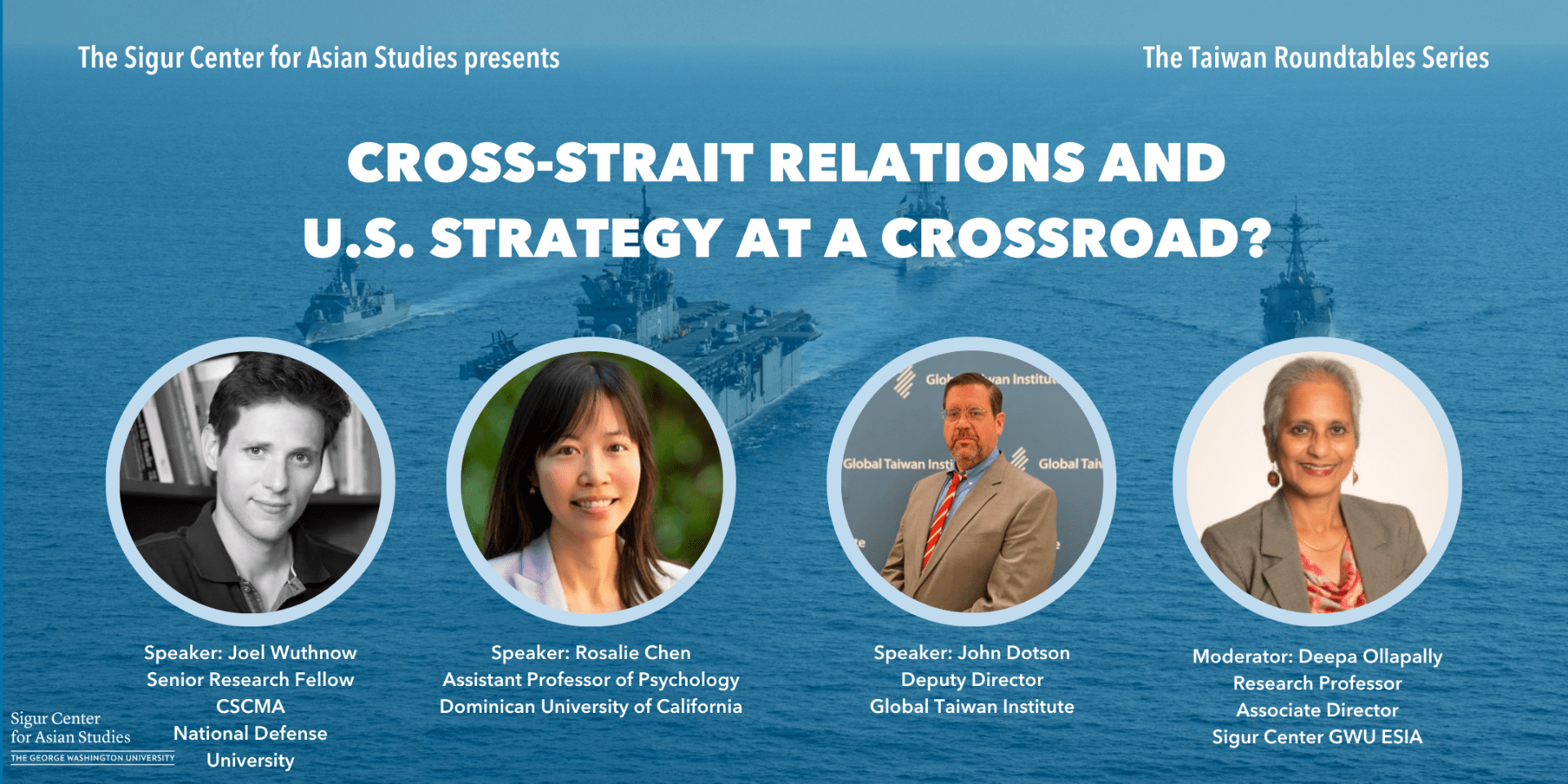
5/12/23 | Taiwan Roundtable | Cross-Strait Relations and U.S. Strategy at a Crossroad?

A graphic for Cross-Strait Relations and U.S. Strategy at a Crossroad

Friday, May 12, 2023

12:00 PM – 12:30 PM ET Lunch

12:30 PM – 2:00 PM ET Event

Lindner Family Commons

Elliott School of International Affairs

1957 E Street NW Washington, D.C. 20052

How is the intensification of Chinese pressure in the Taiwan Strait affecting cross strait politics and  U.S. strategy? What options are open to the U.S. and Taiwan to safeguard their interests and what are the implications? 

Join the Sigur Center for Asian Studies for a luncheon discussion with top political and strategic experts.

Topics

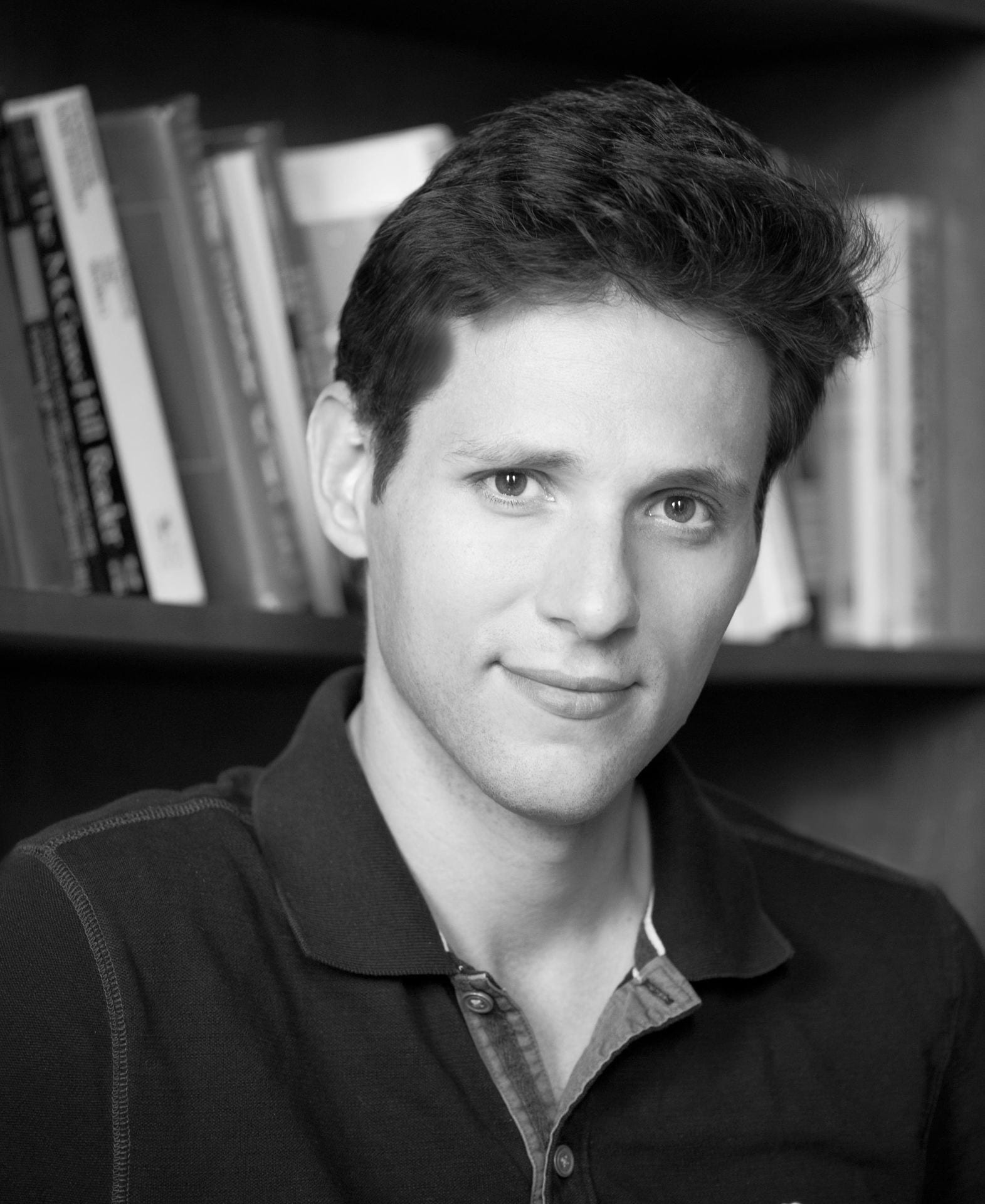
Military Scenarios in the Taiwan Strait and U.S. Deterrence Strategy, Joel Wuthnow, Senior Research Fellow, National Defense University

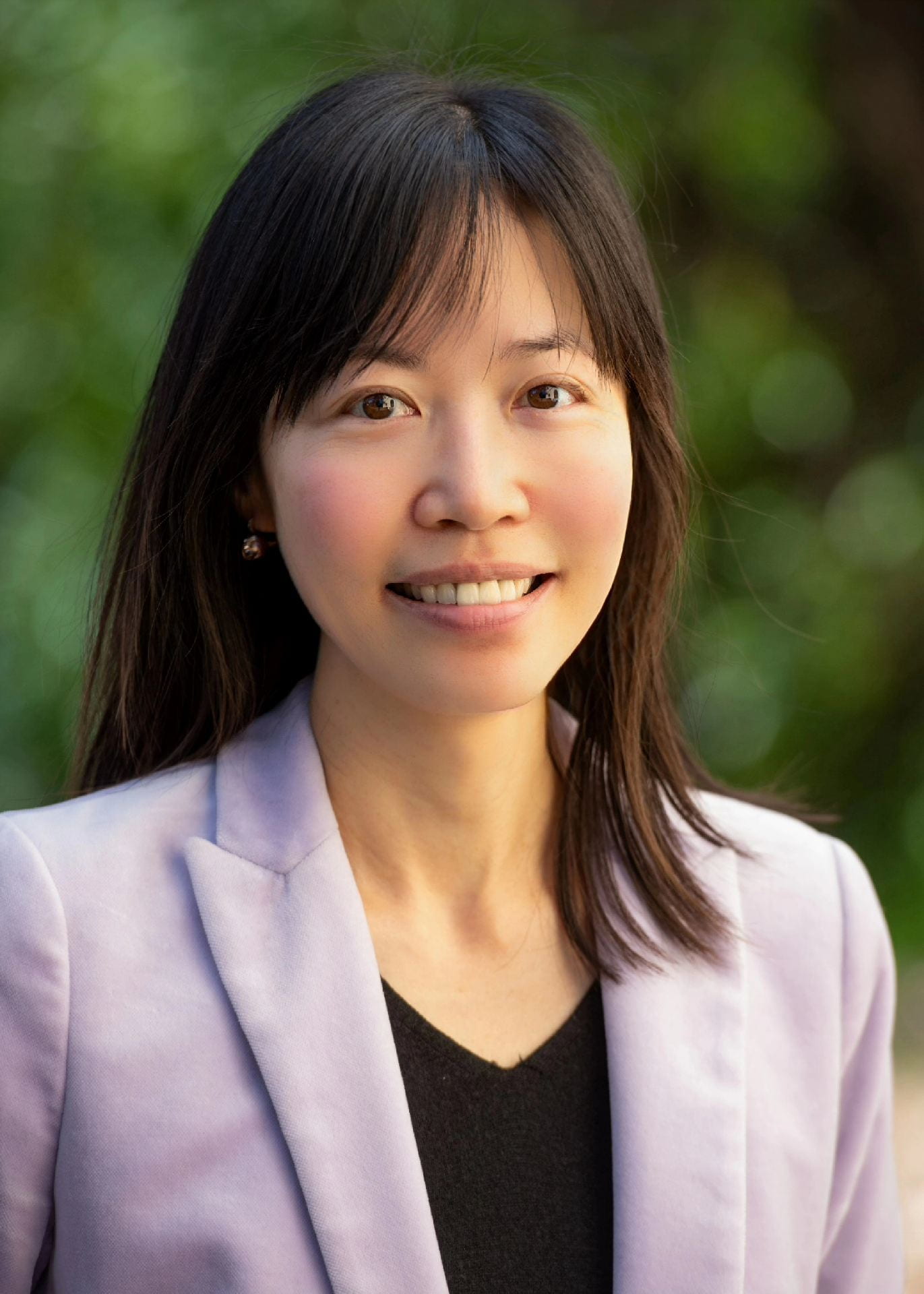
How are Identity and Ideology in Taiwan Shaping Cross-Strait Perceptions?, Rosalie Chen, Assistant Professor of Psychology, The Dominican University of California

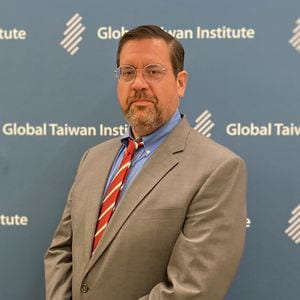
Cross-Strait Politics and Evolving U.S.-Taiwan Relations, John Dotson, Deputy Director, The Global Taiwan Institute

Speakers

A headshot of Lotta Danielsson

Dr. Joel Wuthnow is a senior research fellow in the Center for the Study of Chinese Military Affairs within the Institute for National Strategic Studies at NDU. His research areas include Chinese foreign and security policy, Chinese military affairs, U.S.-China relations, and strategic developments in East Asia. In addition to his duties in INSS, he also serves as an adjunct professor in the Edmund A. Walsh School of Foreign Service at Georgetown University. 

His recent books and monographs, all from NDU Press, include Gray Dragons: Assessing China’s Senior Military Leadership (2022), Crossing the Strait: China’s Military Prepares for War with Taiwan (2022, lead editor), The PLA Beyond Borders: Chinese Military Operations in Regional and Global Context (2021, lead editor), System Overload: Can China’s Military Be Distracted in a War over Taiwan? (2020), and Chairman Xi Remakes the PLA: Assessing Chinese Military Reforms (2019, co-editor). His research and commentary has also appeared in outlets such as Asia Policy, Asian Security, China Leadership Monitor, The China Quarterly, Foreign Affairs, Foreign Policy, Joint Force Quarterly, Journal of Contemporary China, Journal of Strategic Studies, Korean Journal of Defense Analysis, Naval War College Review, and in edited volumes. 

Prior to joining NDU, Dr. Wuthnow was a China analyst at CNA, a postdoctoral fellow in the China and the World Program at Princeton University, and a pre-doctoral fellow at The Brookings Institution. His degrees are from Princeton University (A.B., summa cum laude, in Public and International Affairs), Oxford University (M.Phil. in Modern Chinese Studies), and Columbia University (Ph.D. in Political Science). He is proficient in Mandarin.

A headshot of Jeffrey Bean

Rosalie Chen is currently an Assistant Professor of Psychology at Dominican University of California. Her research interests are interdisciplinary in nature and lie at the intersection of social psychology, political science, and culture. Rosalie studies ideology in the East Asian cultural context, the national identity issue in cross-strait relations, and the role of culture-specific emotions at the group level in motivating international conflict. She is particularly interested in exploring international relations from the angles of political psychology and culture. Previously, she taught at Colgate University before joining DUC. Rosalie received her B.S. from Truman State University, M.A. from George Washington University, and Ph.D. from National Taiwan University.

A picture of Daniel Aum

John Dotson is the deputy director at the Global Taiwan Institute. John has performed extensive writing and research on a range of political and national security issues related to U.S. policy in East Asia, to include Chinese propaganda and influence efforts, military-civil fusion efforts within the People’s Liberation Army, and patterns in military coercion efforts directed against Taiwan. He is a proficient Mandarin linguist, who has performed extensive original research in indigenous Chinese language sources.

John holds an M.A. in National Security Studies from the U.S. Naval War College, and a Master of International Public Policy from Johns Hopkins-SAIS.

Moderator

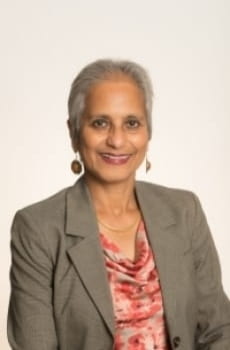
Deepa Ollapally, pictured in professional attire

Deepa Ollapally is a political scientist specializing in Indian foreign policy, India-China relations, and Asian regional and maritime security. She is Research Professor of International Affairs and the Associate Director of the Sigur Center. She also directs the Rising Powers Initiative, a major research program that tracks and analyzes foreign policy debates in aspiring powers of Asia and Eurasia.

Dr. Ollapally is currently working on a funded book, Big Power Competition for Influence in the Indian Ocean Region, which assesses the shifting patterns of geopolitical influence by major powers in the region since 2005 and the drivers of these changes. She is the author of five books including Worldviews of Aspiring Powers (Oxford, 2012) and The Politics of Extremism in South Asia (Cambridge, 2008). Her most recent books are two edited volumes, Energy Security in Asia and Eurasia (Routledge, 2017), and Nuclear Debates in Asia: The Role of Geopolitics and Domestic Processes (Rowman & Littlefield, 2016).

Dr. Ollapally has received grants from the Carnegie Corporation, MacArthur Foundation, Smith Richardson Foundation, Ford Foundation, the Rockefeller Foundation, and the Asia Foundation for projects related to India and Asia. Previously, she was Associate Professor at Swarthmore College and has been a Visiting Professor at Kings College, London and at Columbia University.

Sigur Center logo with line art of Asian landmarks

5/4/23 | Gaston Sigur Memorial Lecture: North Korea, Japan and Biopolitics of Repatriation

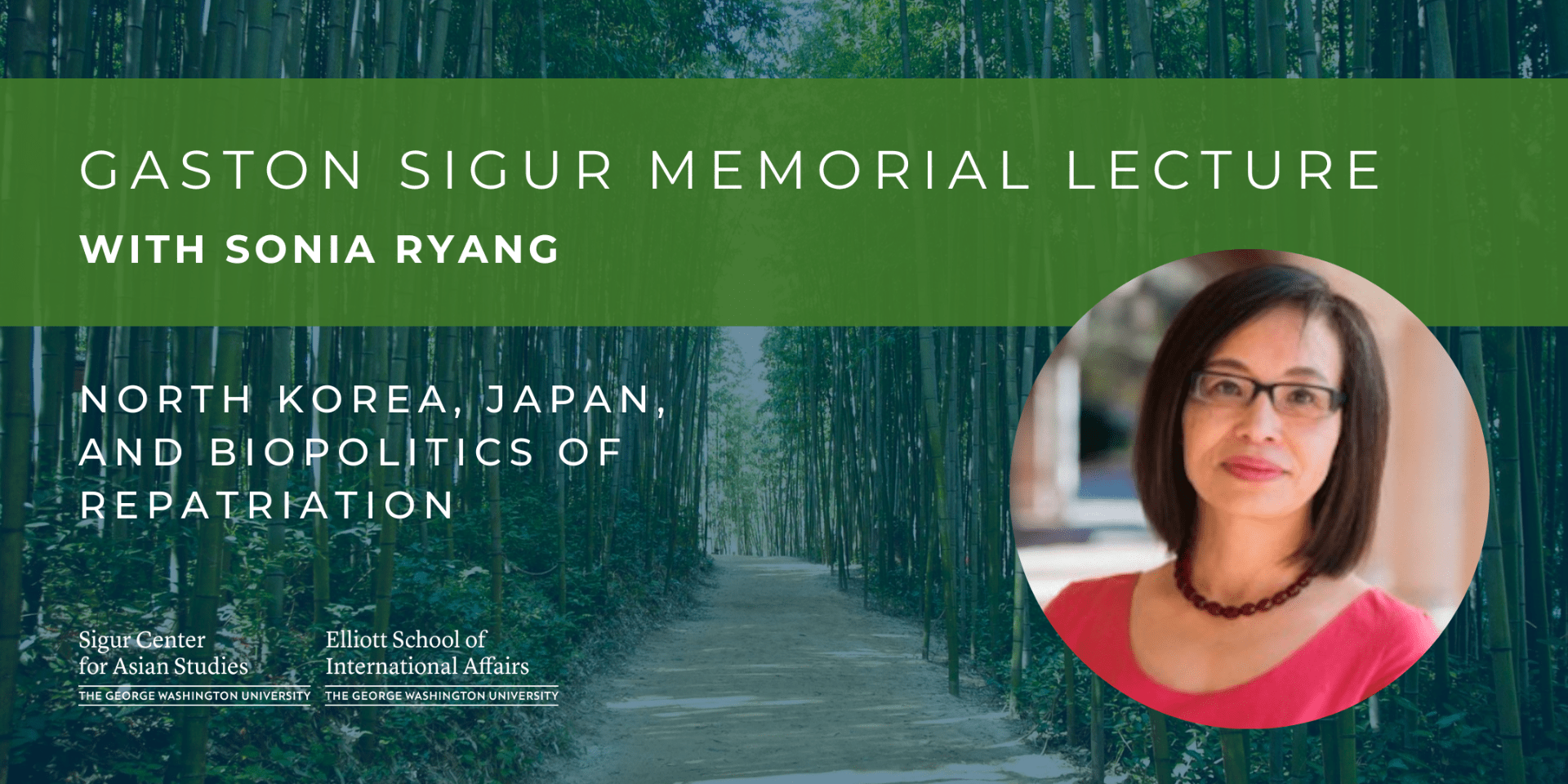
A graphic for North Korea, Japan, and Biopolitics of Repatriation

Thursday, May 4, 2023

4:30 PM – 6:00 PM ET

Lindner Commons, 602

Elliott School of International Affairs

1957 E Street NW Washington, D.C. 20052

On December 14, 1959, amidst much fanfare and tears, the first repatriation boat carried thousands of Koreans from Niigata, Japan, to Cheongjin, North Korea. In the remaining two weeks of December 1959 alone, a total of three trips were made, transporting 2,942 persons to North Korea. Between 1959 and1984, a total of 93,340 persons were relocated from Japan to North Korea. This number included Koreans who had moved from Korea to Japan during the colonial period and their descendants, including family members who had been born in Japan, as well as some 1,830 Japanese spouses; including the descendants of Japanese spouses, the estimate total of about 6,800 Japanese citizens were repatriated to North Korea over the course of this process. Most Koreans who repatriated from Japan to North Korea originated from southern provinces in the peninsula, i.e., today’s South Korea. Reflecting recent declassification of the International Committee for Red Cross papers, scholars have revisited this issue, yet questions remain: how should we understand this phenomenon? In this presentation, Sonia Ryang approaches this question from multiple angles and addresses the issues of power and forms of life.

Registration is free and open to the public.

This event will be recorded and will be available on the Sigur Center YouTube channel after the event.

Speaker

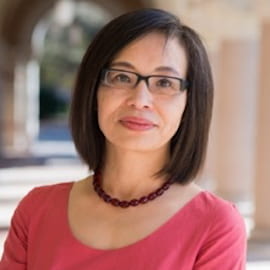
Sonia Ryang was born in Japan to Korean parents and grew up speaking both Korean and Japanese. Ryang received a Ph.D. degree in Social Anthropology from Cambridge University, England, and worked as a Research Fellow at the Research School for Pacific and Asian Studies, the Australian National University, before being appointed as Assistant Professor of Anthropology at Johns Hopkins University. Ryang moved to the University of Iowa as an endowed chair of Korean Studies and professor of Anthropology. At Iowa, she directed the Center for Asian and Pacific Studies and also served as the Director of Academic Programs in the University of Iowa International Programs. She came to Rice in 2014 as the Director of the Chao Center for Asian Studies; after six years of directorship, she joined the Department of Transnational Asian Studies, her home department.

She has been elected the President of the Society for East Asian Anthropology (2020-2022).

Sonia Ryang is a social anthropologist by training, having obtained her PhD from Cambridge University in 1995. She began her anthropological career with research on the Korean minority in Japan as her primary focus of investigation. While, in many senses, this field of research continues to constitute the core of her work, she now also concerns herself with a much broader set of conceptual and ontological questions pertaining to human existence, encompassing ethnic minorities, diaspora, totalitarianism, ideology, romantic (and other forms of) love, language, food, and, more recently, science. While her books explore a wide range of themes, they are all underpinned by a desire to explore and elucidate the socio-historical functions and materiality of ideas that humans have created and subjected themselves to through the self-imposition of various rules, codes, and institutions. While this human journey has been marked by countless demonstrations of imagination and ingenuity, it has also witnessed innumerable examples of tragic error and loss. Sonia’s scholarship tries to address these. Thus, it is unequivocally interdisciplinary and cross-disciplinary in nature and orientation, combining area studies, literature, history, gender studies, diaspora and transnational studies, philosophy, and ethics, among others. Geographically, she has focused on Korea (North and South) and Japan (the Korean diaspora in Japan) throughout her career. More recently, envisioning the concept of transnational Asia, she has begun to explore the best means by which the boundaries between Asia and Asian America can be undone, for, when viewed from multiple angles, such a distinction is rapidly becoming an artificial one.

With the grant funding by the National Science Foundation (Proposal ID: BCS-1357207) Sonia Ryang has recently finished a project which forms the sequel to her 2012 book on North Korea’s cultural logic, Reading North Korea: An Ethnological inquiry (Harvard University Press, 2012). The book, based on this research, will be published from the University of Hawaii Press in 2021, under the title Reading North Korea. With the Academy of Korean Studies funding (AKS-2020-R24) Sonia Ryang is currently working on a research that reconsiders the repatriation of Koreans from Japan to North Korea (1959 through 1984).

Moderator

Gregg A. Brazinsky works on U.S.-East Asian relations and East Asian international history. He is interested in the flow of commerce, ideas, and culture among Asian countries and across the Pacific. He is proficient in Mandarin Chinese and Korean. He is the author of two books: Winning the Third World (2017), which focuses on Sino-American Rivalry in the Third World and Nation Building in South Korea (2007), which explores U.S.-South Korean relations during the Cold War. Currently, he is working on two other book projects. The first examines American nation-building in Asia during the Cold War. The second explores Sino-North Korean relations between 1949 and 1992 and focuses specifically on the development of cultural and economic ties between the two countries. He has received numerous fellowships to support his research including the Kluge Fellowship from the Library of Congress, the Smith Richardson Foundation junior faculty fellowship, and a fellowship from the Woodrow Wilson Center. Professor Brazinsky also currently serves as the director of the George Washington Cold War Group.

As director of the Asian Studies Program, Professor Brazinsky has attracted some of the brightest students from around the country and the world who share a commitment to pursuing careers related to Asia. He helped to launch a special mentoring program for Asian Studies MA students and has worked to expand fellowship and professional opportunities for students in the program.

Sigur Center logo with line art of Asian landmarks

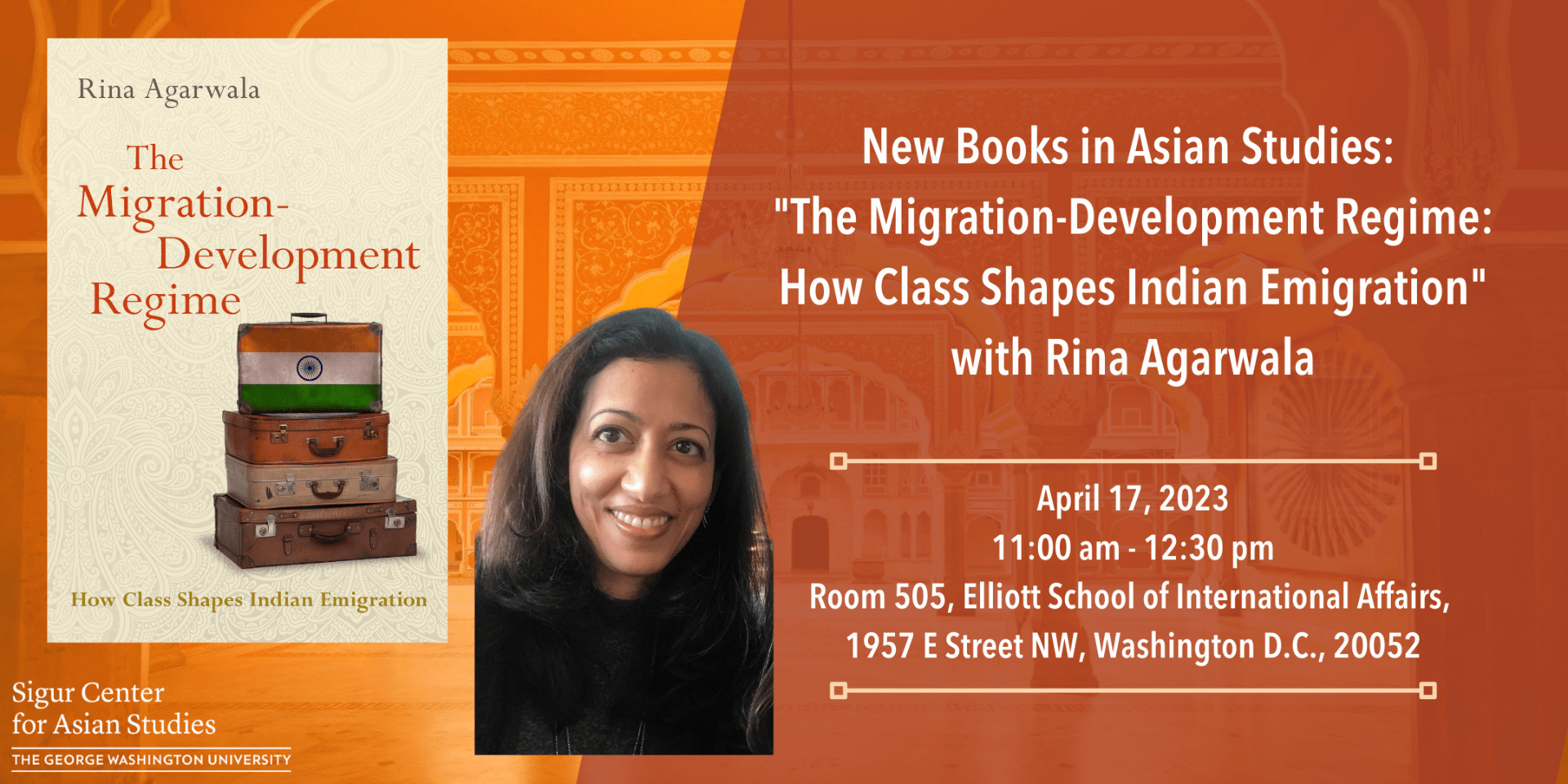
4/17/23 New Books in Asian Studies: “The Migration-Development Regime”

Monday, April 17, 2023

11:00 AM – 12:30 PM ET

Room 505

Elliott School of International Affairs

1957 E Street NW Washington, D.C. 20052

How can we explain the causes and effects of global migration from the perspective of sending states and migrants themselves? The Migration and Development Regime introduces a novel analytical framework to help answer this question in India, the world’s largest emigrant exporter and the world’s largest remittance-receiving country.  Drawing on an archival analysis of Indian government documents, a new database of Indian migrants’ transnational organizations, and unique interviews with poor and elite Indian emigrants, recruiters, and government officials, this book exposes the vital role the Indian state, as well as its poor and elite emigrants, have long played in forging and legitimizing class inequalities within India through their management of international emigration.  Since the 1800s, the Indian state has differentially used poor and elite emigrants to accelerate domestic economic growth at the cost of class inequalities, while still retaining political legitimacy. At times, the Indian state has forbidden emigration, at other times it has promoted it.  At times, Indian emigrants have brought substantial material inflows, at other times, they have brought new ideas to support new development agendas within India.  But throughout, Indian emigration practices have deepened class inequalities by imposing different regulations, acquiring different benefits from different classes of emigrants, and making new class pacts–all while remaining invisible in political and academic discussions on Indian development.  On the flip side, since the early 1900s, poor and elite emigrants have resisted and re-shaped Indian development in response to state migration practices.  By taking this long and class-based view, this book recasts contemporary migration not simply as a problematic function of “neoliberalism” or as a development panacea for sending countries, but as a long and dynamic historical process that sending states and migrants have long tried to manage.  In doing so, it re-defines the primary problems of migration, exposes the material and ideological impact that migration has on sending state development, and isolates what is truly novel about contemporary migration.

Copies of the book can be purchased from Oxford University Press.

Registration is free and open to the public.

This event will be recorded and will be available on the Sigur Center YouTube channel after the event.

Speaker

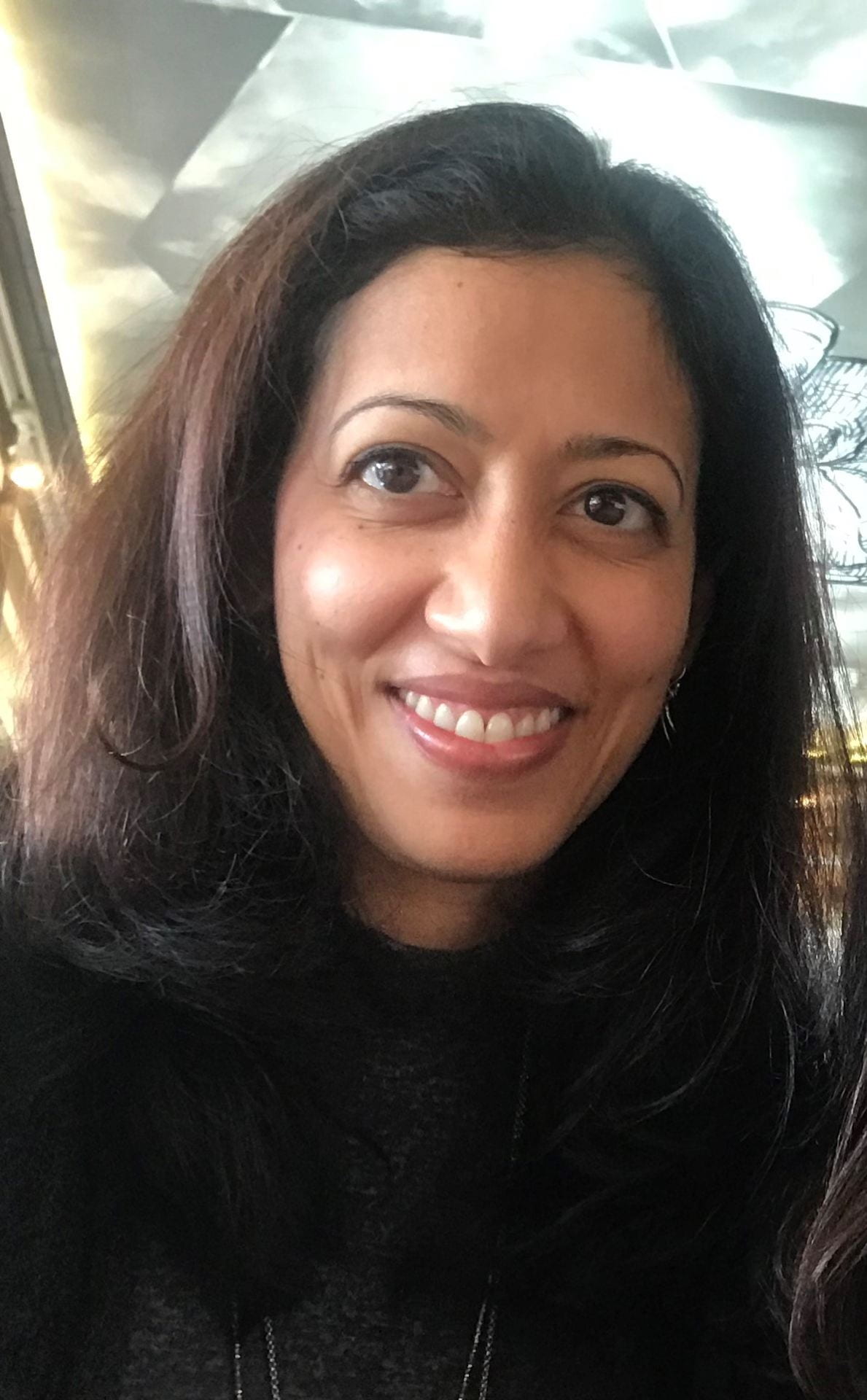
A headshot of Rina Agarwala

Rina Agarwala is a Professor of Sociology at Johns Hopkins University. Agarwala publishes and lectures on international development, labor, migration, gender, social movements, and Indian politics. Agarwala is the author of Informal Labor, Formal Politics and Dignified Discontent in India (Cambridge, 2013) and The Migration-Development Regime: How Class Shapes Indian Emigration (Oxford, 2022), as well as the co-editor of Whatever Happened to Class? Reflections from South Asia (Routledge, 2008, 2016). Agarwala has worked at the United Nations Development Program in China, the Self-Employed Women’s Association in India, and Women’s World Banking in New York. She holds a B.A. in Economics and Government from Cornell University, an MPP in Political and Economic Development from the Harvard Kennedy School of Government, and a Ph.D. in Sociology and Demography from Princeton University.

Moderator

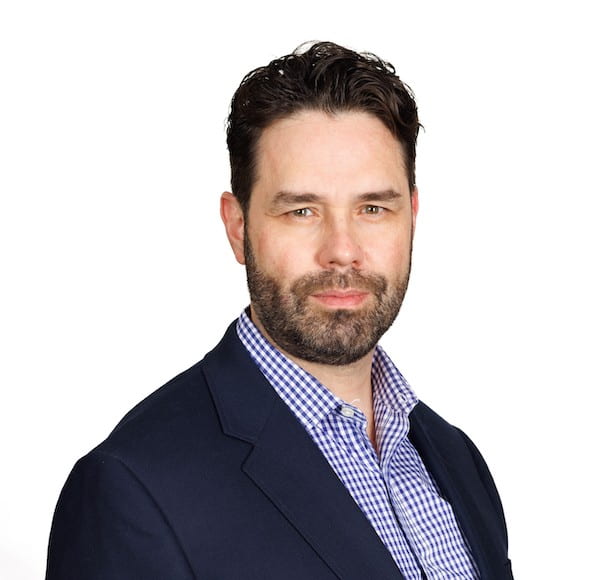
A picture of Emmanuel Teitelbaum

Emmanuel Teitelbaum is an Associate Professor of Political Science and International Affairs at George Washington University. Professor Teitelbaum serves as a managing editor for the Journal of Development Studies. His writings examine class politics and political violence. His academic articles have appeared in leading journals such as the American Journal of Political Science, World Politics, Comparative Political Studies, Political Research Quarterly, Politics and Society, and the Journal of Development Studies. His book, Managing Dissent: Democracy and Industrial Conflict in Post-Reform South Asia (Cornell University Press), explores the dynamics of state-labor relations and industrial conflict following the implementation of neoliberal economic reforms in India and Sri Lanka. Professor Teitelbaum’s research has received support from the United States Institute of Peace, the National Science Foundation, the Fulbright Foundation and the Social Science Research Council. He was the recipient of the 2007 Gabriel Almond Award for Best Dissertation in Comparative Politics. He holds a Ph.D. from Cornell University and a B.A. from John Carroll University.

Sigur Center logo with line art of Asian landmarks