4/14/2022 | Congress, Ukraine and US Hardening Against China – Book Launch of U.S.-China Relations: Perilous Past, Uncertain Present

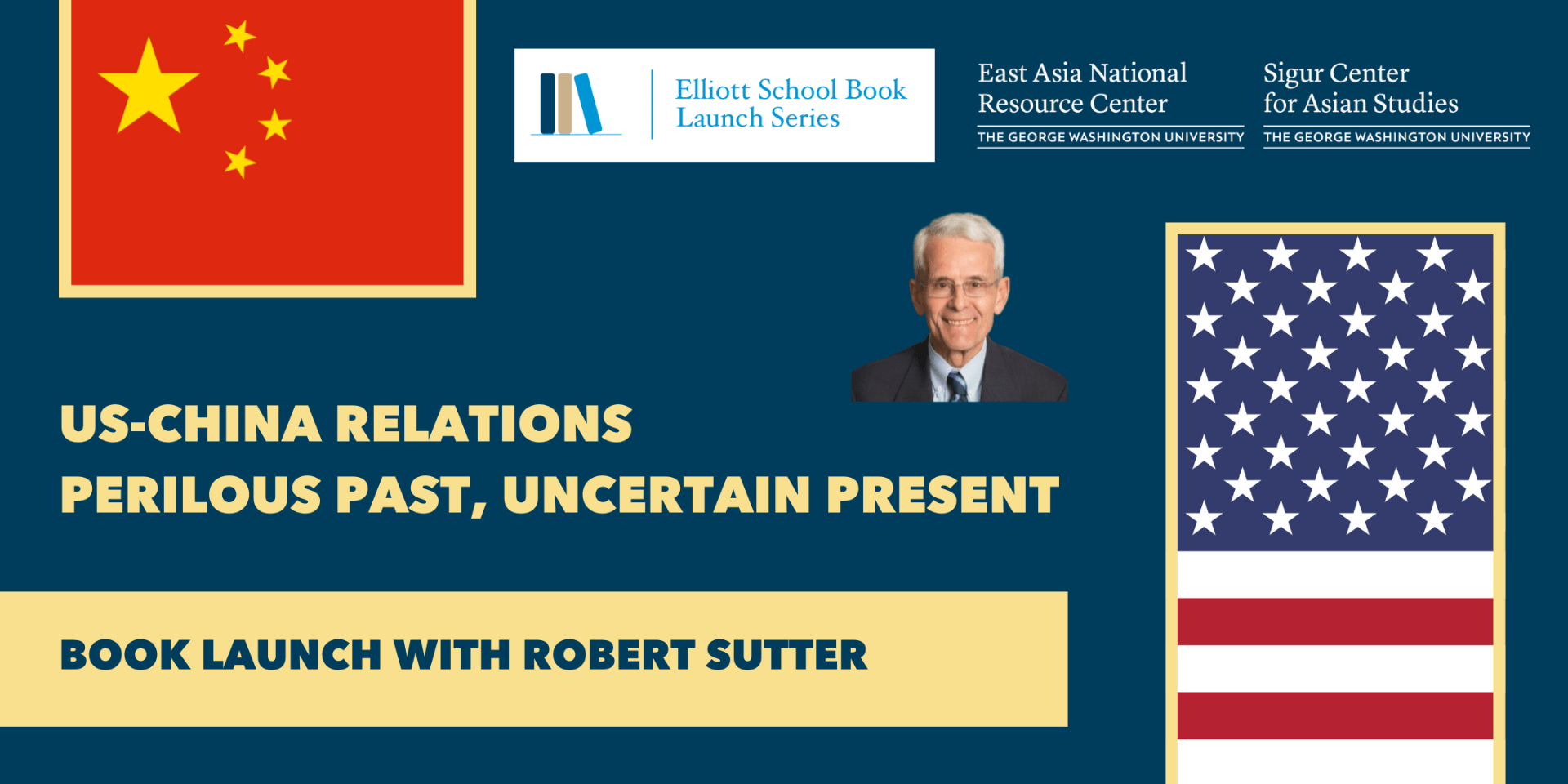
event banner for book launch with Robert Sutter

The Elliott School of International Affairs New Book Launch Series

The Sigur Center for Asian Studies

The East Asia National Resource Center

Presents

Book Launch: U.S.-China Relations: Perilous Past, Uncertain Present

Thursday, April 14th, 2022

12:00 pm – 1:15 pm EDT

1957 E ST NW Room 505 and Online via Zoom

NOTE: All non-GW affiliated attendees attending the event IN-PERSON must comply with GW’s COVID-19 policy in order to attend this event, including showing proof of vaccination and masking indoors. For frequently asked questions, please refer to GW’s guidance

Join us for a book talk with Professor Robert Sutter on his book “U.S.-China Relations: Perilous Past, Uncertain Present

About

The extensively revised fourth edition of Sutter’s major text US-China Relations: Perilous Past, Uncertain Present explains in detail the critical role of American domestic politics in hardening US policy toward China over the past five years. Bi-partisan majorities in Congress seek to defend America against an onslaught of malign Chinese government advances in broad areas of international security, economic statecraft and global governance. Congress exerts unprecedented influence on US China policy. The bi-partisan majorities are much steadier than erratic Donald Trump and Joseph Biden shifting from past disparaging China’s threat to a current tough posture in line with congressional majorities.

Sutter will discuss these findings, reinforced by China’s recent support for Russia in the Ukraine war, as well as some important shortcomings in current American strategy toward China.


Registration

The event is open to the public.

Speaker

Robert Sutter, Professor of Practice in International Affairs, The George Washington University

Opening Remarks

Alyssa Ayes, Dean, The Elliott of International Affairs at The George Washington University

Moderator

John W. Tai, Professorial Lecturer, The George Washington University

Speaker
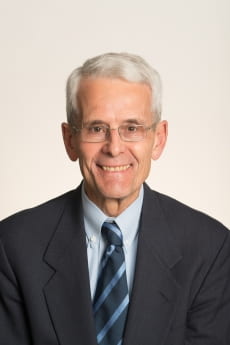
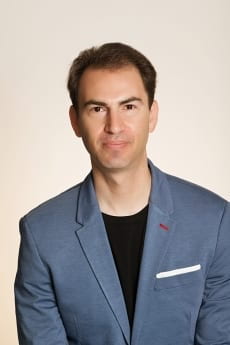
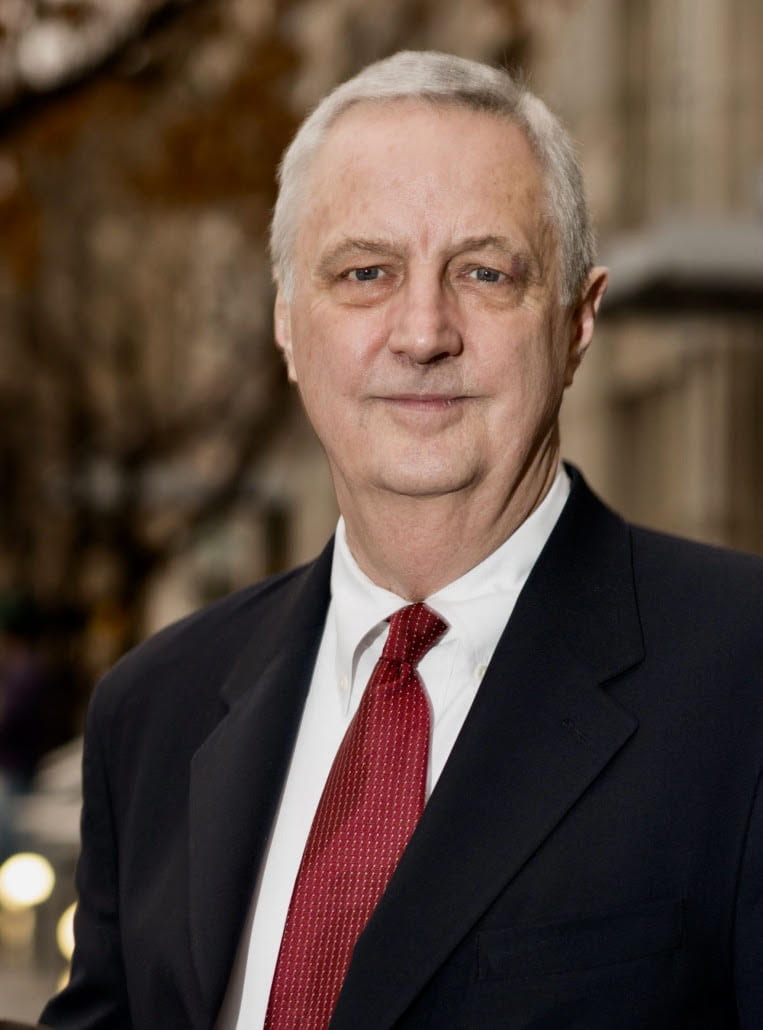
A headshot of Professor Robert Sutter

Robert Sutter is Professor of Practice of International Affairs at the Elliott School of George Washington University (2011-Present). He also served as Director of the School’s main undergraduate program involving over 2,000 students from 2013-2019. His earlier full-time position was Visiting Professor of Asian Studies at Georgetown University (2001-2011). A Ph.D. graduate in History and East Asian Languages from Harvard University, Sutter has published 22 books (four with multiple editions), over 300 articles and several hundred government reports dealing with contemporary East Asian and Pacific countries and their relations with the United States. His most recent book is Chinese Foreign Relations: Power and Policy of an Emerging Global Force, Fifth Edition (Rowman & Littlefield, 2021). Sutter’s government career (1968-2001) saw service as senior specialist and director of the Foreign Affairs and National Defense Division of the Congressional Research Service, the National Intelligence Officer for East Asia and the Pacific at the US Government’s National Intelligence Council, the China division director at the Department of State’s Bureau of Intelligence and Research and professional staff member of the Senate Foreign Relations Committee.

Opening Remarks
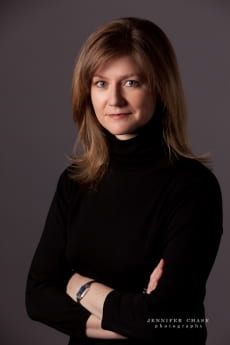
Dean Alyssa Ayres' Headshot

Alyssa Ayres was appointed dean of the Elliott School of International Affairs and professor of history and international affairs at George Washington University effective February 1, 2021. Ayres is a foreign policy practitioner and award-winning author with senior experience in the government, nonprofit, and private sectors. From 2013 to 2021, she was senior fellow for India, Pakistan, and South Asia at the Council on Foreign Relations (CFR), where she remains an adjunct senior fellow. Ayres has been awarded numerous fellowships and has received four group or individual Superior Honor Awards for her work at the State Department. She speaks Hindi and Urdu, and in the mid-1990s worked as an interpreter for the International Committee of the Red Cross. She received an AB from Harvard College and an MA and PhD from the University of Chicago. She is a life member of the Council on Foreign Relations, a member of the Halifax International Security Forum’s agenda working group, and a member of the Women’s Foreign Policy Group board of directors.

Moderator
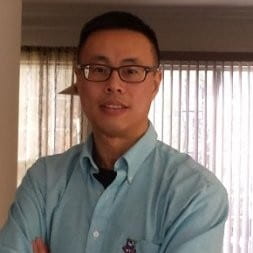
John W. Tai's headshot

John W. Tai, Ph.D., is a professorial lecturer at the Elliott School of International Affairs, George Washington University. He is also an instructor at the Foreign Service Institute, U.S. Department of State, and a senior language analyst at Leidos, providing support to the U.S. Government. He is a specialist on China’s political developments, science and technology developments, and foreign relations. He also specializes in Taiwan’s internal developments and external relations and teaches a graduate seminar on this subject at the Elliott School. He is the author of various articles and commentaries on Chinese and Taiwan politics and foreign relations, including the book Building Civil Society in Authoritarian China (2015).  
East Asian National Resource Center Logo
Sigur Center for Asian Studies Logo
Elliott School Book Launch Series

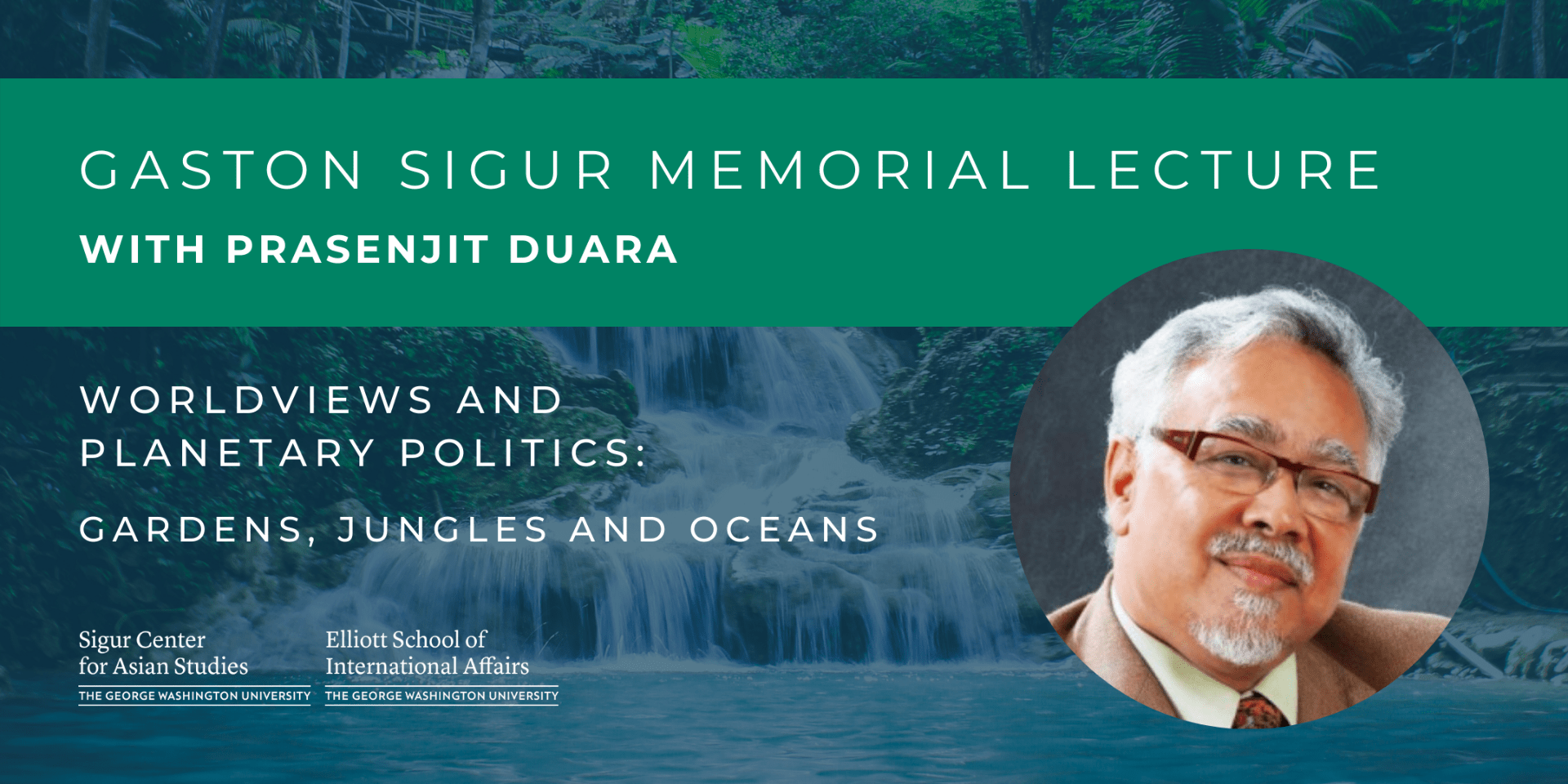
4/4/2022 | The 25th Annual Gaston Sigur Memorial Lecture with Prasenjit Duara

event banner for the 2022 Gaston Sigur Memorial Lecture

Worldviews and Planetary Politics: Gardens, Jungles and Oceans

Monday, April 4, 2022

5:00 PM – 6:30 PM EDT

Lindner Family Commons

1957 E ST NW Room 602

NOTE: All non-GW affiliated attendees must comply with GW’s COVID-19 policy in order to attend this event, including full vaccination and masking indoors.

About the Event

Contemporary world politics is structured around the world order of nation-states in turn founded largely upon a Newtonian cosmology and an associated worldview. I develop a conceptual framework around the ‘epistemic engine’ which organizes and circulates the cosmological and institutional structures of Enlightenment modernity. Subsequently, I explore how the imperial Chinese world order– functional until at least the late 19th century–reveals a different cosmology shaping a different world order and politics. I also explore the contemporary PRC view of the world order probing the extent to which its historical experiences can be seen to re-shape the hegemonic epistemic engine. In the final section, I draw from a paradigm of ‘oceanic temporality’ to grasp counter-finalities generated by the epistemic engine on the earth and the ocean itself. Can the counter-flows of social movements allow us to imagine what Katzenstein calls a post-Enlightenment, hyper-humanist cosmology?

Speaker

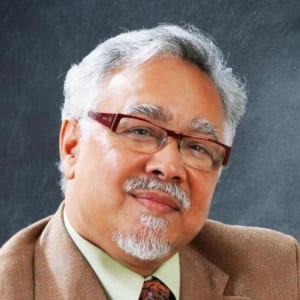
headshot of Prasenjit Duara in professional attire

Prasenjit Duara is the Oscar Tang Chair of East Asian Studies at Duke University. He was born and educated in India and received his PhD in Chinese history from Harvard University. He was previously Professor and Chair of the Dept of History and Chair of the Committee on Chinese Studies at the University of Chicago (1991-2008). Subsequently, he became Raffles Professor of Humanities and Director, Asia Research Institute at National University of Singapore (2008-2015).

In 1988, he published Culture, Power and the State: Rural North China, 1900-1942 (Stanford Univ Press) which won the Fairbank Prize of the AHA and the Levenson Prize of the AAS, USA. Among his other books are Rescuing History from the Nation (U Chicago 1995), Sovereignty and Authenticity: Manchukuo and the East Asian Modern (Rowman 2003) and most recently, The Crisis of Global Modernity: Asian Traditions and a Sustainable Future (Cambridge 2014). He has edited Decolonization: Now and Then (Routledge, 2004) and co-edited A Companion to Global Historical Thought with Viren Murthy and Andrew Sartori (John Wiley, 2014). His work has been widely translated into Chinese, Japanese, Korean and the European languages.

Moderator

Gregg Brazinsky in professional attire

Gregg Brazinsky (he/him) is Professor of History and International Affairs. He is director of the Asian Studies Program, acting director of the Sigur Center for Asian Studies, and acting co-director of the East Asia National Resource Center. He is the author of two books: Nation Building in South Korea: Koreans, Americans, and the Making of a Democracy and Winning the Third World: Sino-American Rivalry during the Cold War. His articles have appeared in numerous journals including Diplomatic History and the Journal of Korean Studies. He has written op-eds for The Washington Post, The Chicago Tribune and several other media outlets. He is currently working on two books. The first explores American nation building in Asia–especially Japan, Taiwan, and South Korea. The second explores Sino-North Korean relations during the Cold War.

logo of the Sigur Center for Asian Studies with transparent background
logo of the Elliott School of International Affairs at GW

3/22/2022 | “The Dangers of a Catastrophic Conflict between the US and Xi Jinping’s China” with the Honorable Kevin Rudd

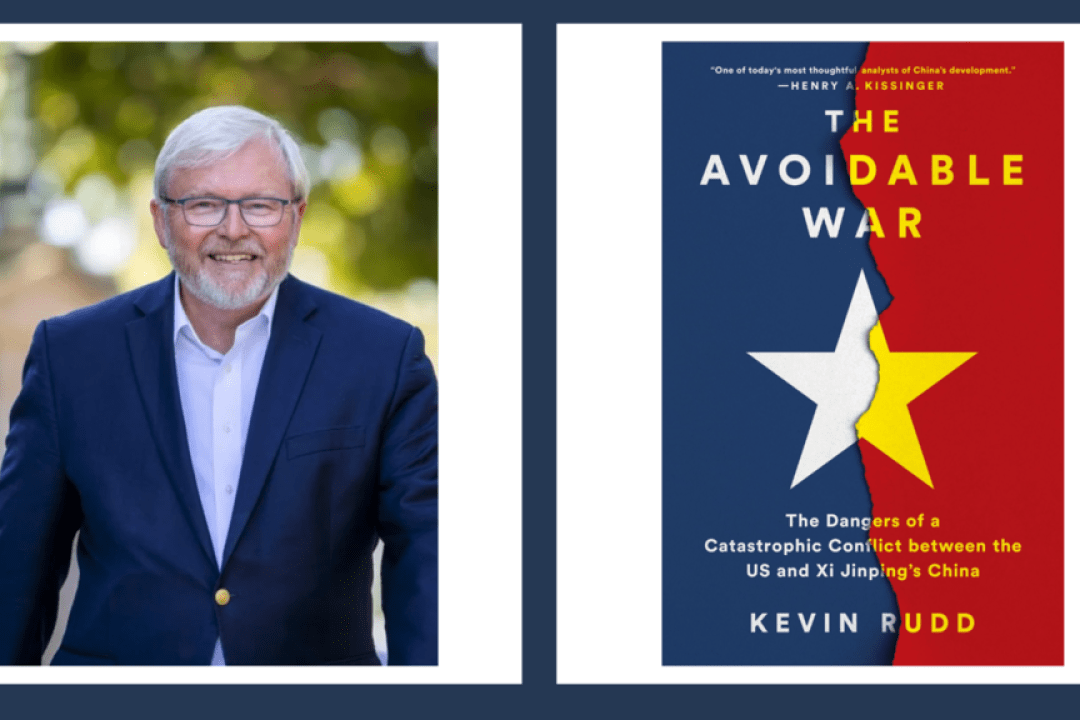
portrait of Kevin Rudd and his new book on US-China relations
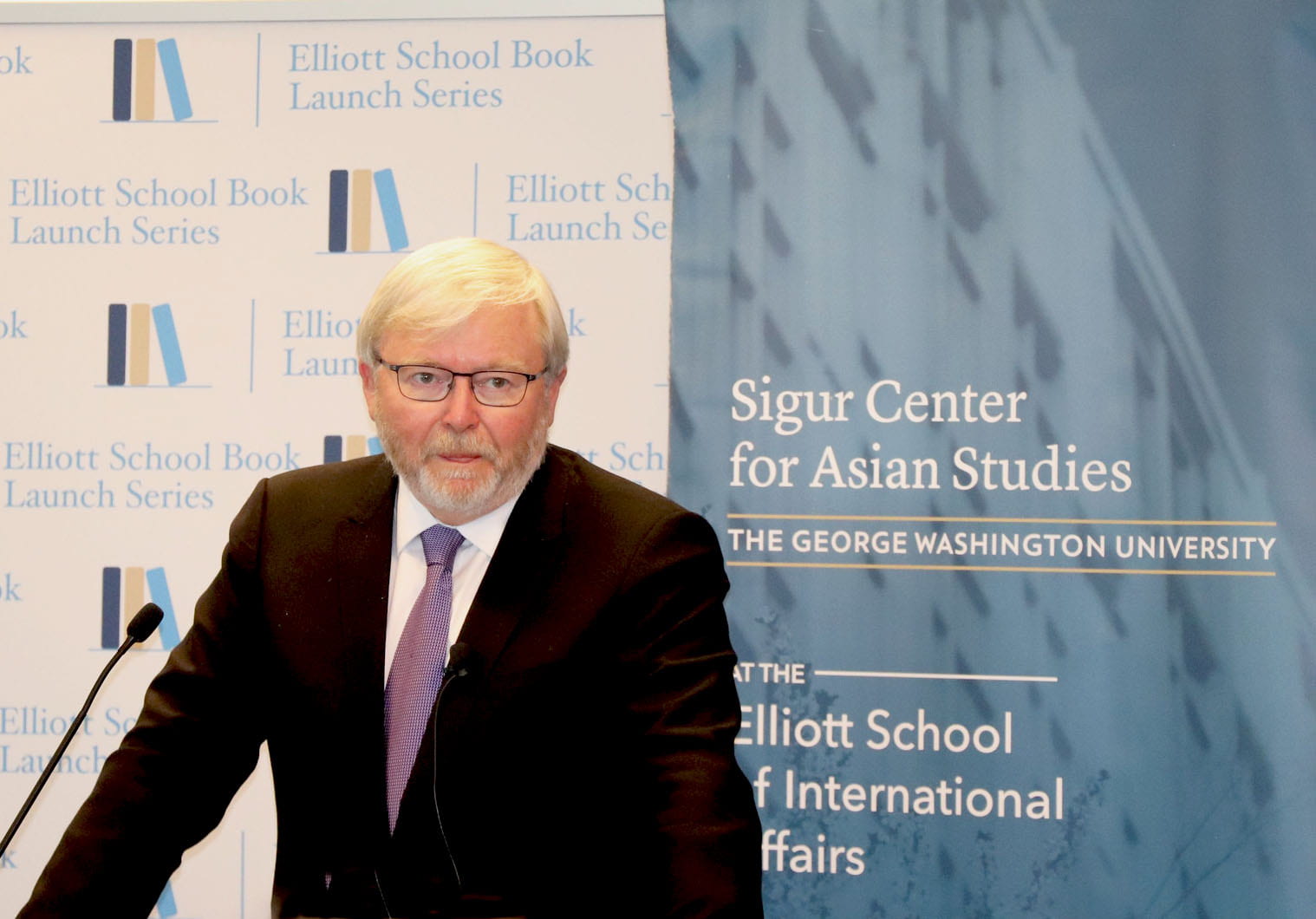
Kevin Rudd speaking at the podium in front of Sigur Center banner
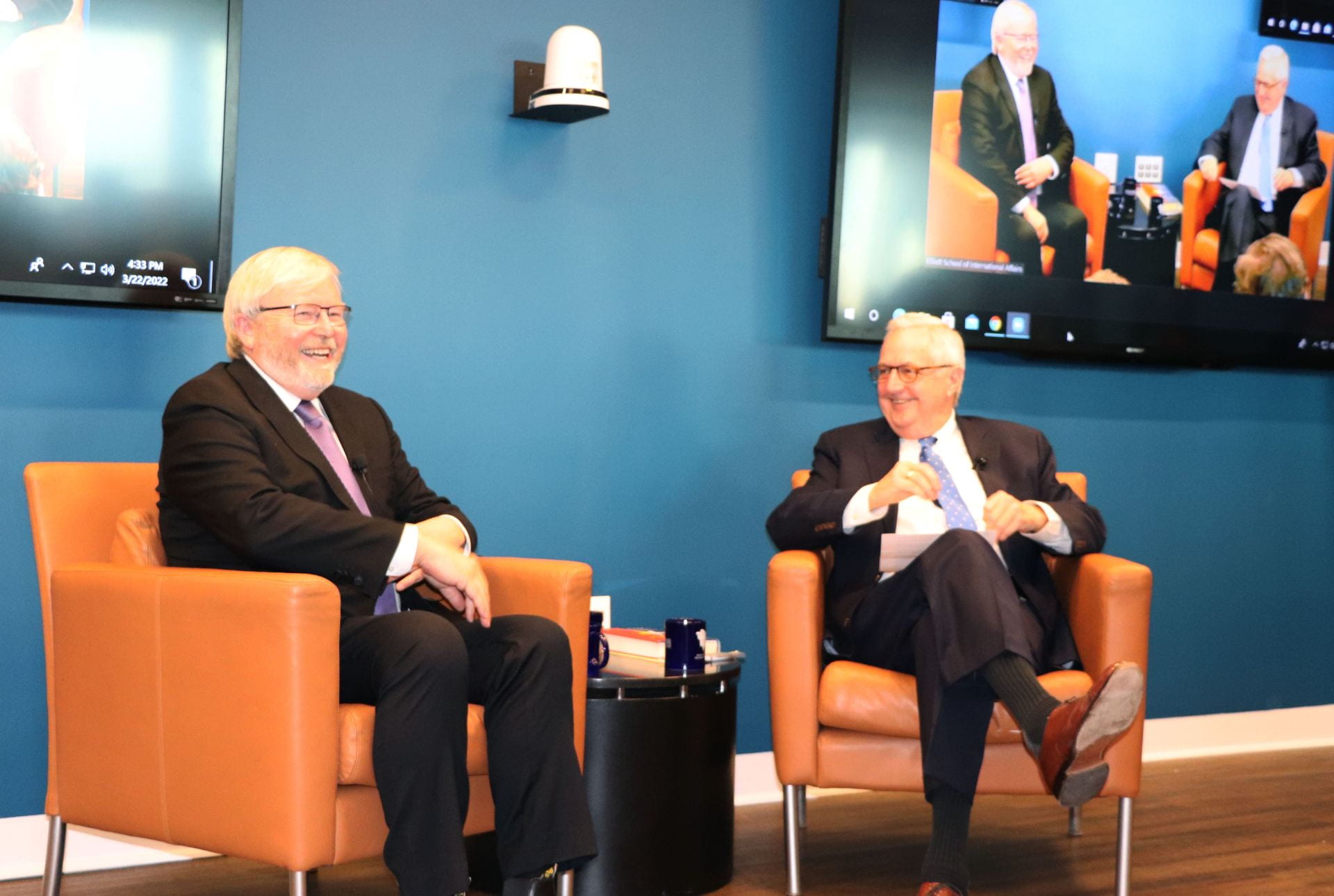
Kevin Rudd and David Shambaugh talking and laughing

Tuesday, March 22, 2022

4:00 PM – 6:00 PM EDT

Lindner Family Commons

1957 E ST NW Room 602

AND Zoom

You are invited to a presentation at GW by Kevin Rudd, former Prime Minister of Australia and current President and CEO of the Asia Society, on his new book, The Avoidable War: The Dangers of a Catastrophic Conflict between the US and Xi Jinping’s China.

Elliott School Dean Alyssa Ayres will provide welcome remarks. The presentation will be followed by a conversation between the Honorable Kevin Rudd and David Shambaugh, the Gaston Sigur Professor of Asian Studies, Political Science, and International Affairs at GW. The event will conclude with an extensive Q&A with the audience.

Those attending this hybrid event in person will have the opportunity to have the Honorable Kevin Rudd sign a copy of his new book.

Speaker

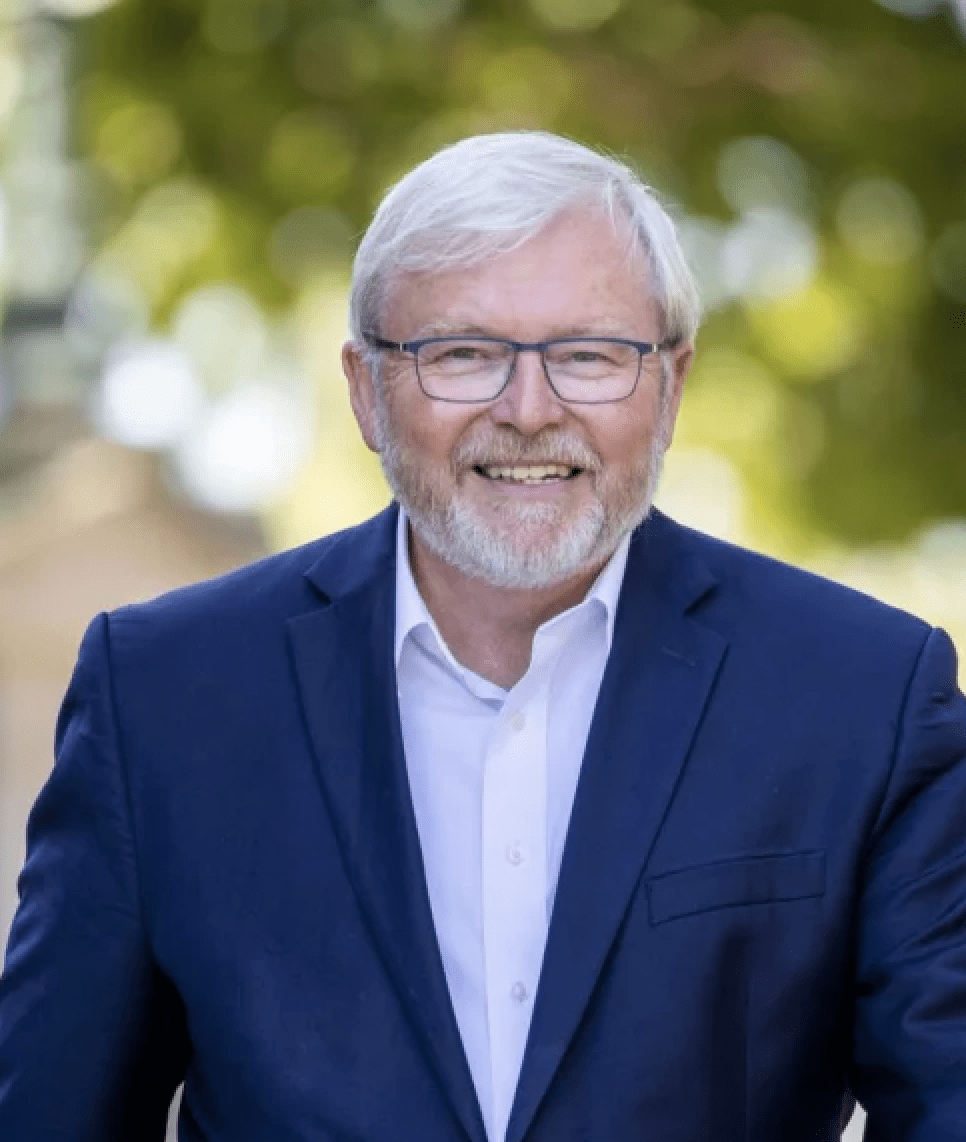
portrait of Kevin Rudd in professional attire

Kevin Rudd is a former Prime Minister of Australia and current President and CEO of the Asia Society. He became President and CEO of Asia Society in January 2021 and has been president of the Asia Society Policy Institute since January 2015. He served as Australia’s 26th Prime Minister from 2007 to 2010, then as Foreign Minister from 2010 to 2012, before returning as Prime Minister in 2013. He is also a leading international authority on China. He began his career as a China scholar, serving as an Australian diplomat in Beijing before entering Australian politics.

Moderator

professional portrait of David Shambaugh with brown background

David Shambaugh is Gaston Sigur Professor of Asian Studies, Political Science, & International Affairs and the founding director of the China Policy Program in the Elliott School of International Affairs at George Washington University. Before joining the GW faculty, Professor Shambaugh taught Chinese politics at the University of London’s School of Oriental & African Studies (SOAS) and was editor of The China Quarterly.

He also worked at the U.S. Department of State and National Security Council. He served on the board of directors of the National Committee on U.S.-China Relations, and is a member of the Council on Foreign Relations, U.S. Asia-Pacific Council, and other public policy and scholarly organizations. A frequent commentator in the international media, he sits on numerous editorial boards, and has been a consultant to governments, research institutions, foundations, universities, corporations, banks, and investment funds. Professor Shambaugh has published more than 30 books and 300 articles.

Dr. Shambaugh received his bachelor’s degree in East Asian studies from George Washington University, his master’s degree in international affairs from Johns Hopkins University School of Advanced International Studies, and his doctorate in political science from the University of Michigan.

Opening Remarks

Alyssa Ayres, Dean of the Elliott School

Alyssa Ayres is Dean of the Elliott School of International Affairs at George Washington University. Dean Ayres is a foreign policy practitioner and award-winning author with senior experience in the government, nonprofit, and private sectors. She was Senior Fellow for India, Pakistan, and South Asia at the Council on Foreign Relations (CFR), where she remains an adjunct senior fellow. From 2010 to 2013 Ayres served as Deputy Assistant Secretary of State for South Asia in the Barack Obama administration, where she covered all issues across a dynamic region of 1.3 billion people at the time (Bangladesh, Bhutan, India, Maldives, Nepal, and Sri Lanka) and provided policy direction for four U.S. embassies and four consulates. Her work focuses primarily on India’s role in the world and on U.S. relations with South Asia in the larger Indo-Pacific. Her last book is, Our Time Has Come: How India is Making Its Place in the World (OUP, 2018). She holds a Ph.D. from the University of Chicago.

logo of the Elliott School of International Affairs at GW
logo of the Institute for International Economic Policy
logo of the Sigur Center for Asian Studies with transparent background

Associate Director Deepa Ollapally Interviewed for Jane’s Defence Weekly

On March 7th, 2022, Associate Director of the Sigur Center and Director of the Rising Powers Initiative, Professor Deepa Ollapally, interviewed for the Jane’s Defence Weekly for an article titled “Ukraine conflict – Analysis: India faces mounting predicament“. 

Ukraine conflict – Analysis: India faces mounting predicament

07 MARCH 2022 | From Jane’s Defence Weekly

by Oishee Majumdar

Russia’s invasion of Ukraine has pushed the Indian government into a delicate situation, with mounting diplomatic pressure from the United States and its allies and Russia to take a clear stance in favour of one side.

Given its dependence on both the US and Russia for defence and security, New Delhi has been trying to strike a balance between them.

Although India has internationally condemned the ongoing violence in Ukraine – Prime Minister Narendra Modi has reached out to both Volodymyr Zelenskyy and Vladimir Putin to urge an end to the violence – the country has abstained from voting in the United Nations (UN) polls that intended to pass resolutions against the Russian attack.

Critics have described India’s position to be ambiguous or dubious, calling for a stronger Indian stance against the Russian aggression in Ukraine. On the other hand, many have also supported India’s decision to prioritise national interests and take a middle ground to not explicitly antagonise either the US or Russia. Since the beginning of the conflict, India has abstained from UN voting four times in polls held by the United Nations Security Council (UNSC), the United Nations Human Rights Council (UNHRC), and the United Nations General Assembly (UNGA).

Deepa Ollapally, research professor of international affairs and associate director of the Sigur Center for Asian Studies at George Washington University, told Janes that New Delhi “did not have much choice” in these votes given India’s dependence on Russia for military hardware.

“Russia has always been more willing to sell military equipment at relatively cheaper rates to India”, leading to a historically strong defence partnership between the two countries that India is obliged to safeguard, she said.

“The country also cannot afford to alienate the Russians who are much closer to them geographically than the Americans,” Ollapally added.

India’s relation with the US, on the other hand, is “more strategic” in nature given the two countries’ common concerns about China’s efforts to expand its presence in the Asia-Pacific, she noted.

Ollapally said that abstention from voting is similar to a “non-decision” on India’s part and is a “smart move” because it will enable New Delhi to “continue its goodwill” with both the US and Russia.

However, with “emotions running high in the US Congress against Russia, it complicates matters”, she said.

Although there may be “some amount of backlash against India in the US with certain members of the Congress strongly pushing for sanctions against the country”, Washington may choose not to do so as “India is a critical part of US’ Indo-Pacific strategy”, Ollapally said.

Nonetheless, India-US relations, which had been “going on an upward trajectory” in the past few years, will witness a rupture because of India’s stance on the Ukraine conflict, she said.

“India has stood firm in maintaining its strategic autonomy and is willing to incur some costs for that,” she said. This is a critical moment for the US, which will “pause to think how much they can really count upon India in the Asia-Pacific”, she added.

“Though there might be a temporary tiff, regular dialogues and a deepening partnership over the last 15 years have brought about a certain level of maturity in India-US relations, enabling the two countries to understand each other more. Many in the US realise that India did what it had to do in order to secure its national interests,” she said.

Despite India’s attempts to diversify its defence suppliers by engaging with countries such as France, Israel, and the United Kingdom, Janes data shows that Russia continues to be India’s biggest supplier of weapons.

In December 2021 India and Russia deepened their long-standing defence alliance by renewing the India-Russia Inter-Governmental Commission on Military and Military-Technical Cooperation (IRIGC-M&MTC) until 2031.

Besides the procurement of weapons, India relies on Russia for spare parts and maintenance of these systems. Given this dependence, a major concern for New Delhi has been facing US sanctions through the US Countering America’s Adversaries Through Sanctions Act (CAATSA), which was enacted in August 2017 in response to Russia’s annexation of Crimea in 2014.

As a close strategic and military ally, India has been lobbying hard for more than two years for a CAATSA waiver, which can be granted by a US president under the act’s “modified waiver authority” for “certain sanctionable transactions”.

However, as Russia extends its military offensives in Ukraine, India could find it more difficult to remain immune from such sanctions. In comments to Janes, the US Department of State concurred.

“The sweeping sanctions imposed on Russia as a result of its invasion of Ukraine are likely to make it difficult for any international customer to procure new systems and parts from Russian suppliers,” a spokesperson for the US Department of State told Janes.

“As for CAATSA, we have not yet made sanctions or waiver determination regarding potential sanctions in response to any Indian transaction with Russia. We continue to urge all countries, including India, to avoid major new transactions for Russian weapons systems,” the spokesperson added.

Official spokesperson for India’s Ministry of External Affairs (MEA), Arindam Bagchi, did not respond to a Janes request for comment on how the Indian government plans to respond to potential US sanctions if it continues to maintain defence collaboration with Russia.

Since Russia is the primary contributor to India’s military imports, New Delhi may not be able to immediately cease its defence collaborations with Moscow. However, delay in defence procurements because of the diversion of Russian resources to the war in Ukraine will give opportunities to other countries to expand their defence trade with India.

The present circumstances may also give an impetus to India’s efforts to boost indigenous defence manufacturing. The government of India has been investing in the local defence industrial complex with the vision of not only making the country self-reliant but also enhancing its exports.

India expects its defence and aerospace manufacturing market to be worth USD65 billion by 2047. India has also outlined a vision of achieving a turnover of USD25 billion, including exports of USD5 billion in aerospace and defence goods and services by 2025.