August 2021 Media Digest

8/07/2021

DAVID SHAMBAUGH – Asia Times
featured in  Putting light on China’s shadow over SE Asia

8/08/2021

MÉLANIE SADOZAÏ – Radio Free Europe/Radio Liberty

interviewed for  Majlis Podcast: Who Are The Central Asian Fighters In North Afghanistan?

8/09/2021 

JIN KAI – CCTV.com English

interviewed for  Sanctions can’t resolve U.S.-China conflicts: expert

BRUCE DICKSON – Financial Post

interviewed for  Who’s Pan Dong? Meet the publicity-shy Chinese-Canadian soap tycoon

8/17/2021 

DAVID SHAMBAUGH – SupChina

featured in  Chinese history through the prism of its leaders

8/18/2021 

MIKE MOCHIZUKI – Nikkei Asia

interviewed for  From the ashes of Afghanistan, a ‘Biden Doctrine’ emerges

8/19/2021 

8/29/2021 

DAViD SHAMBAUGH – Nikkei Asia

authored  Understanding China’s conflicted nationalism

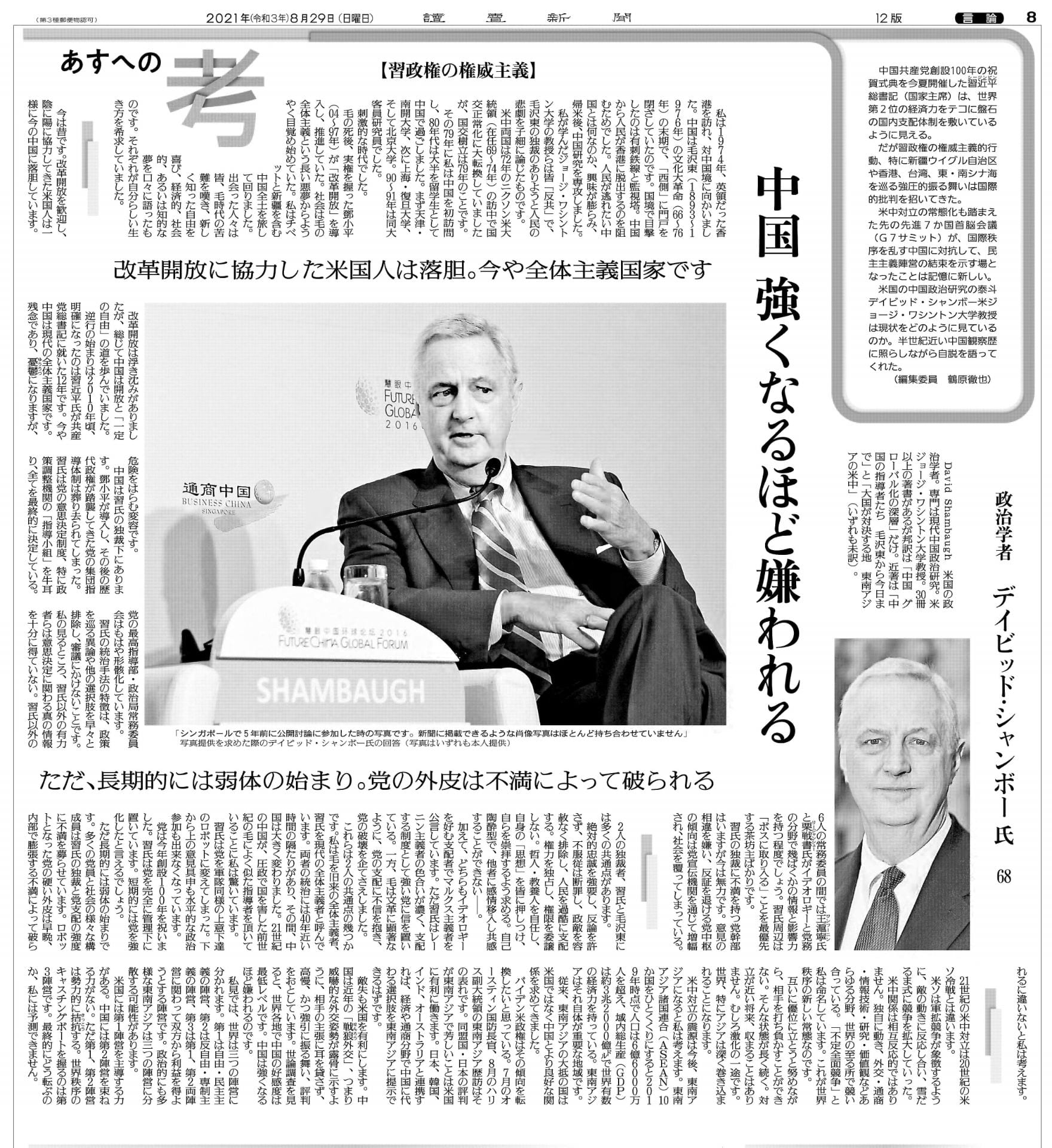
Professor David Shambaugh Featured on Nikkei Asia and Yomiuri Shimbun

Yomiuri Shimbun on August 29, 2021: 

spread of a japanese newspaper featuring Professor David Shambaugh

Nikkei Asia on August 29, 2021:

Understanding China’s conflicted nationalism:
Beijing’s aggressive behavior undermines its soft power ambitions

Original article published on Nikkei Asia

Why is it that every time the world thinks China is becoming a constructive and cooperative international partner, Beijing lashes out and undermines its own global reputation?

Just when it seems that China is becoming a comfortable status quo power exhibiting “confident nationalism,” as the late Sinologist Michel Oksenberg once described it, its government reverts to more assertive, acerbic, defensive, and revanchist forms of public diplomacy.

Despite China’s long-standing propaganda protestations that it is a well-meaning benign country, a good neighbor, that it will “never seek hegemony,” and that it works with others for “win-win solutions” to global problems, it frequently undermines these messages with contradictory rhetoric and behavior.

The Chinese government is often accused of ignoring public diplomacy to the extent that it weakens its soft power. In fact, Beijing has long paid attention to public diplomacy and efforts to project a positive image to the outside world — beginning with Mao’s interviews with Edgar Snow in Yanan in 1939, the friendship diplomacy of the 1950s, the revolutionary diplomacy of the 1960s, the ping-pong diplomacy of the 1970s, the reform and opening diplomacy of the 1980s, and then-President Hu Jintao’s admonition to build soft power in 2007.

More recently. President Xi Jinping instructed in his June 2 Politburo directive to display a “more credible, lovable, and respectable China,” “tell China’s story well,” and become a “public communications power.”

In the early 2000s, a separate Central Committee department of external propaganda was created to spearhead a multifaceted campaign to promote China abroad, which has since been reabsorbed within the Chinese Communist Party’s propaganda department. In 2009, China’s Ministry of Foreign Affairs inaugurated its own public diplomacy department, and a system of ministerial spokespersons was created to interface with foreign media. China’s embassies abroad similarly designated spokespersons.

Notwithstanding these efforts to project a positive image, Beijing has punctuated them with periodic angry outbursts, accusatory rhetoric, and an aggrieved national persona-now commonly described as “wolf warrior diplomacy” led by Foreign Ministry spokespersons Hua Chunying and Zhao Lijian.

Chinese ambassadors abroad are also increasingly outspoken. Ambassador to France Lu Shaye and ambassador to Sweden Gui Congyou have been particularly caustic in their public remarks. Following criticisms of China in the communiques from the Group of Seven, U.S.-EU, and NATO summits in June 2021, the London and Brussels embassies sprang into action with sharp critiques.

Xi’s June 2 speech seemed to evince awareness of this when he also said that China should be “open and confident, but also modest and humble.” Xi’s convening of the special Politburo study session on public diplomacy is thought to have been a response to the wolf warrior critiques as well as global public opinion polls that show China’s global favorability ratings at all-time lows. In mid-August, the Pew Research Center issued new data showing a continued sharp deterioration dating back to 2018.

This acerbic nationalist posture is likely to become a continual feature of China’s diplomacy. There are three principal causes for it.

First, it is hardwired into the CCP’s institutional identity and its claim to ruling legitimacy. This is because the entire narrative the party has spun since its founding in 1921 has focused on its efforts to overcome China’s “century of shame and humiliation” that began in the 19th century. This translates into zero tolerance for disrespect from other — notably Western — countries.

Second, the regime under Xi today believes that China is no longer a second-rate power, that the tide of history has turned, and that China is becoming the world’s dominant power.

Third, Chinese citizens are deeply infused with uber-nationalism and a sense of national accomplishment — they take great pride in their government officials pushing back against perceived discrimination.

What is odd — and conflicted — about China’s nationalism today is that it reflects both security and insecurity. On the one hand, China takes great pride in its accomplishments, its history, and sense of global importance. On the other hand, there remains a strong residual streak of aggrievement, and revanchism — which produces a sense of brittleness that is quick to react to any perceived slight and hit back against perceived “foreign hostile forces.”

The CCP itself still lives in the shadow of the Soviet collapse and the East European “color revolutions,” and the palpable paranoia is apparent in the CCP’s wide-ranging domestic repression. Foreign nongovernmental organizations working in China have come under particular pressure — forcing the majority to abandon operations there.

China’s pushback is also coupled with a sense of payback — as Chinese nationalists are increasingly demanding punitive actions against those who have previously infringed on China’s sovereignty and sense of dignity. The U.S., Europe, Australia and Japan head the list.

This is playing out in the form of Beijing banning a variety of individuals and institutions from visiting or conducting business with China, punitive economic statecraft — sanctions, investment bans, high taxes, tariffs and non-tariff barriers on trade and doing business in China, blocking normal academic and cultural exchanges, and threatening military moves against neighbors.

These types of punitive measures can be expected to proceed alongside the increasingly acerbic rhetoric emanating from Beijing. With this new aggressive national persona on display, it will only alienate other countries, undercut Beijing’s official protestations of cooperation and peaceful intent, and contribute to the growing global image of China as a threat.

09/09/2021: China’s Leaders: From Mao to Now

yellow silhouettes of Chinese political figures on red background

Thursday, September 9, 2021

4:00 PM – 5:00 PM EDT

Zoom Event

Event hosted by the National Committee on US-China Relations

Since the establishment of the People’s Republic of China in 1949, five men have principally shaped the ruling Chinese Communist Party and the nation: Mao Zedong, Deng Xiaoping, Jiang Zemin, Hu Jintao, and Xi Jinping. During their decades of leadership, China, starting from a base of poverty and insularity, became a world power. In his latest book, China’s Leaders: From Mao to Now, David Shambaugh analyzes China’s contemporary history by studying the personal and professional experiences that shaped each leader.

professional portrait of David Shambaugh with brown background

David Shambaugh is Gaston Sigur Professor of Asian Studies, Political Science, & International Affairs and the founding director of the China Policy Program in the Elliott School of International Affairs at George Washington University. Before joining the GW faculty, Professor Shambaugh taught Chinese politics at the University of London’s School of Oriental & African Studies (SOAS) and was editor of The China Quarterly.

He also worked at the U.S. Department of State and National Security Council. He served on the board of directors of the National Committee on U.S.-China Relations, and is a member of the Council on Foreign Relations, U.S. Asia-Pacific Council, and other public policy and scholarly organizations. A frequent commentator in the international media, he sits on numerous editorial boards, and has been a consultant to governments, research institutions, foundations, universities, corporations, banks, and investment funds. Professor Shambaugh has published more than 30 books and 300 articles.

Dr. Shambaugh received his bachelor’s degree in East Asian studies from George Washington University, his master’s degree in international affairs from Johns Hopkins University School of Advanced International Studies, and his doctorate in political science from the University of Michigan.

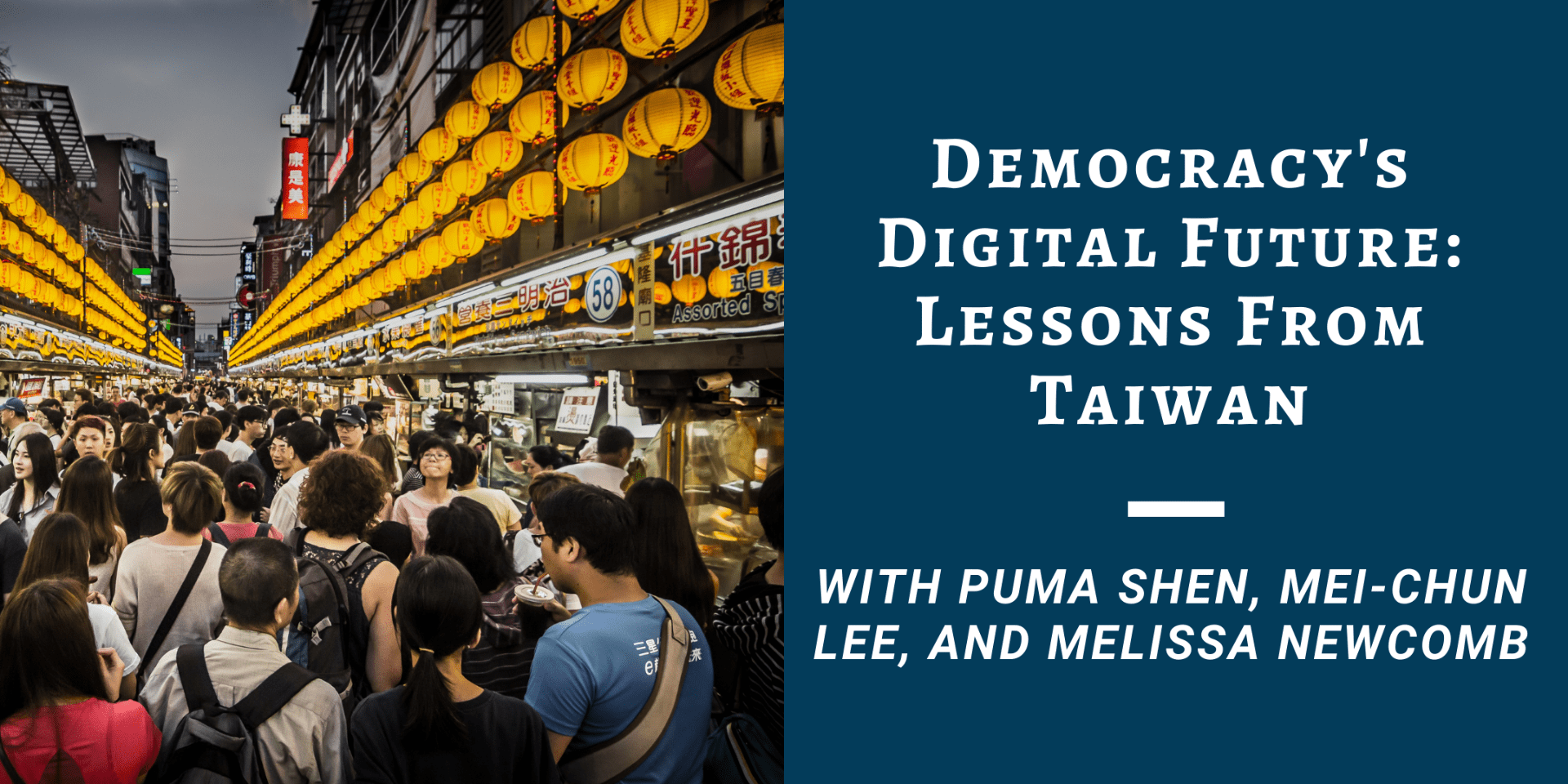
09/08/2021: Democracy’s Digital Future: Lessons from Taiwan

busy night market in taiwan next to the event's title and speakers
Sigur Center logo with Asian landmark icons outline art

Wednesday, September 8, 2021

8:30 PM – 10:00 PM EDT

WebEx Event

Taiwan is a leader in considering how technology can promote democratic principles, a question that democracies around the world are currently grappling with. The pandemic has only intensified the digitization of Taiwan’s democracy. How is Taiwan experimenting with innovative digital oversight mechanisms? What does its civic tech communities and digital ecosystem look like? And importantly, what does Taiwan’s performance tell us about possible pathways to a digitized democratic future for others?

Moderator:

  • Deepa Ollapally (Associate Director of the Sigur Center for Asian Studies at The George Washington University)

Speakers and Presentation Titles:

  • Puma Shen (Assistant Professor at National Taipei University, Taiwan): How to Categorize and Respond to Disinformation Campaigns
  • Mei-Chun Lee (Postdoc Researcher, Research Institute for the Humanities and Social Science, National Taiwan University & Ministry of Science and Technology, Taiwan): How Civic Tech Fights COVID-19 and Infodemic: Taiwan’s Case
  • Melissa Newcomb (Senior Program Manager for the Hong Kong, Taiwan, and China Illiberal Influence programs at the National Democratic Institute): Taiwan and Democracy in a Digital Age

The webinar begins at 8:30pm EDT on Wednesday, September 8th. Registered guests will receive an email with instructions for joining the webinar prior to the event. Registration closes at 8:30pm EDT on September 7th, 24 hours before the event begins. Media inquiries must be sent to gwmedia@gwu.edu in advance. If you need specific accommodations, please contact gsigur@gwu.edu with at least 3 business days’ notice.

This event is free, open to the public, and will be recorded. Questions can be sent in advance to gsigur@gwu.edu with subject “Democracy’s Digital Future.”

Speakers

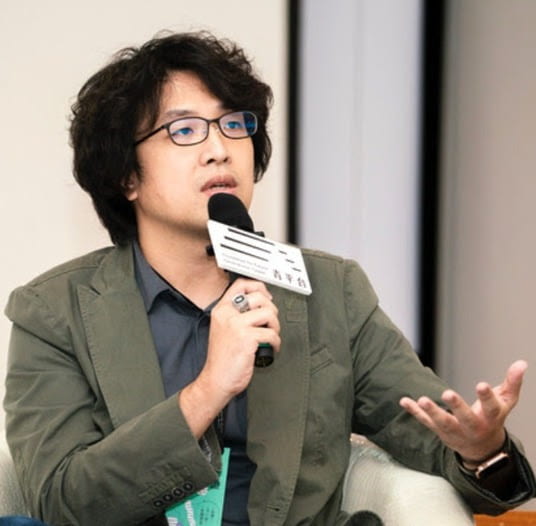
Puma Shen holding a mic speaking at an event

Puma Shen is the chairperson of Doublethink Lab and the vice president of Taiwan Association for Human Rights (TAHR). He was a lawyer who focuses heavily on the Right to Privacy and track privacy violations locally. Dr. Shen’s article on China’s disinformation chain has been circulated widely among academics and the Taiwanese society in early 2019, greatly contributing to public awareness of Chinese IO. He specializes in state crime, information warfare, white-collar crime, and the sociology of law.

Mei-chun Lee posing for photo on a couch with her dog

Mei-Chun Lee is an anthropologist with research interests in civic tech, digital activism, and data politics. She is a participant of g0v (Taiwan’s biggest civic tech community) and the co-author of of Taiwan Open Government Report 2014-2016. She holds a PhD from the University of California Davis and an MPhil from the University of Cambridge.

 
portrait of Melissa Newcomb in professional attire

Melissa Newcomb is the Senior Program Manager for the Hong Kong, Taiwan, and China Illiberal Influence programs at the National Democratic Institute. Previously, she managed the Taiwan portfolio at the National Bureau of Asian Research. Melissa was a founding staff member of the Global Taiwan Institute which launched in 2016. At GTI she created the Civil Society and Democracy series, which invited activists and experts from Taiwan to Washington D.C. to speak about their work. Prior to her work at GTI, Melissa was an intern for the Office of Taiwan Coordination at the U.S. Department of State. Her current research is focused on Taiwan’s digital democracy reforms as a fellow for the U.S.-Taiwan Next Generation Working Group with the Institute of East Asian Studies at UC Berkeley. Her recently published article in The Diplomat, “Can Taiwan Provide the Alternative to Digital Authoritarianism?” is based on her preliminary research. She holds a B.A. in English Literature and Asian Studies from St. Mary’s College of Maryland, and a M.A. in International Affairs with a focus on East Asia and Conflict Resolution from American University.


Moderator

Deepa Ollapally, pictured in professional attire

Deepa Ollapally is the Associate Director of the Sigur Center for Asian Studies, Director of the Rising Powers Initiative, and Research Professor of International Affairs. She is currently working on a funded book, Big Power Competition for Influence in the Indian Ocean Region, which assesses the shifting patterns of geopolitical influence by major powers in the region and drivers of these changes. Ollapally’s recent publications include co-edited volumes Worldviews of Aspiring Powers (Oxford University, 2012) and Energy Security in Asia and Eurasia (Routledge, 2017). She has received major grants from the Smith Richardson Foundation, Carnegie Corporation, MacArthur Foundation, and the Ford Foundation for projects related to India and Asia. She is a frequent commentator in the media, including appearances on CNN, BBC, CBS, and Reuters TV. She holds a PhD from Columbia University.

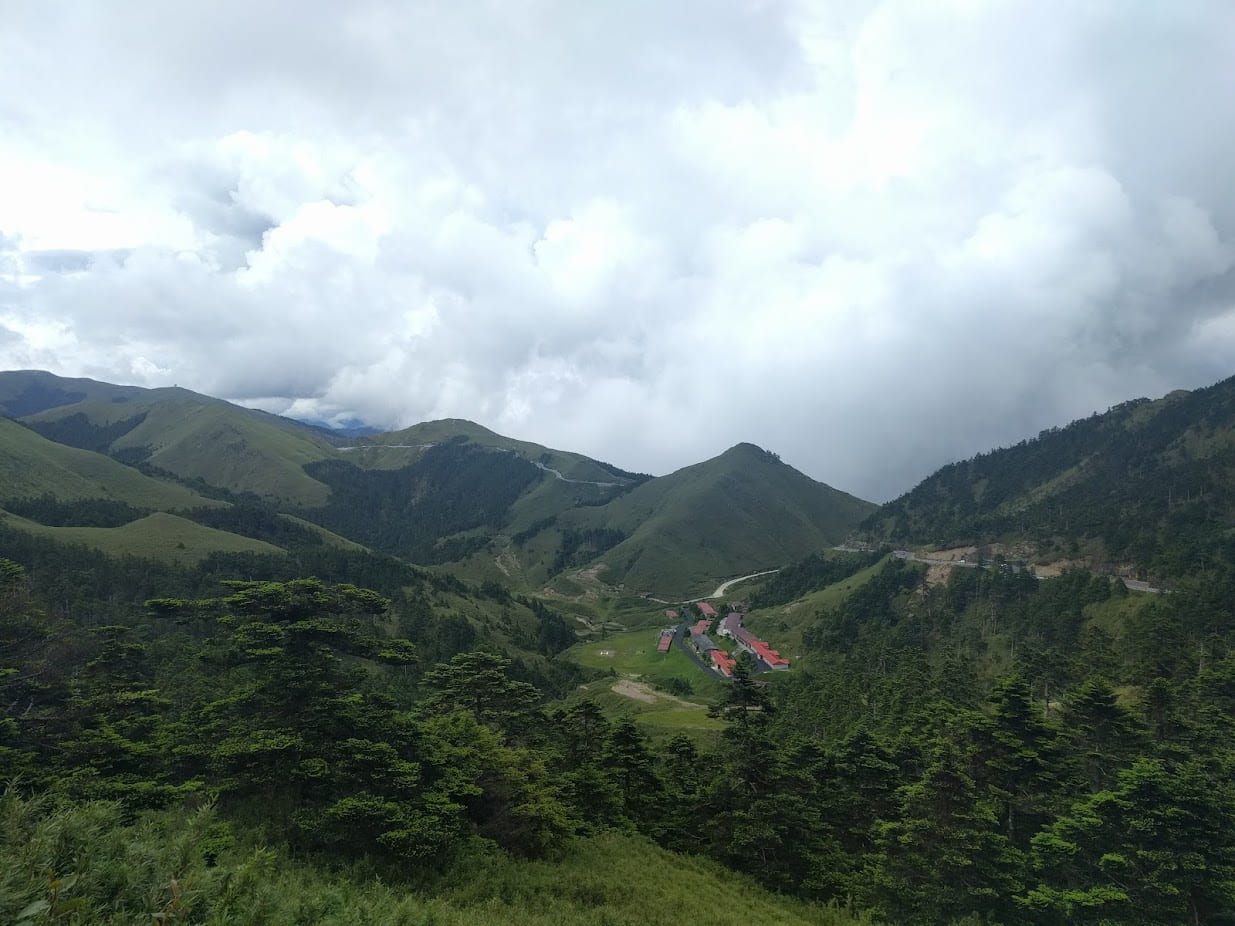
Fun Places to Visit When In Taiwan and Final Thoughts

view of mountain valleys and a small village in Taiwan

Hello everyone!

This is my final video blog for my summer study program. I will be finishing my last class on Sunday and will conclude my 8 weeks study program.

In this blog, I am going to discuss some interesting places that have been talked about in my textbook that I think are fun places to visit when getting out of Taipei, and also I will provide some closing thoughts on my study program.

To watch the video please go to this link!

Summer 2021 Field Research Fellow — Doing Research on Asia during the Pandemic, Part II: Online Databases

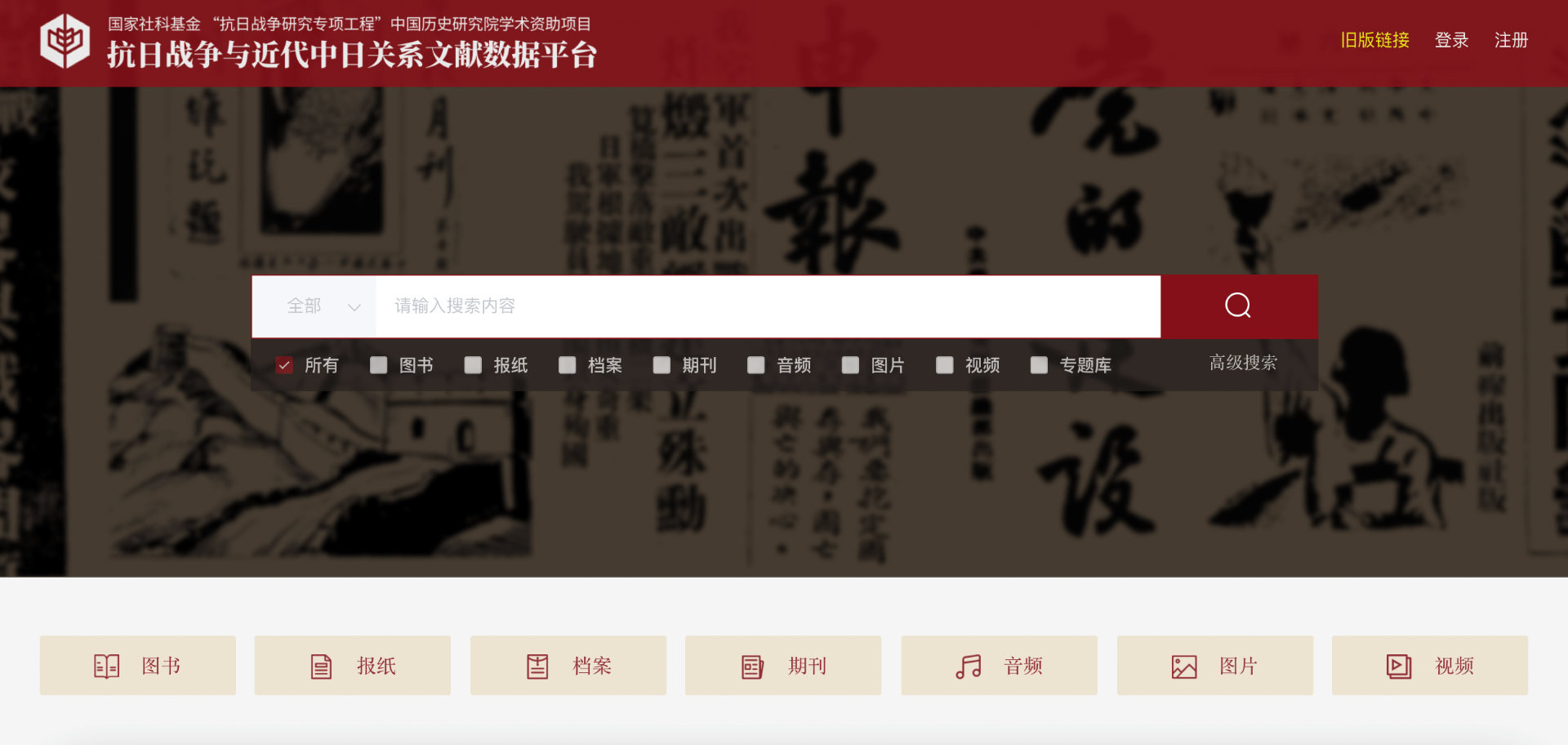
Data Platform of Documents on the Sino-Japanese War and modern China-Japan Relations homepage

The Covid-19 pandemic has brought enormous difficulties for doing research on Asia. Since in-person visits to archives and field work has become more inconvenient, this blog post explores alternative ways to do research. Based on my experiences of using the “Data Platform of Documents on the Sino-Japanese War and modern China-Japan Relations (Kangri zhanzheng yu jindai Zhongri guanxi wenxian shuju pingtai),” (hereafter “Data Platform on Sino-Japanese War”) this blog post discusses the value of online databases for research on Asia.


Overview of the Database


Established in 2015, The “Data Platform on Sino-Japanese War” (bottom) was a project within the Chinese Communist Party (CCP) center’s general initiative to promote research on the Sino-Japanese War (1937-1945). The database was directed by the Chinese Academy of Social Sciences, the National Library, and the National Archives Bureau. The funding for the database comes from National Social Sciences Foundation.

Data Platform of Documents on the Sino-Japanese War and modern China-Japan Relations homepage


Most of the materials in the database are contemporary publications from the Republican period (1912-1949), including official documents, books, journals, and newspapers. By September 2020, the database contains more than 50,000 volumes of books, about 1,000 titles of newspapers, and nearly 3,200 titles of journals—more than twenty-five million digital pages in total.


The title of the database indicates that it is strong on Sino-Japanese War and China-Japan relations, but the sources in the database cover every aspect of Republican China. Therefore, the database can be helpful for any research that covers the Republican period.


Some Examples of Sources at the Database


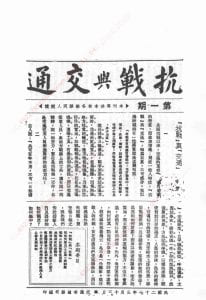
One interesting set of sources I found at the database was the journal Resistance War and Communication (Kangzhan yu jiaotong), which was the internal journal of the Ministry of Communication during the Sino-Japanese War. The journal (bottom, copyright “Data Platform on Sino-Japanese War”) was published biweekly, and the database has all the issues from 1938 to 1942. The journal contains rich information on China’s wartime communications, including plans, conferences, and operations of the Ministry of Communication, as well as informed opinions on communication affairs. The journal is an example of the database’s strong collection of Republican period journals.

Resistance War and Communication


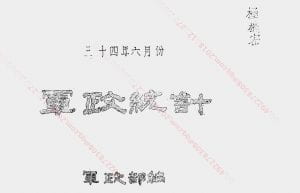
Another useful set of materials I discovered was the Military Administration Statistics (Junzheng tongji), a secret series compiled by the Ministry of Military Administration from 1937 to 1945. The series (bottom, copyright “Data Platform on Sino-Japanese War”) contains detailed statistics on every aspect of the Nationalist Army, including its combat and service troops, supplies and logistics, medical services, and armament industries. The series is a useful source to study the military aspect of the Sino-Japanese War.

Military Administration Statistics


Tips for Searching the Database


For searching of the database, I recommend use various types of keywords: thematic, personal, institutional etc. I also suggest sparing additional patience when searching for materials. The database covers a wide range and various types of materials, which are not sorted out in record groups as in an archive. Therefore, it might take more time to find useful sources.


Overall, the “Data Platform on Sino-Japanese War” is one of the largest online databases on Republican history open to the public. It offers an additional option for doing research during the pandemic. For other alternatives such as digital archives, please see my blog post “Doing Research on Asia during the Pandemic, Part I: Digital Archives”.


Zhongtian Han, Ph.D. East Asian History 2022

Sigur Center 2021 Field Research Fellow

China

Summer 2021 Field Research Fellow — Doing Research on Asia during the Pandemic, Part I: Digital Archives

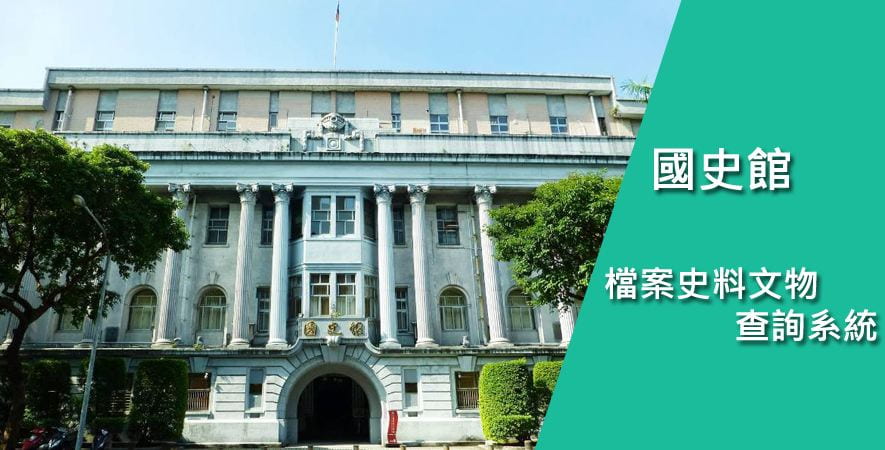
banner image of the front entrance of the Academia Historica in Taiwan; text: 国史馆 档案史料文物查询系统

The Covid-19 Pandemic changed everything, including academic research on Asia. The disruption of international travel to Asia limited access to archives, as well as the opportunity to conduct field work. In this situation, it is important to find alternative means to get sources and do research. Based on my experiences of using the Academic Historica Collections Online System, this blog explores the use of digital archives to do research on Asia during the pandemic.


Overview of the Archive


Established in May 1914 at Beijing, the Academia Historica (Guoshi Guan) was the central government institution responsible for compiling official history and collecting official documents. After 1949, the Academia Historica moved with the Nationalist government to Taiwan and reponed at Taipei in 1956.


The Academia Historica is responsible for managing the records of Republic of China Presidents and Vice-Presidents, as well as the records of a number of government institutions and prominent political figures. The records of Academia Historica cover the political, military, economic, social, and cultural aspects of the Republic of China. Therefore, they should be valuable for research on any topics of Republic of China history.


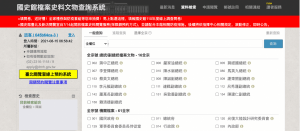
The digitization of Academia Historica records began in 2002. It was part of the Republic of China government’s general plan to digitize government records for public use. In 2016, the Academia Historica opened its digitized records to the public. By January 2019, the Academia Historica has made more than six million pages of digital documents available for public use. Since then, that number kept growing. The digital documents are searchable and open to download through the Academic Historica Collections Online System (bottom).

Academic Historica Collections Online System


Some Examples of Records at Academia Historica


My experiences of using the Academic Historica digital records focused mainly on the Republican History (1912-1949). I found two collections of documents most valuable: the Chiang Kai-shek Collection and the Chen Cheng Collection. Chiang was the supreme leader of the Nationalist government and the Nationalist Army, while Chen served high civil and military posts under Chiang. The two collections include not only the personal directives and papers of Chiang and Chen, but also the official documents collected by or associated with them. Therefore, the two collections are comparable to U.S. presidential libraries in terms of the broad range of sources they contain.


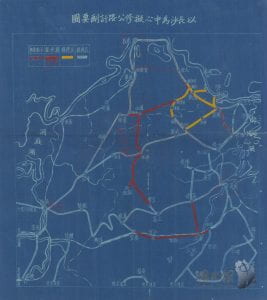
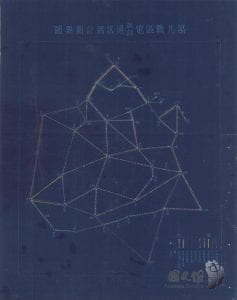
Some of the most interesting documents I discovered were those on the Wuhan Campaign (June-November 1938) in the Chen Cheng Collection. The campaign involved more than 800,000 Chinese soldiers and about 400,000 Japanese soldiers and was fought in central China. The documents in the Chen Cheng Collection revealed the elaborate communication networks on the Chinese side. These include a highway network that connected Hunan, Hubei and Jiangxi (bottom left, copyright Academic Historica), and an inter-province landline telephone and telegraph network in the three provinces (bottom right, copyright Academic Historica).

Highway network that connected Hunan, Hubei and Jiangxi Inter-province landline telephone and telegraph network in Hubei, Hunan, and Jiangxi


Tips for Searching the Records


The most convenient way to use Academia Historica digital records was through keyword search. To maximize the chance to find useful materials, I recommend using various types of keywords for any one topic: thematic, personal, institutional etc. It’s also helpful to pay attention to historical context and use keywords in contemporary use.


After searching by keywords, the results can be browsed either by the record group number or the starting year of the documents. When finding some useful documents, it’s also a good idea to browse other documents within the same record group. This often leads to additional useful materials.


Overall, the Academia Historica is probably the largest and best organized digital archive in Chinese language open to the public. It provides scholars with an alternative to in-person archival visits during the pandemic. For other options such as online databases please refer to my blog post “Doing Research on Asia during the Pandemic, Part II: Online Databases” on the Sigur Center for Asian Studies website.


Zhongtian Han, Ph.D. East Asian History 2022

Sigur Center 2021 Field Research Fellow

China

08/26/2021: Afghanistan: What Comes Next?

event banner with photo of evacuees in Afghanistan; text: Afghanistan: What Comes Next?
Sigur Center logo with Asian landmark icons outline art

Thursday, August 26, 2021

4:00 PM – 5:45 PM EDT

Zoom Event

The US withdrawal from Afghanistan and the subsequent Taliban takeover will have a global impact. It seems likely to reshape regional politics, lead to questions about American credibility, and create a humanitarian crisis. What will Afghanistan look like with no American presence? How will the Taliban govern? How will other countries in the region deal with the collapse of the Afghan government?

This panel invites several distinguished scholars and policymakers to discuss how developments in Afghanistan will influence central Asia, the United States, and the world in future months.


Moderator:

Alyssa Ayres (Dean of the Elliott School of International Affairs at The George Washington University)


Speakers and Presentation Titles:

  • Benjamin Hopkins (Professor of History and International Affairs): What’s next from the South/Central Asian Perspective?
  • Marlene Laruelle (Director of the Institute for European, Russian, and Eurasian Studies): What’s next from the Russian Perspective?
  • Ambassador Ronald Neumann (President of The American Academy of Diplomacy and former ambassador to Afghanistan): What’s next for US policy?
  • Nilofar Sakhi (Director of Policy and Diplomacy at McColm & Company): What’s next from a humanitarian perspective?

This webinar is sponsored by the George Washington University Sigur Center for Asian Studies, the Institute for Middle East Studies, and the Institute for European, Russian, and Eurasian Studies.

This event is open to the public. Questions can be sent in advance to gsigur@gwu.edu with subject “Afghanistan: What Comes Next?”

Moderator

Alyssa Ayres, Dean of the Elliott School

Alyssa Ayres is Dean of the Elliott School of International Affairs at George Washington University. Ayres is a foreign policy practitioner and award-winning author with senior experience in the government, nonprofit, and private sectors. From 2013 to 2021, she was senior fellow for India, Pakistan, and South Asia at the Council on Foreign Relations (CFR), where she remains an adjunct senior fellow. Her work focuses primarily on India’s role in the world and on U.S. relations with South Asia in the larger Indo-Pacific. Her book about India’s rise on the world stage, Our Time Has Come: How India is Making Its Place in the World, was published in 2018. Ayres is also interested in the emergence of subnational engagement in foreign policy, particularly the growth of international city networks, and her current book project (working title, Bright Lights, Biggest Cities: The Urban Challenge to India’s Future, under contract with Oxford University Press) examines India’s urban transformation and its international implications. From 2010 to 2013, Ayres served as Deputy Assistant Secretary of State for South Asia. She received an AB from Harvard College and an MA and PhD from the University of Chicago. @AyresAlyssa

Speakers

Headshot of Ben Hopkins with blue background

Benjamin D. Hopkins is Director of the Sigur Center for Asian Studies. Hopkins is a historian of modern South Asia, specializing in the history of Afghanistan and British imperialism on the Indian subcontinent. He has authored, co-authored, and co-edited numerous books on the region. Hopkins has received fellowships from the Council on Foreign Relations, the National University of Singapore, the School for Advanced Research in Santa Fe, and the Wilson Center in DC. Writing for the public, he has been featured in The New York TimesThe National Interest, and the BBC. Hopkins holds a PhD from the University of Cambridge and BSc from the London School of Economics. @GWUSigurCenter)

headshot of Marlene Laruelle with white background

Marlene Laruelle is the Director of the Institute for European, Russian, and Eurasian Studies at The George Washington University. She is also the Director of the Illiberalism Studies Program and the Central Asia Program. She is a Research Professor of International Affairs at GWU. She works on the rise of populist and illiberal movements in post-Soviet Eurasia, Europe and the US. Trained in political philosophy, she explores how nationalism and conservative values are becoming mainstream in different cultural contexts. She focuses on Russia’s ideological landscape and its outreach abroad. She has been also working on Central Asia’s nationhood and regional environment, as well as on Russia’s Arctic policy. She has been the Principal Investigator of several grants from the US State Department, the Defense Department, the National Science Foundation, Open Society Foundations, Carnegie Corporation of New York, the Henry Luce Foundation, etc. @IERES_GWU

 
headshot of Ronald E. Neumann in professional attire

Ambassador Ronald E. Neumann served three times as Ambassador; to Algeria, Bahrain and finally to Afghanistan from July 2005 to April 2007. Before Afghanistan, Mr. Neumann, a career member of the Senior Foreign Service, served in Baghdad from February 2004 with the Coalition Provisional Authority and then as Embassy Baghdad’s liaison with the Multinational Command, where he was deeply involved in coordinating the political part of military actions. Ambassador Neumann is the author of a memoir, Three Embassies, Four Wars: a personal memoir (2017) and The Other War: Winning and Losing in Afghanistan (Potomac Press, 2009), a book on his time in Afghanistan. He has returned to Afghanistan repeatedly and is the author of a number of monographs, articles, and editorials. Ambassador Neumann is on the Advisory Board of a non-profit girls’ school in Afghanistan, the School of Leadership, Afghanistan (SOLA) and the Advisory Board of Spirit of America. He is on the board of the Middle East Policy Council and the Advisory Council of the World Affairs Councils of America. He earned a B.A. in history and an M.A. in political science from the University of California at Riverside and is a graduate of the National War College.

 
headshot of Nilofar Sakhi speaking at an event

Nilofar Sakhi is a nonresident senior fellow at the Atlantic Council’s South Asia Center and the director of policy and diplomacy at McColm & Company. She is also a professorial lecturer at George Washington University’s Elliott School of International Affairs. She was formerly a visiting fellow at the National Endowment for Democracy and Columbia University and was a fellow at Asia Society and the International Center for Tolerance Education. Sakhi is a scholar and policy practitioner who has written extensively on various aspects of transitional security, human security, and peacemaking and peacebuilding processes and recently released the book Human Security and Agency: Reframing Productive Power in Afghanistan. She has been involved in assisting peace and counter-insurgency policy formulation and has been involved in the Afghan peace processes since 2010; she remains a regular commentator in media and writer on analyzing the challenges and prospects of peace processes. Sakhi holds a PhD in international conflict analysis and resolution from George Mason University, a master’s degree in international public policy from Johns Hopkins University, and a master’s degree in conflict transformation and peacebuilding from Eastern Mennonite University.


Fun Day Trips In and Around Taipei

table with Chinese tea set and tea snacks

Hello everyone, I hope your summer is closing on a high note. My summer studies have been progressing well and I hope you all enjoyed my video on cooking dumplings.


Currently in my lesson we are talking about a lot of places that you can take a day trip to if you are already in Taipei. This blog I wanted to touch on some really cool areas that my lessons have recommended but also some areas which I have visited in the past while in Taiwan. It’s disappointing that I was unable to take part in language studies in Taiwan this summer, but having this language opportunity has really helped me improve my language ability and I am excited for the next opportunity where I will be able to go to Taiwan.


  1. Jiufen/Teapot Mountain

This area is very famous as a tourist destination where you can walk the winding streets of Jiufen and eat many kinds of street food in addition to eating at many great restaurants. Since Jiufen is in the mountains you are bound to find many hikes in the area that are of interest. My personal favourite hike is at Teapot Mountain. This is a fantastic hike that I think everyone who plans to head to the famous Jiufen area should take the time to make the short trip from Jiufen to Teapot Mountain. The views on a clear day are absolutely spectacular, as your view will be mountain summits against a backdrop of the open ocean. An easy place to start this hike will be from the Gold Mining Museum at the base of the mountain, from there you can take the trail about 35 minutes to the top. Alternately, you can drive up to just below the summit and walk the 5 minutes to the top to enjoy a great view. The best way to travel to this area will be by taking a train to the Ruifang train station and then taking a taxi to your intended destination.


  1. Laomei Green Reef

This location from March to May has very beautiful views of the green vegetation that grows on the reef along the shore. The Laomei Green Reef is located north of Taipei along the north coast of Taiwan. It is best to visit Laomei Green Reef during low tide so that you will be able to see the vastness of the green reef and the view it has to offer tourists. The reef is a well known geological site due to the geological forces that have formed the unique landscape. Nearby this area, there is also a lighthouse that you can walk to and further enjoy the scenery and view. The Laomei Green Reef is not the most convenient location to get to. While there are busses that can be used to get there, the most convenient way to visit is by using a car or using a rideshare company; otherwise it might take too much time.


  1. Wistaria Tea House

This tea house is not much of a day trip but rather a place to visit while you are busy exploring Taipei. I wanted to add this since I have really enjoyed my time while visiting. Wistaria Tea House is located near National Taiwan Normal University and Shida Night Market and is just a short walk from either. At the tea house, you have the option to have dinner or you can just relax in the tea room and enjoy the variety of tea and small snacks. One very fun part of visiting the Wistaria Tea House is how you will be educated on the proper preparation of the teapots and cups prior to enjoying the tea to ensure you are practicing the proper methods that enhance the flavor of the tea. The tea house is a fun educational experience and you will be able to enjoy the teas that are natively grown in Taiwan.


  1. Yinhe Cave & Waterfal

       This excursion is south of Taipei and is actually in New Taipei City. The best route to take to arrive here is to take the MRT Green Line to Xindian Station and to take the bus or a rideshare company to the trailhead. The walk is not long and the scenery is very worth the time spent getting there. Once there you will see the buildings pressed up against the rock face and the beautiful waterfall overhead. Most places in Taiwan when hiking actually have a lot of stairs due to the frequent rain that often causes erosion. Therefore, the trails are usually nice and well maintained

Summer 2021 Language Fellow – Cultural Activities

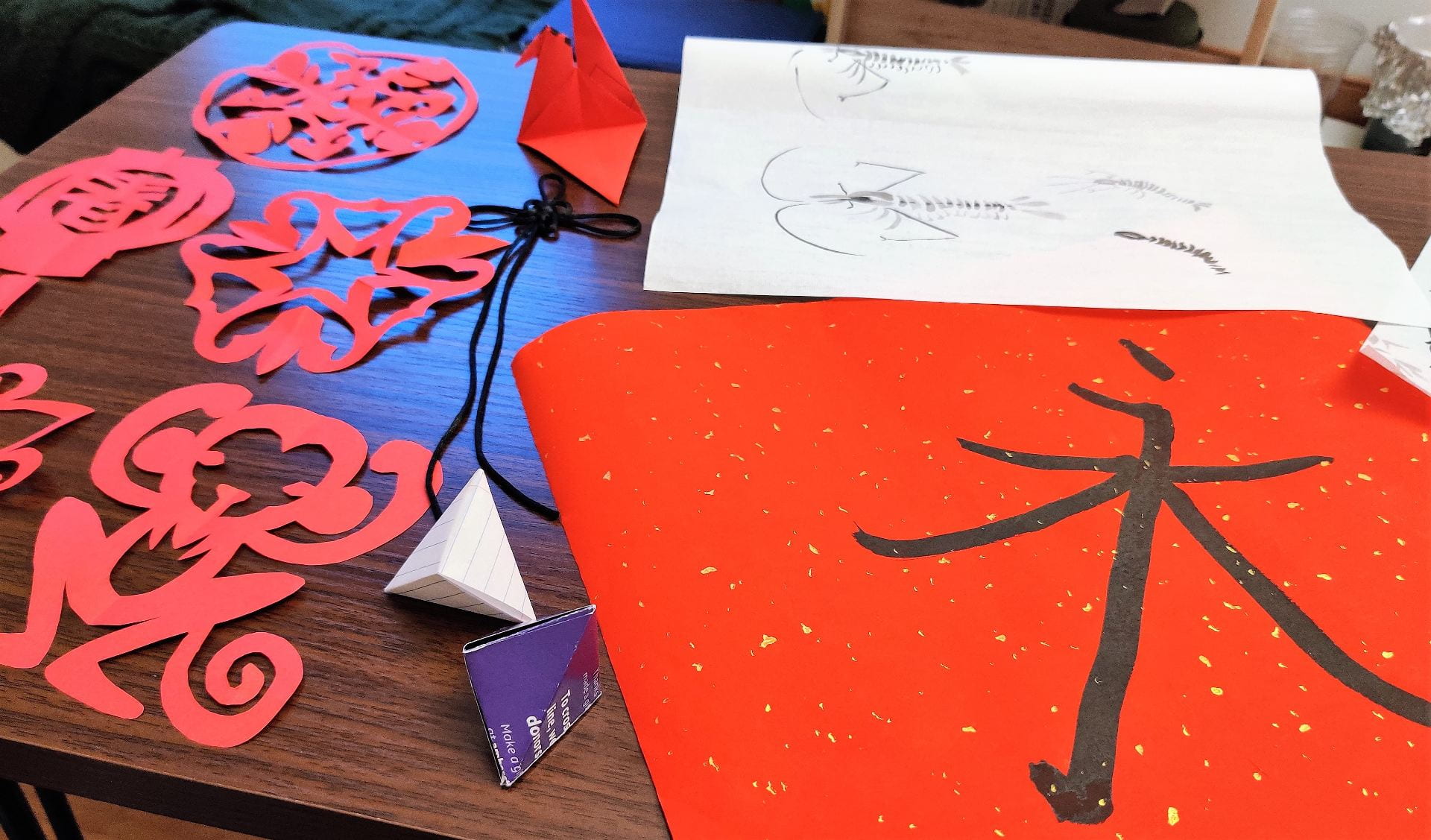
red paper cutouts on the table with Chinese calligraphy on red paper

Early in the program, we all received a package containing some swag as well as materials for our weekly cultural activities. In this video blog, I share the crafts we had the chance to learn and try for ourselves—all while continuing to practice our language skills!


Sylvia Ngo, PhD in Anthropology 2025
Sigur Center 2021 Asian Language Fellow
Beloit College, Wisconsin, USA