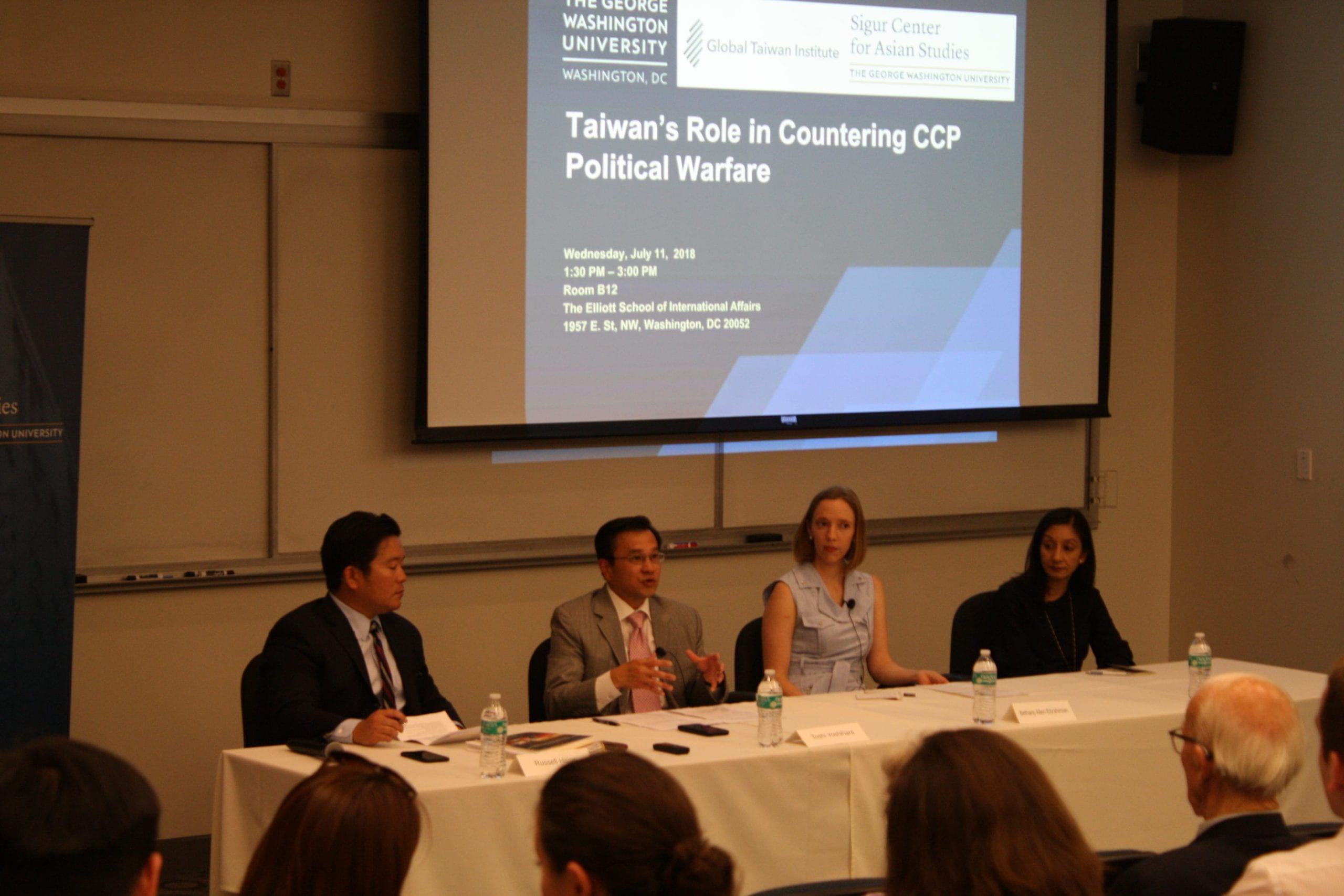
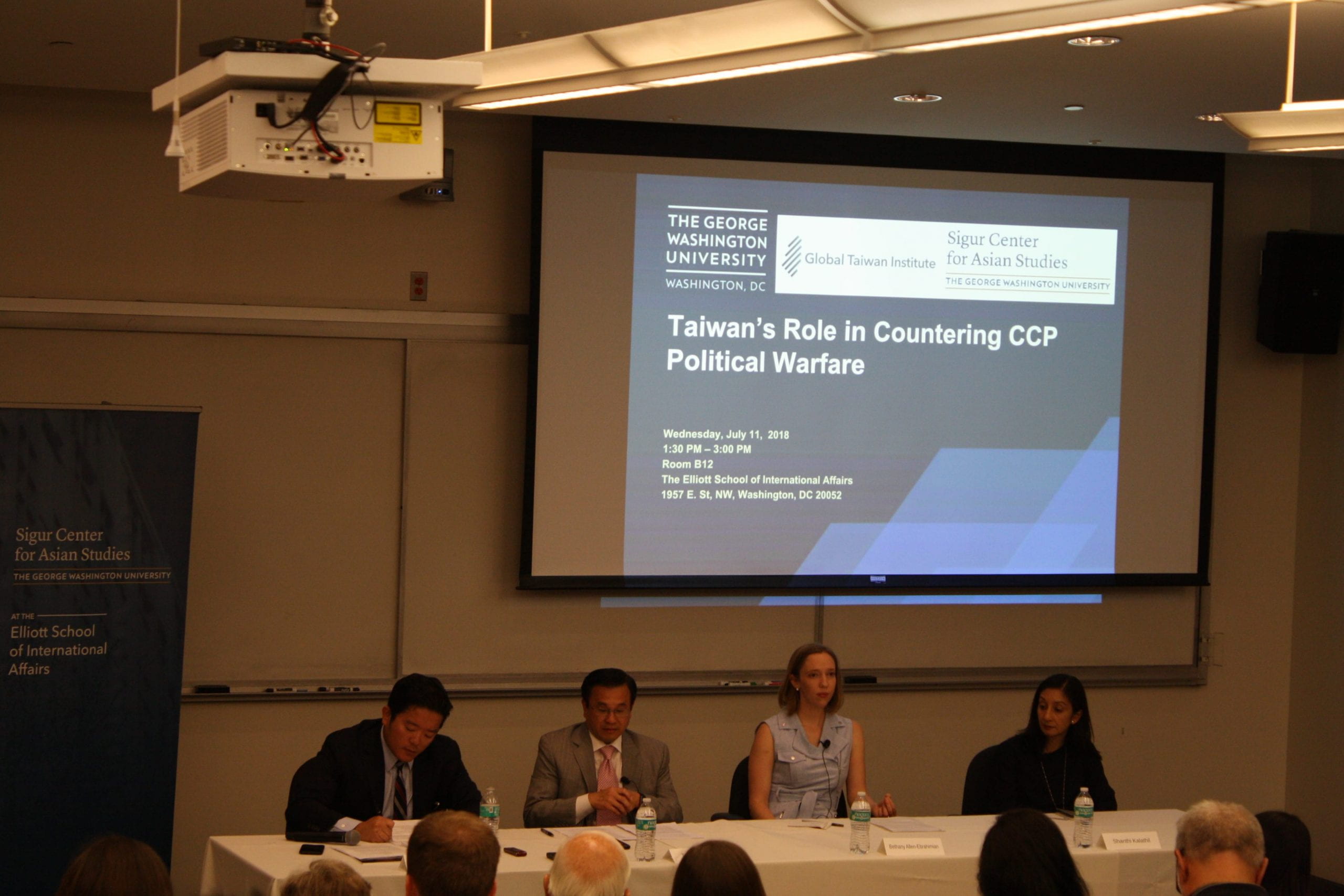
Wednesday, July 11, 2018
1:30 PM – 3:00 PM
Elliott School of International Affairs
**B12**
1957 E St. NW, Washington, DC 20052
This event is co-sponsored with the Global Taiwan Institute. This event is free and open to the public and media.

Event Description:
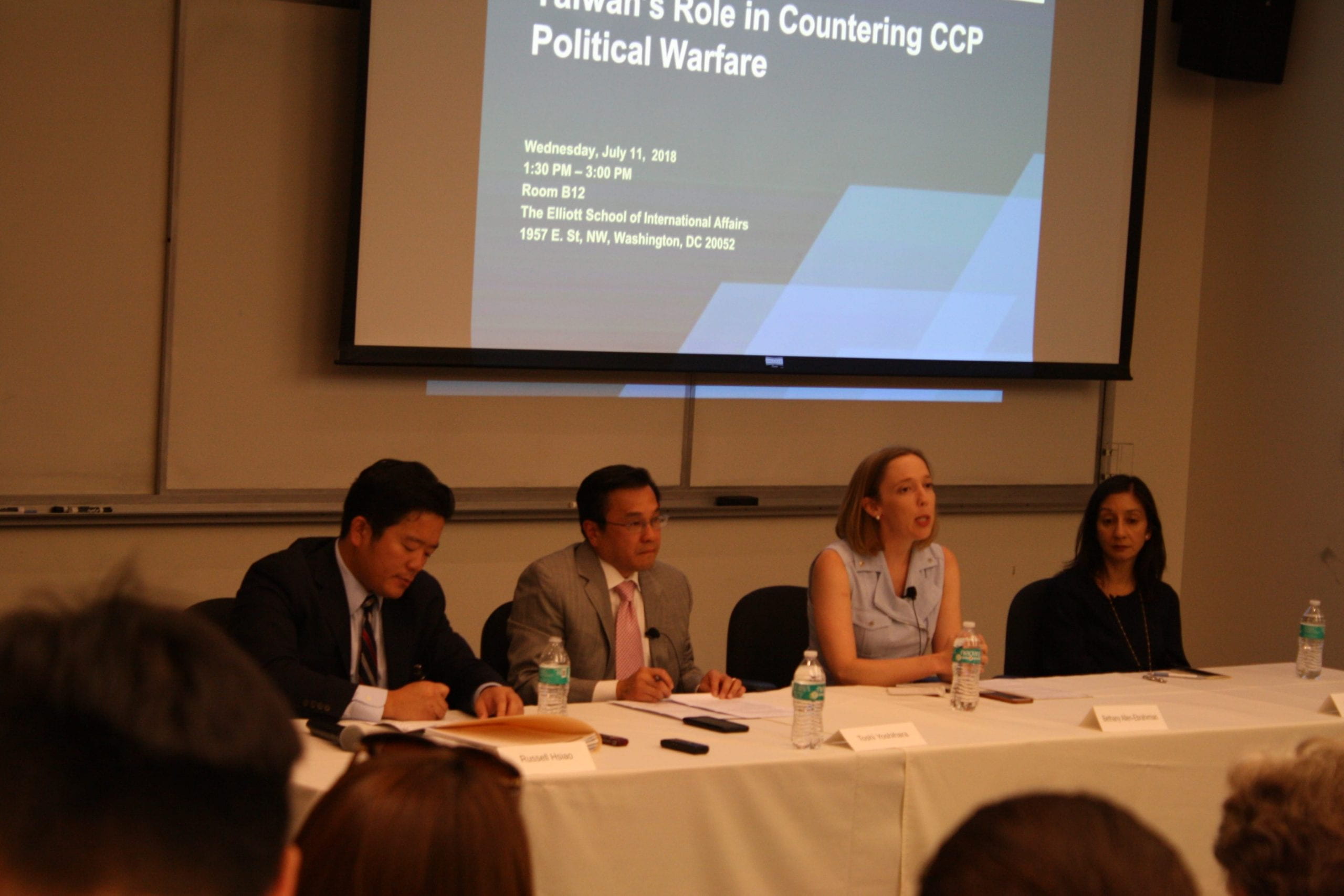
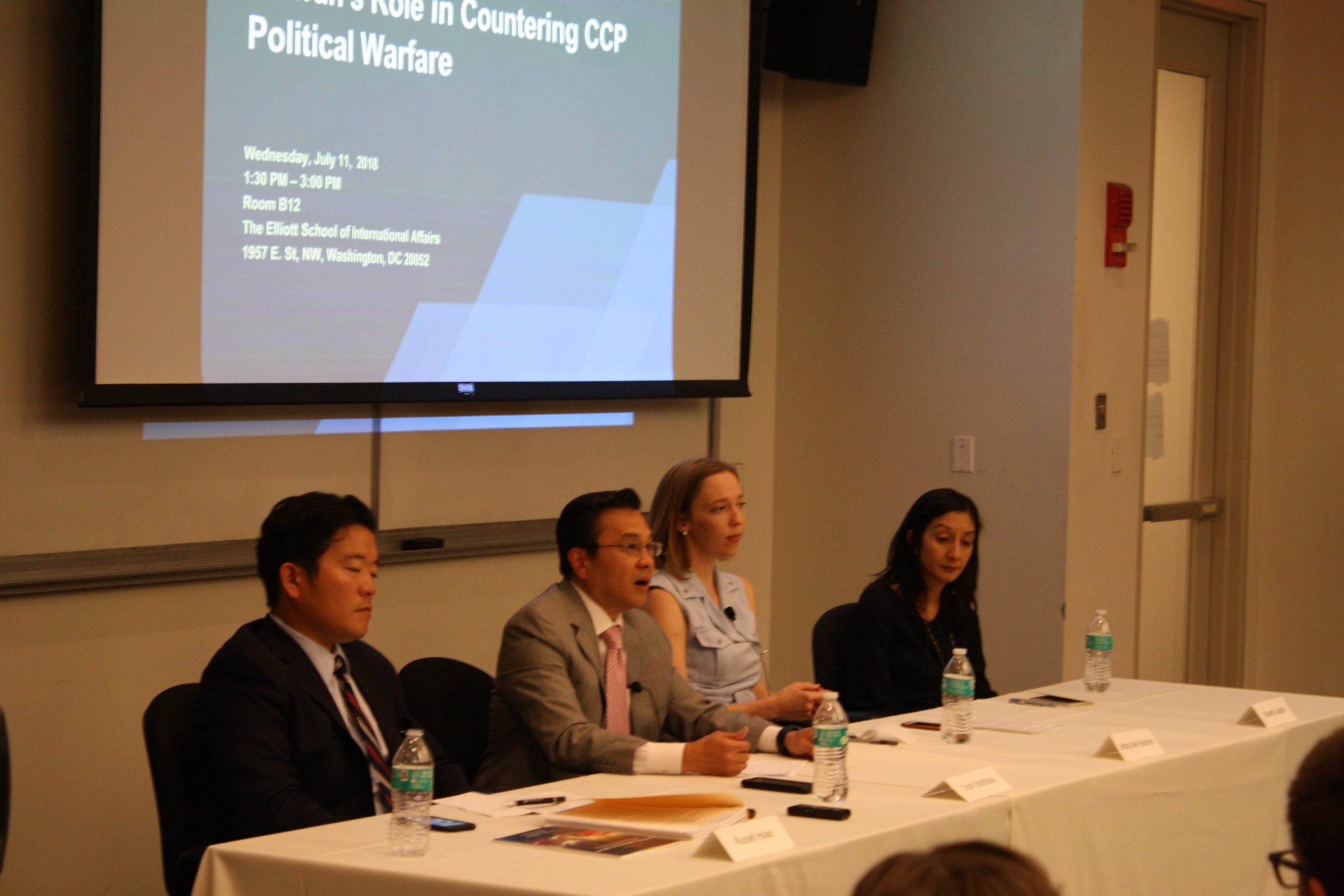
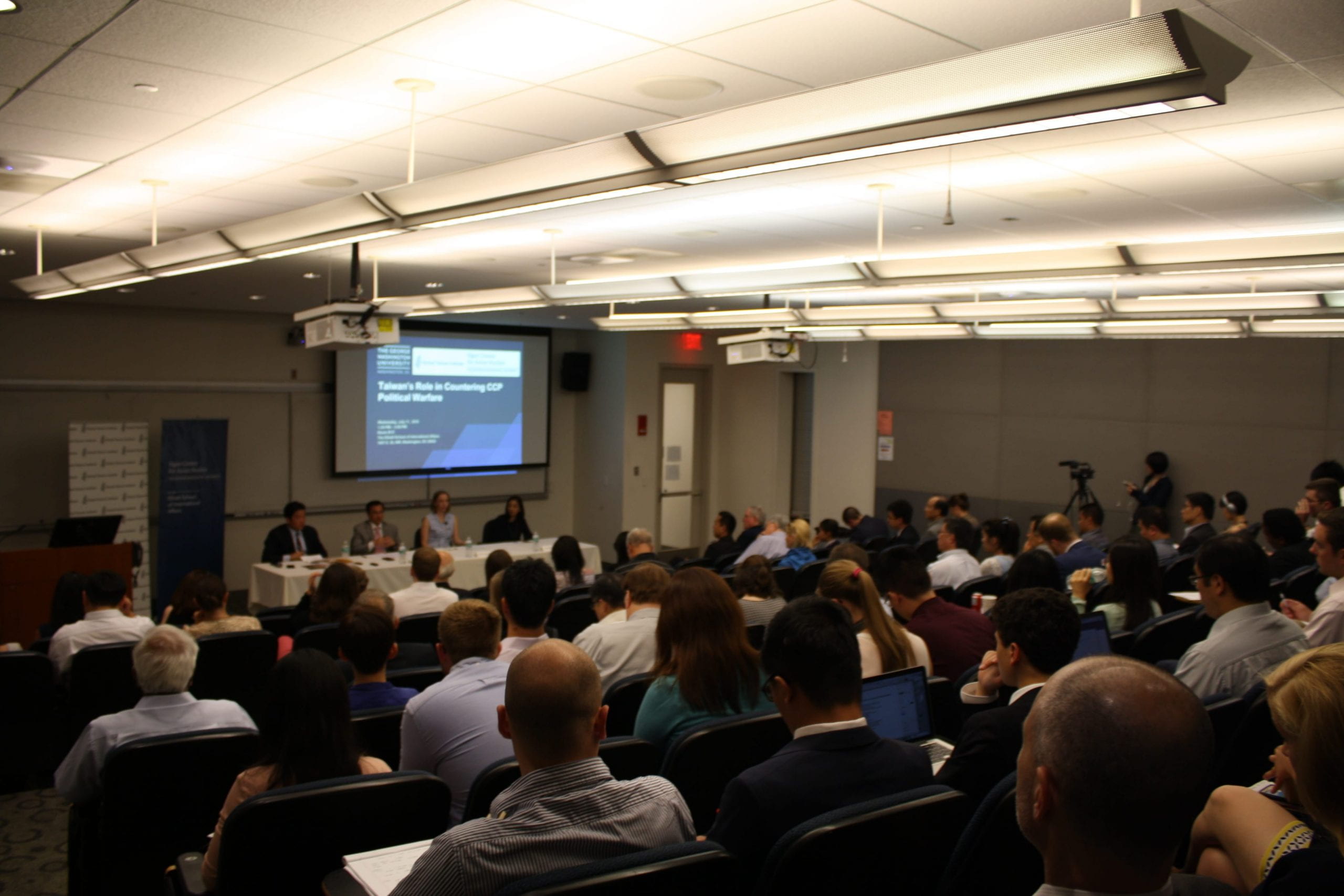
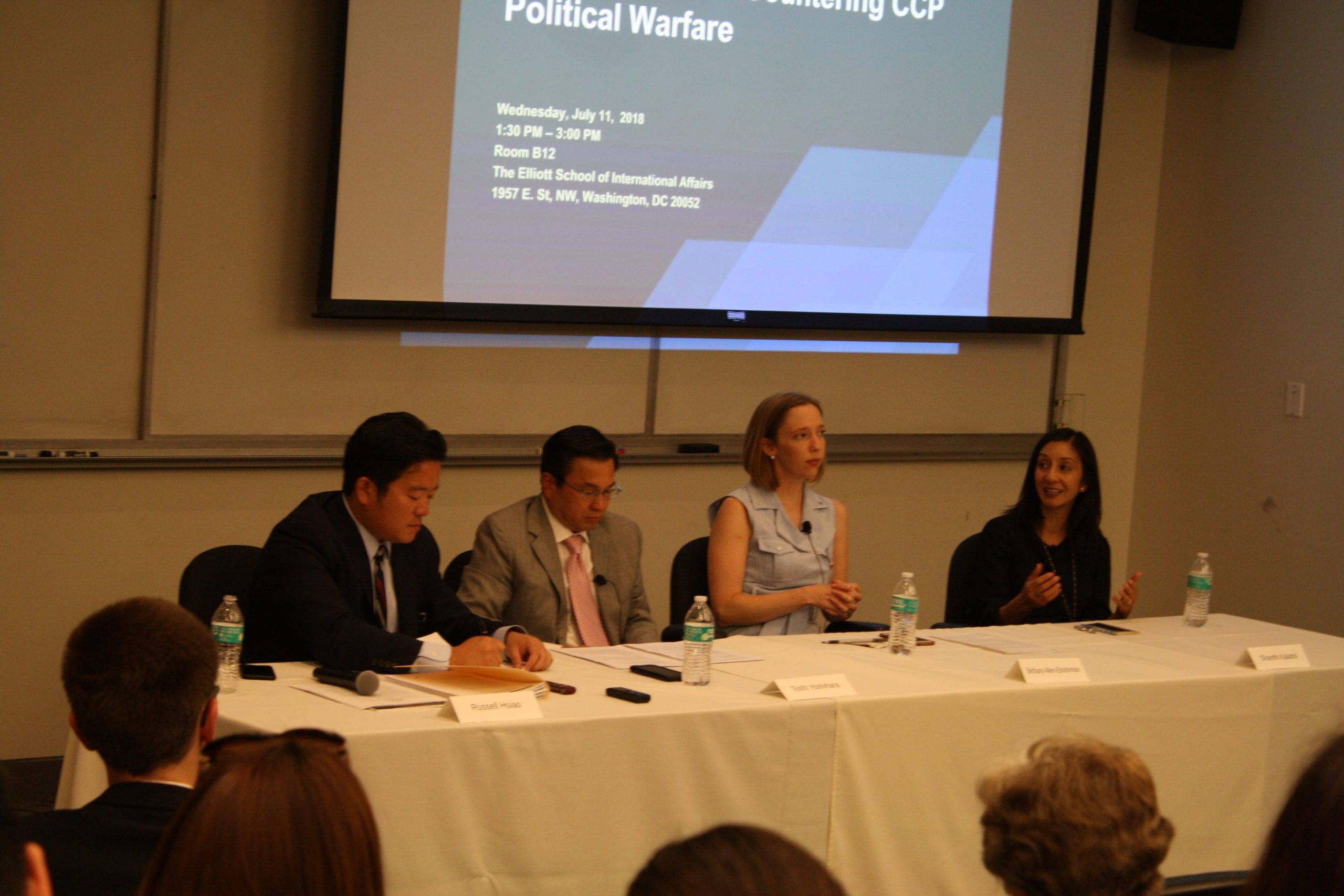
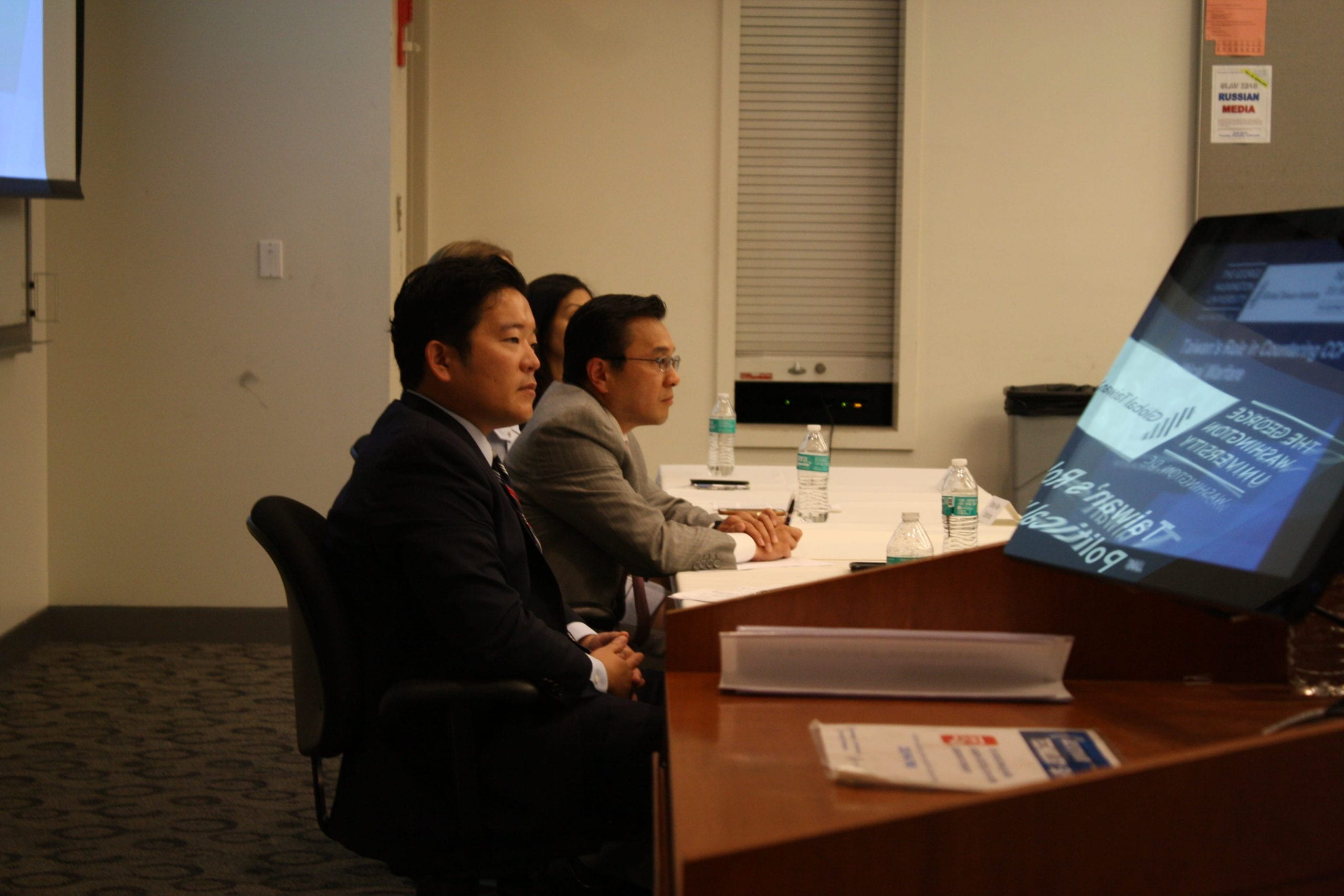
The Trump administration’s 2017 National Security Strategy warned that adversaries “are using information tools in an attempt to undermine the legitimacy of democracies.” Indeed, there is a growing consensus that the Chinese Communist Party (CCP) is currently engaged in a comprehensive coercive campaign that utilizes political warfare to influence and undermine democracies through coercive, corrupt, and covert means. The impact of China’s authoritarian influence is being felt throughout the world, but most visibly in Australia, Canada, New Zealand, Czech Republic, United States, and Taiwan. To be clear, the government in Taiwan has the longest experience contending with CCP political warfare than any other governments. Consequently, Taipei’s counter-measures to this emerging challenge deserves careful study. Please join GTI and the Sigur Center for Asian Studies at the George Washington University on July 11 for a timely discussion with a panel of experts: Toshi Yoshihara (Center for Strategic and Budgetary Assessments), Bethany Allen-Ebrahimian (The Daily Beast), and Shanthi Kalathil (National Endowment for Democracy).
Please direct questions or concerns to Global Taiwan Institute Program Associate Marzia Borsoi-Kelly.
** Media that would like to bring additional crew members or equipment, please contact Ms. Borsoi-Kelly directly.
Panelists
Toshi Yoshihara is a Senior Fellow at CSBA. Previously he held the John A. van Beuren Chair of Asia-Pacific Studies at the U.S. Naval War College where he taught strategy for over a decade. He was also an affiliate member of the China Maritime Studies Institute at the War College. Dr. Yoshihara has been a visiting professor of international politics at the Fletcher School of Law and Diplomacy, Tufts University since 2012. He has also taught as a visiting professor at the School of Global Policy and Strategy, University of California, San Diego and as a visiting professor in the Strategy Department at the U.S. Air War College. He has served as a research analyst at the Institute for Foreign Policy Analysis, RAND, and the American Enterprise Institute. Dr. Yoshihara has testified before the Defense Policy Board, the House Foreign Affairs Committee, and the U.S.-China Economic and Security Review Commission. He is the recipient of the Navy Meritorious Civilian Service Award in recognition of his scholarship on maritime and strategic affairs at the Naval War College.
Bethany Allen-Ebrahimian is a Security Reporter at The Daily Beast and previously a contributing reporter at Foreign Policy. She was previously an assistant editor at Foreign Policy’s China channel Tea Leaf Nation. Bethany has appeared on CNN, C-SPAN, BBC, Al Jazeera, PRI, and Deutsche Welle, among other outlets, and her work has also appeared in The New York Times, The Washington Post, and The Atlantic. She covered the 2017 German federal elections as a correspondent in Berlin and has also reported from Russia, Saudi Arabia, Turkey, Austria, China, Japan, and Taiwan. She was a 2017 Arthur F. Burns Fellow in Berlin, a 2016 Jefferson Fellow at the East-West Center, and a 2015 fellow with the International Reporting Project. Before joining Foreign Policy, she lived and worked in China for more than four years. She holds an M.A. in East Asian studies from Yale University and a graduate certificate from the Hopkins-Nanjing Center for Chinese and American Studies. Bethany speaks and reads Chinese.
Shanthi Kalathil is Director of the International Forum for Democratic Studies. Her work has focused primarily on issues pertaining to democratization, development, and the impact of information and communication technology, with a particular emphasis on Asia. Previously in her career, she served as a senior Democracy Fellow at the U.S. Agency for International Development, an associate with the Carnegie Endowment for International Peace, a non-resident associate with the Institute for the Study of Diplomacy at Georgetown University, and as a consultant for the World Bank, the Aspen Institute, and other international affairs organizations. Kalathil has appeared on media including NPR, BBC, VOA, RFA, C-SPAN, and others, and has authored or edited numerous policy and scholarly publications, including Diplomacy, Development and Security in the Information Age (Institute for the Study of Diplomacy, 2013), Developing Independent Media as an Institution of Accountable Governance (The World Bank, 2008), and (with Taylor C. Boas) Open Networks, Closed Regimes: The Impact of the Internet on Authoritarian Rule (Carnegie Endowment for International Peace, 2003). A former Hong Kong-based staff reporter for The Wall Street Journal Asia, Kalathil lectures on international relations in the information age at Georgetown University. She holds degrees from U.C. Berkeley and the London School of Economics and Political Science.
Part 1 Audio Recording
Part 3 Audio Recording
Part 2 Audio Recording
Part 4 Audio Recording
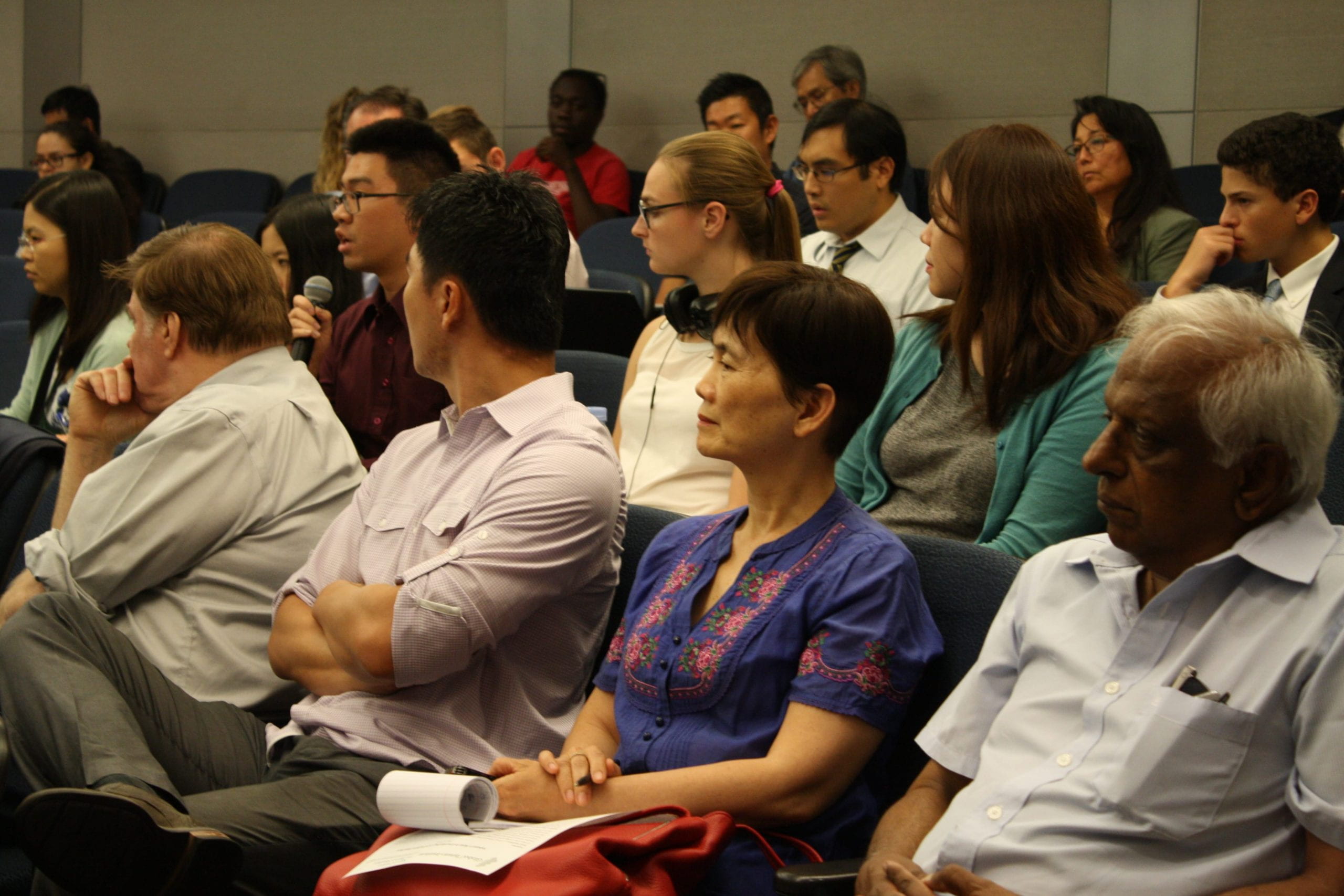
Event Gallery
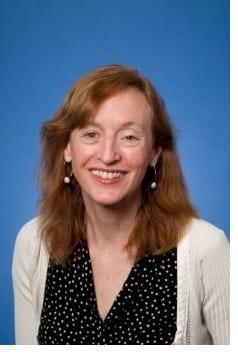
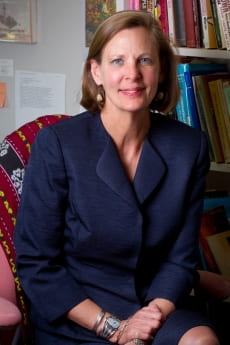

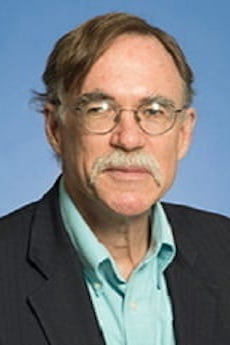

 Patrick M. Cronin is a Senior Advisor and Senior Director of the Asia-Pacific Security Program at the Center for a New American Security (CNAS). Previously, he was the Senior Director of the Institute for National Strategic Studies (INSS) at the National Defense University, where he simultaneously oversaw the Center for the Study of Chinese Military Affairs. Prior to leading INSS, Dr. Cronin served as the Director of Studies at the London-based International Institute for Strategic Studies (IISS). At the IISS, he also served as Editor of the Adelphi Papers and as the Executive Director of the Armed Conflict Database. Before joining IISS, Dr. Cronin was Senior Vice President and Director of Research at the Center for Strategic and International Studies (CSIS).
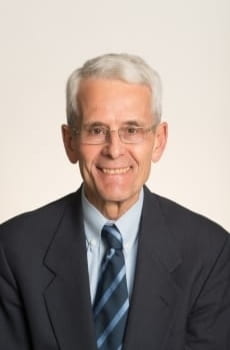
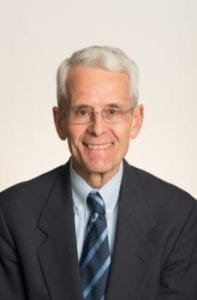 Robert Sutter is Professor of Practice of International Affairs at the Elliott School of George Washington University beginning in 2011. He also serves as the school’s Director, Program of Bachelor of Arts in International Affairs. A Ph.D. graduate in History and East Asian Languages from Harvard University, he has published 20 books, over 200 articles and several hundred government reports dealing with contemporary East Asian and Pacific countries and their relations with the United States. Sutter’s government career (1968-2001) involved work on Asian and Pacific affairs and US foreign policy for the Congressional Research Service of the Library of Congress, the Central Intelligence Agency, the Department of State, and the Senate Foreign Relations Committee.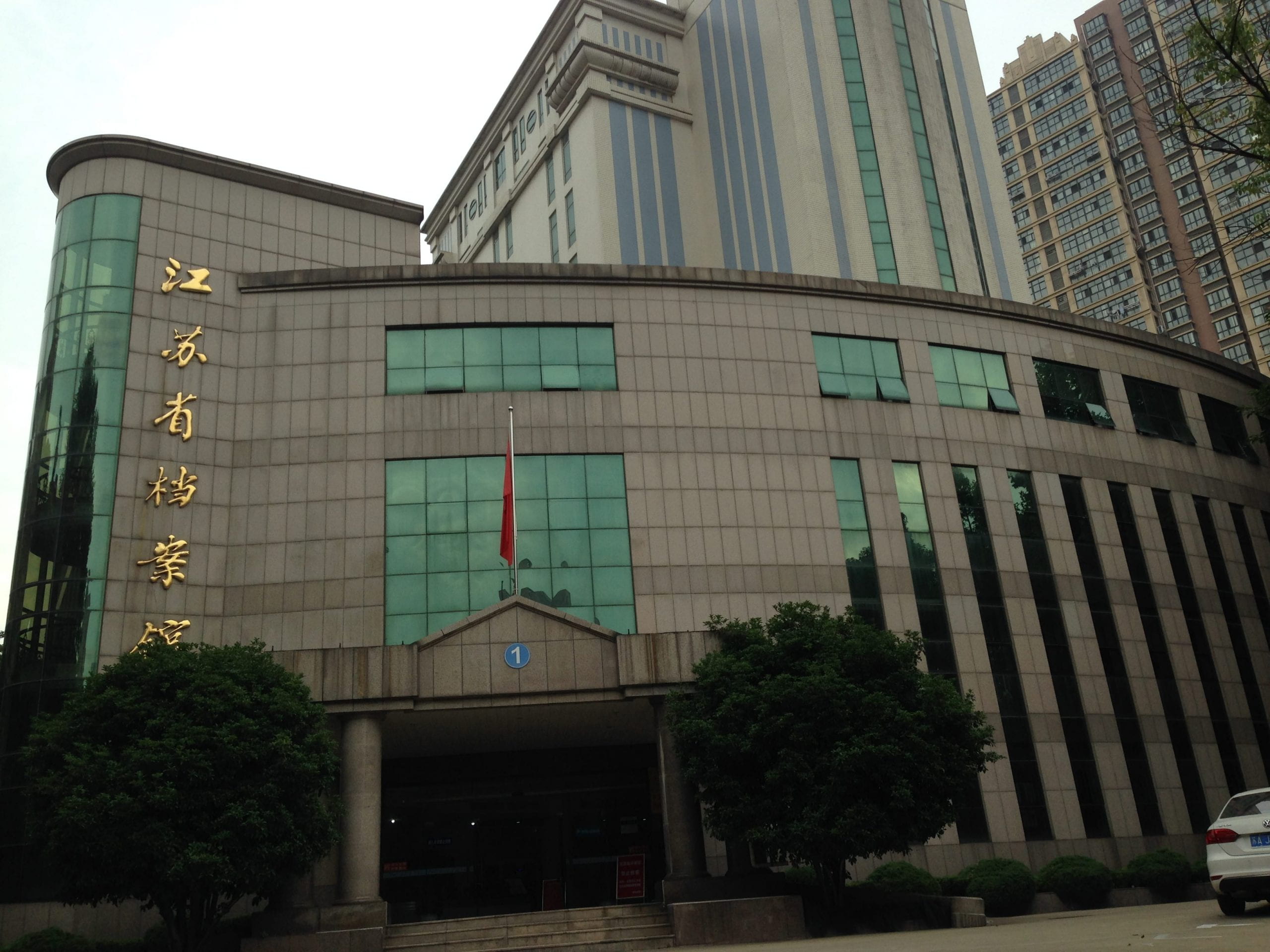
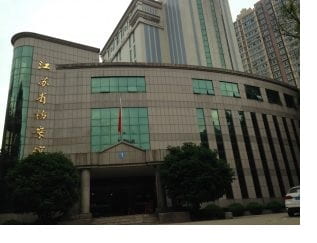 Researching the history of the Chinese Communist Party (CCP) and associated topics is inherently difficult. First and foremost, every historian of the CCP has to deal with the limited accessibility of archival materials in mainland China. When I began my research trip in Nanjing and at the Jiangsu Provincial Archive, I was surprised to learn that, in contrast to common perceptions, the sources for the revolutionary period (pre-1949) was even more strictly administered than the early PRC period (1950s). In the beginning, they would not allow me to see anything and there is even no archival fond catalog available for the revolutionary period (while there are plenty for early 1950s). After some detailed inquiry about my research topic and suggesting some published primary sources at the archive, I was finally allowed to see three archival fonds, for which I’m truly grateful.