• About Us
    • Faculty Directory
      • A-C
      • D-J
      • K-M
      • N-S
      • T-Z
    • Staff
      • Affiliated Programs Leadership
    • East Asia National Resource Center
    • Affiliated Programs
      • China Policy Program
      • Memory and Reconciliation in the Asia Pacific
      • Rising Powers Initiative
      • Taiwan Education and Research Program
      • Tibet Governance Project
      • Uyghur Studies Initiative
    • History
    • Statement on Diversity & Inclusion in Asian Studies at the Elliott School
    • Statement on Anti-Asian Violence
    • Diversity and Inclusion at the Elliott School
  • News & Events
    • In the News
    • Upcoming Events
    • Archived Events
      • Helen T. Lin Legacy Initiative Tiger Talk Archive Collection
    • Flagship Events
      • Gaston Sigur Memorial Lectures
      • New Books in Asian Studies
      • Taiwan Roundtables
      • Sigur Center Lecture Series
      • Taiwan Conference Series
      • Visiting Scholar Roundtables
  • Visiting Scholars
    • Apply
    • Insights & Opinions
    • Current Scholars
    • Past Scholars
  • Publications
    • Faculty Publications
    • Asian Connections Newsletter
    • Asia Report
  • Academics
    • M.A. in Asian Studies
    • B.A. in Asian Studies
    • Study Abroad
    • Student Organizations
    • Summer Course: Introduction to Chaghatay
    • Resources
      • For Educators
  • Opportunities
    • Sigur Center Grants & Fellowships
    • Gitter Fellowship for Advanced Chinese Language Study
    • Graduate Student Associate Program
    • Uyghur Studies Summer Fellowship
  • Asia on E Street Blog
    • Student Spotlights
    • Sigur Research and Language Fellows
    • Subscribe to our newsletters

Sigur Center for Asian Studies

At the Elliott School of International Affairs

  • About Us
    • Faculty Directory
      • A-C
      • D-J
      • K-M
      • N-S
      • T-Z
    • Staff
      • Affiliated Programs Leadership
    • East Asia National Resource Center
    • Affiliated Programs
      • China Policy Program
      • Memory and Reconciliation in the Asia Pacific
      • Rising Powers Initiative
      • Taiwan Education and Research Program
      • Tibet Governance Project
      • Uyghur Studies Initiative
    • History
    • Statement on Diversity & Inclusion in Asian Studies at the Elliott School
    • Statement on Anti-Asian Violence
    • Diversity and Inclusion at the Elliott School
  • News & Events
    • In the News
    • Upcoming Events
    • Archived Events
      • Helen T. Lin Legacy Initiative Tiger Talk Archive Collection
    • Flagship Events
      • Gaston Sigur Memorial Lectures
      • New Books in Asian Studies
      • Taiwan Roundtables
      • Sigur Center Lecture Series
      • Taiwan Conference Series
      • Visiting Scholar Roundtables
  • Visiting Scholars
    • Apply
    • Insights & Opinions
    • Current Scholars
    • Past Scholars
  • Publications
    • Faculty Publications
    • Asian Connections Newsletter
    • Asia Report
  • Academics
    • M.A. in Asian Studies
    • B.A. in Asian Studies
    • Study Abroad
    • Student Organizations
    • Summer Course: Introduction to Chaghatay
    • Resources
      • For Educators
  • Opportunities
    • Sigur Center Grants & Fellowships
    • Gitter Fellowship for Advanced Chinese Language Study
    • Graduate Student Associate Program
    • Uyghur Studies Summer Fellowship
  • Asia on E Street Blog
    • Student Spotlights
    • Sigur Research and Language Fellows
    • Subscribe to our newsletters
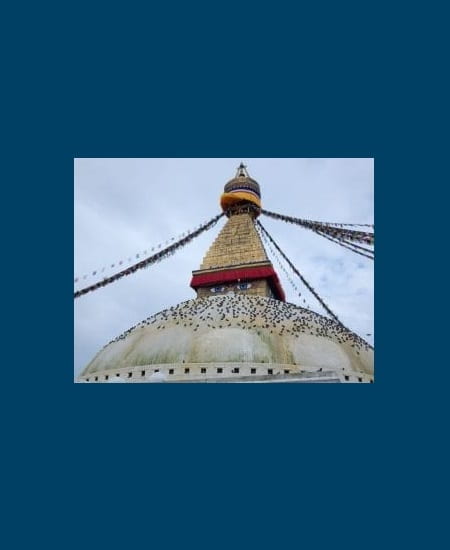
a temple's tip with strings of decoration tied to it connecting it to other objects

Interactive Research Methods in Gorkha, Nepal
January 23, 2019 Sigur Center 2018 Summer Fellows No Comments

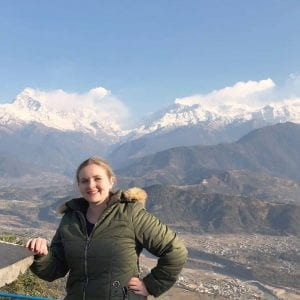
Emily Hall, posing in front of natural scenery on a clear day

When I first began thinking about conducting research in Nepal for my master’s thesis, I wondered how I could address the language gap between myself and research participants. To better understand how quality education is perceived in the local context, I decided it would be necessary to conduct interviews with school headmasters, teachers, and parents. Having lived in Nepal for eight months as a Fulbright English Teaching Assistant (ETA), I speak Nepali at a beginner level but not well enough to capture the full-meaning of interviews conducted in Nepali. Immediately, I knew that it would be necessary to have a translator. Yet, additional questions emerged involving the amount of time and effort it would take to fully understand the meaning of interviews and what might get lost in translation.

When thinking about sample size, the amount of time I would have to collect data, and how to most quickly and accurately conduct interviews, I asked myself who within my participant population would most likely be able to be interviewed in English and who would need to be interviewed in Nepali. Having been a guest teacher or teacher trainer at all of the schools included in my sample population, I understood that most headmasters and teachers would be able to be comfortably interviewed in English. Since interviews conducted in English would take less time to conduct and analyze, I decided that it would be best to hold one-on-one semi-structured interviews with headmasters and teachers. I prepared a set of guiding questions and possible follow-up questions. Due to the semi-structured nature of the interviews, I also had the freedom to ask participants to elaborate upon certain responses in a more conversational manner.

Assuming that interviews with parents would need to be conducted in Nepali, I determined that I could save time and increase the sample population size by conducting group interviews. Reflecting back on my experience being a teacher, I thought that group-work focused activities, such as making a poster, might make the focus group more engaging for participants by encouraging their simultaneous contributions. Thus, I developed a focus group plan that followed a template similar to a lesson plan for teaching. The first activity was to have parents work in groups of 2-3 to create a poster of “what makes a good school.” Subsequently, with the help of my translator, we discussed the meaning of what each group created.

Since it was my first time conducting focus groups in which participants created posters, I wasn’t sure how it was going to go. Given the cultural context, I think the poster task was a big success! Parents actively participated in the conversations and created posters that reflected their beliefs. If I were to design my research project again, I would definitely still use the poster making activity. I’m excited to analyze the collected data to determine trends; I look forward to including photos and translations of each poster in my final research report.

Interested in learning more about my experiences in Nepal? Check out my personal blog Highlights of the Himalaya!
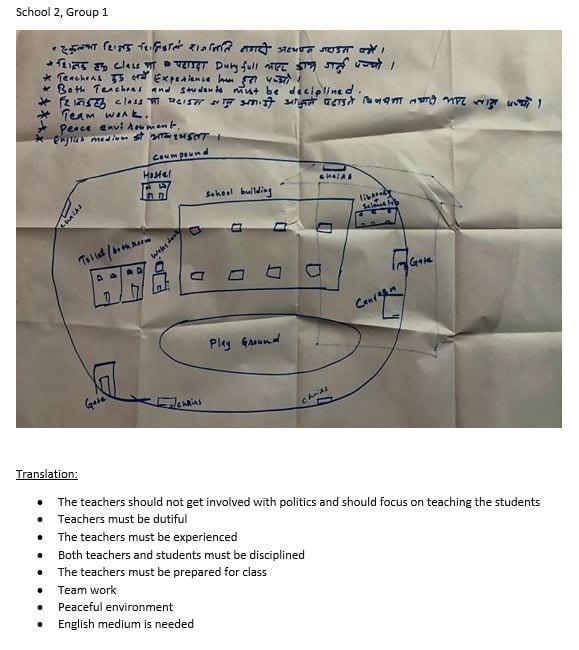
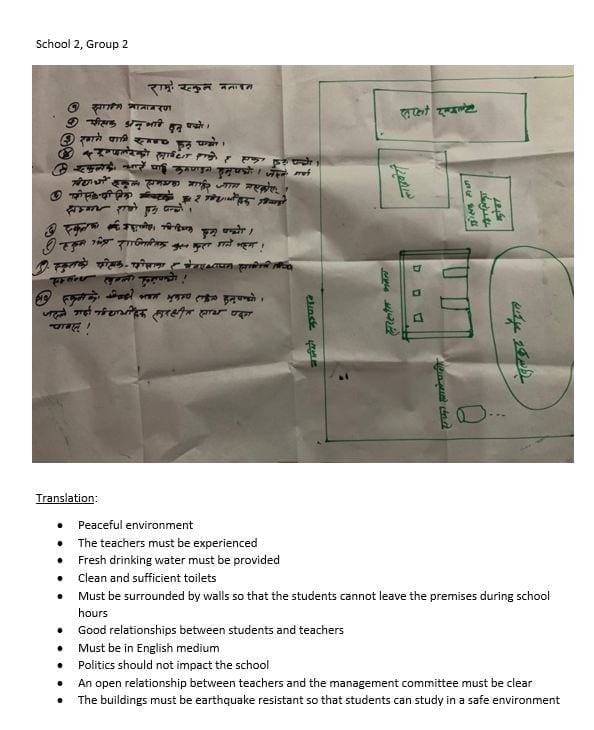
notes and graphs on Emily Hall's research notes and graphs on Emily Hall's research


By Emily Hall, Sigur Center Field Research Grant Recipient. Emily is a master’s student in the International Education Program at the George Washington University. Emily’s areas of interest include understanding and supporting teacher quality and teaching quality in developing country contexts through the lens of cultural anthropology. Her master’s thesis examines local perceptions of quality education in Nepal and analyzes government funded educational reform initiatives seeking to improve equitable access to quality education. To learn more about her experiences in Nepal, please visit her personal blog: Highlights of the Himalaya 

Print Friendly, PDF & Email

Kindness, Nourishment and Newfound Friends

2/1/19: Making Time: Time Measurement and Temporal Concepts in Tokugawa Japan

Leave a Reply Cancel reply

Categories
  • Archives & Recordings
    • Gaston Sigur Memorial Lecture
    • High Profile Events
    • New Books in Asian Studies
    • Sigur Center Lecture Series
    • Taiwan Conference Series
    • Taiwan Roundtables
    • Visiting Scholar Roundtables
  • Helen T. Lin Legacy Initiative Tiger Talk Recording
  • In the News
  • Insights & Opinions
  • Sigur Center Summer Research & Language Fellows
    • Sigur Center 2018 Summer Fellows
    • Sigur Center 2019 Summer Fellows
    • Sigur Center 2020-21 Summer Fellows
    • Sigur Center 2022 Summer Fellows
    • Sigur Center 2023 Summer Fellows
    • Sigur Center 2024 Summer Fellows
  • Student Spotlights
  • Upcoming Events
Event Types
Annual Series (18) Book Launch and Discussion Events (73) CCP (1) china (2) Civil War (1) Climate change (1) communism (1) Discussion Event (1) Film Screening and Discussion Events (14) Helen T. Lin Legacy Initiative (30) international affairs (1) Language and Culture Events (18) Myanmar (1) News (1) Panel Events (115) Roundtable Discussion (2) sigur center 2023 summer fellows (1) Sigur Center 2024 Summer Fellows (5) Sigur Center Summer Research & Language Fellows (5) sigur center summer research fellows 2023 (2) Single-Speaker Seminars (76) Sustainable development (1) Visiting Scholars Seminars (20)
Proudly powered by WordPress | Theme: Doo by ThemeVS.
The George Washington University, Washington, DC
  • Campus Advisories
  • EO/Nondiscrimination Policy
  • Website Privacy Notice
  • Contact GW
  • Accessibility
  • Terms of Use
  • Copyright
  • Report a barrier to accessibility.
Viewing Message: 1 of 1.
Notice

This site uses cookies to offer you a better browsing experience. Visit GW’s Website Privacy Notice to learn more about how GW uses cookies.